
Most homes need a 12–16 gallon can, but here’s the thing—your actual waste matters more than any rule! If you’ve got food scraps piling up, bump toward 16 gallons. Smaller households? Twelve works fine. Measure your space first (especially under-sink spots, which max out around 10 inches tall). Match your bag size to your can. Watch for overflows or liner slippage—they’re red flags you’ve sized wrong. Get this right, and your kitchen runs smoother than you’d expect!
Standard Kitchen Sizes: 12–16 Gallons for Most Homes
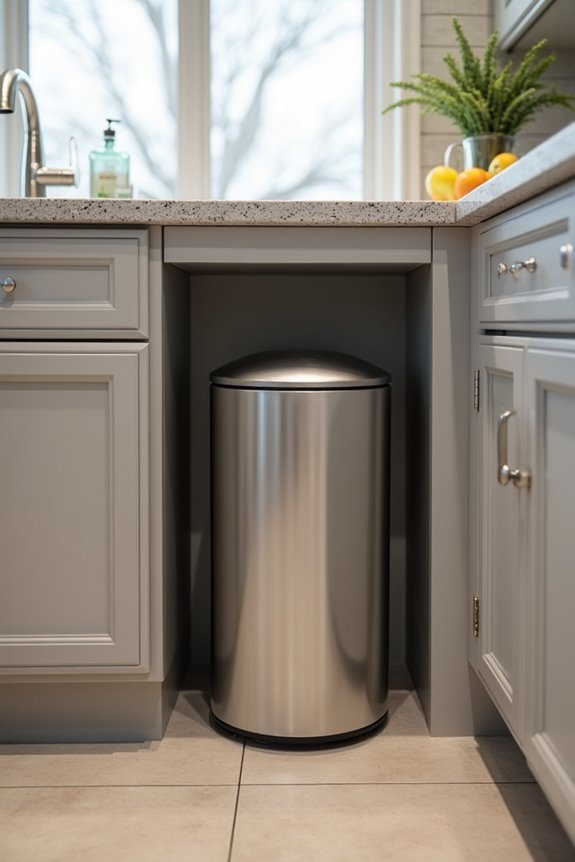
What’s the magic number for a kitchen trash can? It’s 12–16 gallons, and honestly, you’ve probably already got the perfect size! This standard kitchen capacity handles daily waste for most households without constantly needing replacements. A 13-gallon bag fits these cans like a glove, making your life easier when it’s time to swap bags.
Here’s the thing: you don’t need to overthink capacity. Unless your household generates serious waste, going bigger often wastes precious space. Standard kitchen sizes work beautifully in compact kitchens too—they scoot easily near prep areas. Got plumbing constraints? Under-sink placements typically need smaller 7–10 gallon cans instead. The bottom line? Stick with 12–16 gallons and you’re joining countless satisfied households doing the same!
How Household Size Changes the Sizing Math
match your gallon capacity to your household size, and you’ll minimize overflow while maximizing convenience!
Trash Can Types: Do They Affect Your Size Choice?
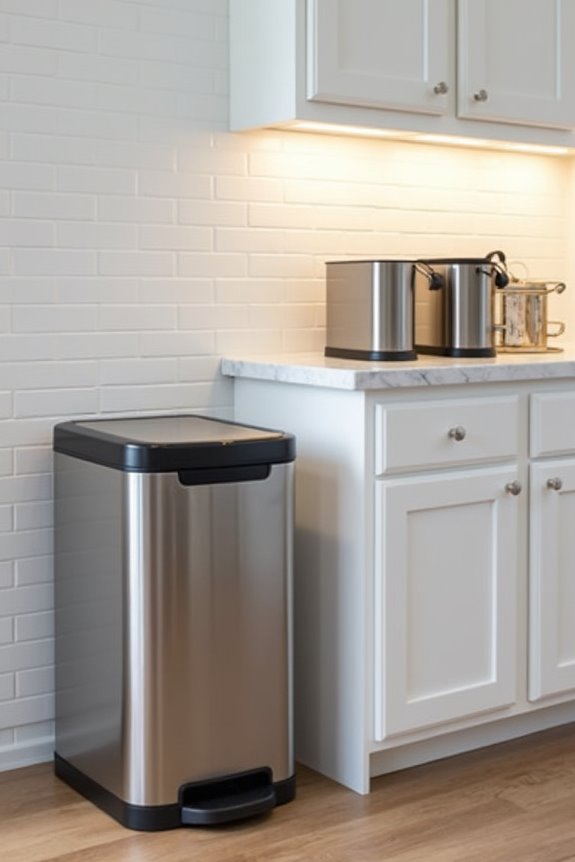
Here’s the thing—your trash can type absolutely shapes what size actually works for your kitchen! Step-on models and touchless options typically max out at 10–13 gallons since they need to fit standard trash bags, while built-in cabinet cans run 10–15 gallons to squeeze under your sink without looking like an eyesore. Choosing between these types means you’re not just picking a style; you’re locking in realistic capacity limits that match both your space and your lifestyle!
Step-On Vs. Touchless Models
Does the type of trash can you pick actually change what size you need? Honestly, yes—it does matter!
Both step-on and touchless (motion sensor) models typically come in 10–13 gallon sizes, perfectly matching standard kitchen waste volume. You’re getting the same capacity whether you prefer hands-free convenience or the classic foot-pedal approach. Here’s the real difference:
| Feature | Step-On | Touchless |
|---|---|---|
| Operation | Foot pedal | Motion sensor |
| Size range | 10–13 gallon | 10–13 gallon |
| Best for | Budget-conscious | Hygiene-focused |
For larger kitchens generating more waste, upgrade to 15–20 gallon models in either style. Dual-compartment 15–20 gallon setups let you combine trash and recycling without increasing footprint. Under-sink installations require heights under 10 inches, regardless of capacity. Choose your preferred operation style—the size recommendation stays the same!
Built-In Cabinet Considerations
When you’re thinking about fitting a trash can inside your kitchen cabinets, the bin itself isn’t what matters most—it’s the space you’re working with! You’ll need to measure your cabinet dimensions carefully—length, width, and depth—before purchasing any slide-out mechanism or bin. Standard pull-out configurations typically accommodate 12–15 gallon bins around 12–15 inches wide and up to 20 inches tall. Under-sink installations demand creative solutions since you’re limited to under 10 inches in height to clear plumbing. Many of you’ll find dual-bin setups brilliant for separating waste and recycling! Remember bag compatibility too—13-gallon bags pair perfectly with standard cabinet bins. Taking time with measurement requirements now prevents frustrating returns later. You’ve got this!
Your Trash Habits Determine Can Capacity
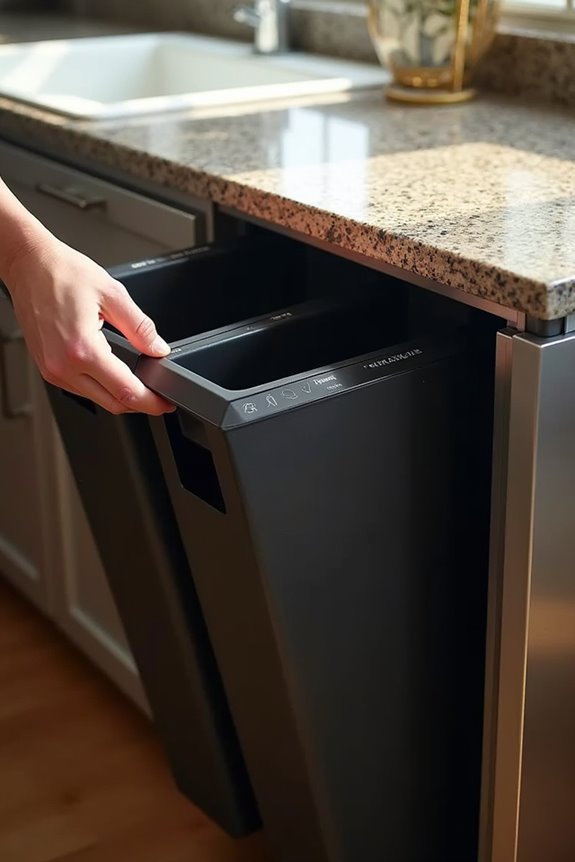
Your waste habits directly influence trash can capacity needs. If you compost or recycle curbside, you’ll dramatically reduce what goes in your main bin capacity. A 7–10 gallon bin handles miscellaneous waste perfectly when you’re diverting materials elsewhere.
But here’s the reality: food waste changes everything. When food scraps land in your trash instead of a compost bin, you’re looking at 12–16 gallons minimum to prevent overflow between curbside pickup days.
Think honestly about your household waste patterns. Do you meal prep, reducing food waste? That shrinks your trash overflow risk. Frequent cleaning and mindful disposal reduce bin selection needs even in larger families. Your actual trash habits—not household size alone—determine what kitchen trash size truly works!
Space Validation: Measure Before You Buy
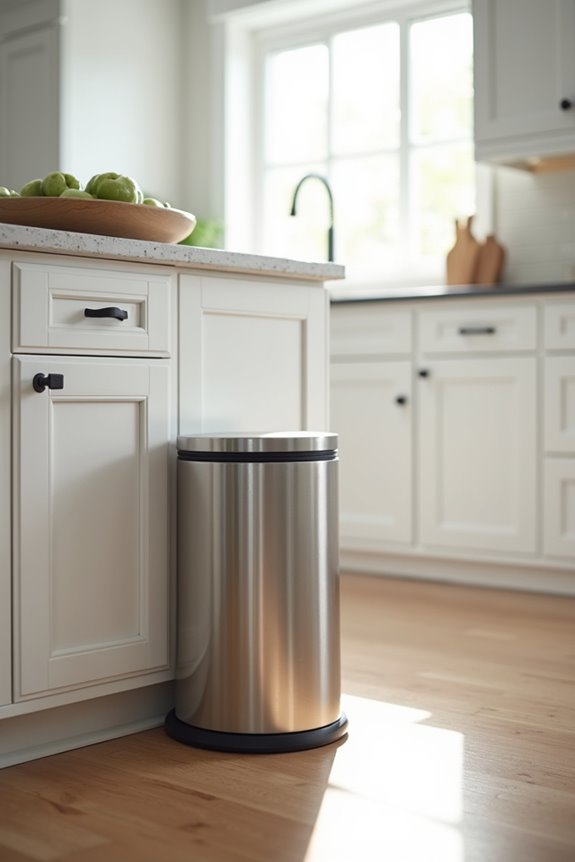
You’ve got to measure your actual space—height, width, and depth—before you even start shopping, or you’ll end up with a can that won’t fit! Account for those sneaky cabinet constraints: under-sink setups need cans under 10 inches tall to dodge plumbing, while corner spots and compact kitchens work best with 12–16 gallon models. Verify every dimension matches your space (I learned this the hard way with a 20-gallon that looked perfect online but got stuck halfway into my cabinet!).
Measure Your Available Space
How’s this for a rookie mistake: I once bought a gorgeous 30-gallon trash can only to discover it wouldn’t fit under my sink!
Don’t repeat my error. Grab your measuring tape and check your space carefully. Measure the height, width, and depth of wherever you’re planning to put your can. Under-sink setups need special attention—plumbing and basin constraints demand shorter models, ideally under 10 inches tall for proper clearance.
| Location | Height Needed | Width Needed |
|---|---|---|
| Under Sink | Under 10″ | 10-12″ |
| Cabinet Corner | 20-30″ | 10-15″ |
| Island/Pantry | 20-30″ | 12-15″ |
Free-standing cans typically range 20 to 30 inches tall and 10 to 15 inches wide. For pull-out systems, ensure your cabinet accommodates standard bin measurements around 15 inches wide and 20 inches tall.
Write down your measurements. Compare them against product dimensions before purchasing. Your space, your rules!
Account For Cabinet Constraints
What’s hiding behind that cabinet door might surprise you—and not always in a good way! Under-sink cabinets present real challenges. Most standard under-sink cabinets are around 30 inches tall, which immediately limits your trash can size options.
Here’s the reality: smaller cans (7–10 gallons) work best in these cramped spaces. They squeeze around plumbing and pipes without creating headaches during installation or removal. You’ll also want to measure your width clearance carefully—aim for cans about 10–15 inches wide. This ensures door clearance and prevents frustrating jamming.
Don’t skip this step! Taking five minutes to measure your actual under-sink space saves you from returning an oversized can later. Your kitchen layout deserves a trash can that fits perfectly, not one that fights with your cabinet constraints.
Verify Dimensions Before Purchase
Measure twice, buy once—that’s the golden rule for trash cans! You’ll want to grab your measuring tape and check every potential spot before committing to a purchase.
Here’s what you need to verify:
- Cabinet openings – Measure width and depth to confirm pull-out bins fit snugly
- Under-sink clearance – Check height (under 10 inches works best) and plumbing obstacles
- Walkway space – Ensure your can doesn’t block kitchen traffic flow
- Capacity against volume – Match gallon size (12–30 gallons) to your household’s waste output
Standard models run 45–60 liters, while pull-out bins typically need 15 inches of width. Those dimensions matter! Taking five minutes now prevents the frustration of returning a can that doesn’t fit. You’ve got this!
Matching Bags and Maintenance to Your Can
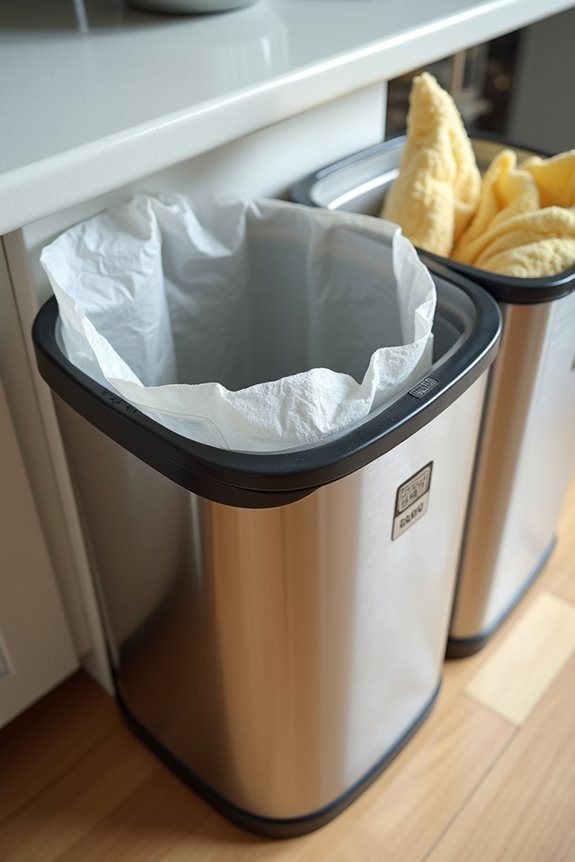
You’d be surprised how many people grab whatever trash bags they’ve got lying around—and then wonder why garbage spills everywhere!
Matching your bag sizes to your can’s gallons matters tremendously. A 13-gallon bag fits standard kitchen cans perfectly, while 12–16 gallon bags work best for medium cans. Larger dual-compartment cans need 20–30 gallon bags or dual-bag liners for proper liner compatibility and bag fit.
Matching bag sizes to can gallons is crucial—13-gallon bags fit standard cans, while larger cans need 20–30 gallon bags for proper compatibility.
Here’s the friendship-level truth: maintenance keeps everything running smoothly. Change bags weekly and sanitize your can with mild cleaners to crush odor control. For under-sink or cabinet-trash setups, remember those shorter cans need smaller bags—usually around 10 inches tall fits your plumbing constraints.
Getting this right transforms your kitchen experience. You’ll appreciate the difference!
Double-Check: Signs You’ve Chosen Wrong
How do you know if your trash can choice is actually working for you? Pay attention to these warning signs:
- Frequent overflows – You’re emptying your kitchen trash constantly, creating mess and odor control issues
- Liner slippage and leaks – Your bag size doesn’t match your garbage can size, causing frustrating spills
- Space waste or tight squeezes – Your bin height doesn’t fit your under-sink setup, or it wastes precious kitchen real estate
- Recycling/compost mismatch – Your waste volume fluctuates, leaving you scrambling between containers
If you’re experiencing these problems, your bin isn’t serving you well. The good news? You’ve got this! Reassessing your garbage can size based on actual household needs takes just a few observations. Notice your weekly waste patterns, measure your under-sink clearance, and choose accordingly. You’ll feel the difference immediately!