Your wood-burning fireplace’s firebox reaches a blazing 1,000°F to 1,500°F internally—seriously hot! But here’s the thing: real-world burns typically run 600°F to 1,200°F depending on your wood quality and airflow. Seasoned hardwoods like oak burn hotter and cleaner than green wood, which creates dangerous creosote buildup. The catch? Much of that heat escapes up your chimney rather than warming your room. EPA-certified stoves trap more warmth safely. Want to understand temperature monitoring, safety clearances, and which fireplace type maximizes your heat output? Keep exploring.
How Hot Do Fireplaces Actually Get?
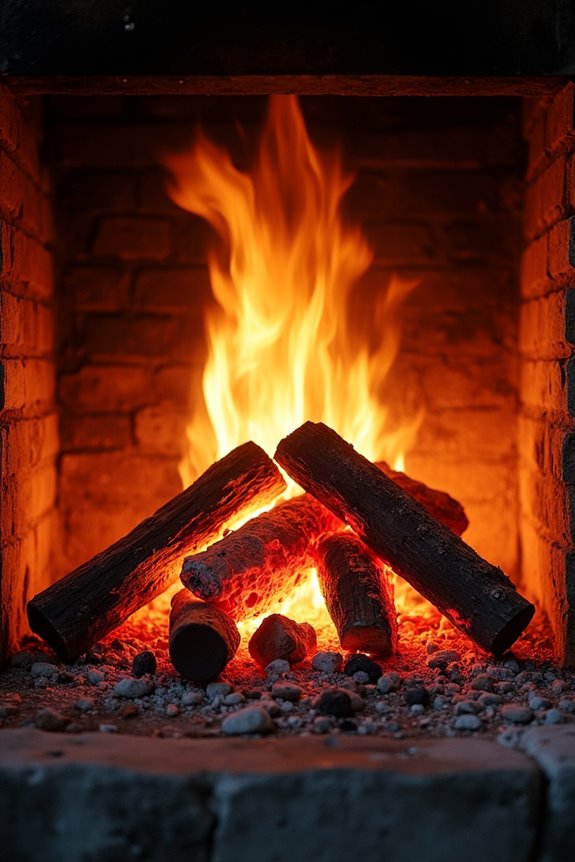
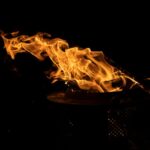
Just how hot does that cozy fire actually burn? You’d be surprised! Wood-burning fireplaces reach internal fireplace temperatures between 1,000°F and 1,500°F, though real-world conditions typically hover around 600°F to 1,200°F. The heat output you feel depends heavily on wood moisture, type, and airflow control.
Here’s what matters: the hottest zone sits inside the firebox itself. Your chimney flue runs considerably cooler—usually 200°F to 500°F. Why? Heat escapes upward naturally.
Now, here’s the catch. Non-EPA-certified fireplaces waste roughly 90% of heat straight up the chimney! That’s frustrating. EPA-certified stoves? They’re game-changers, keeping substantially more warmth in your room. Gas fireplaces offer different advantages—lower flame temperatures but more consistent, controllable heat output throughout your home.
Understanding these temperatures helps you maximize comfort and efficiency!
Firebox Temperatures in Wood-Burning Fireplaces
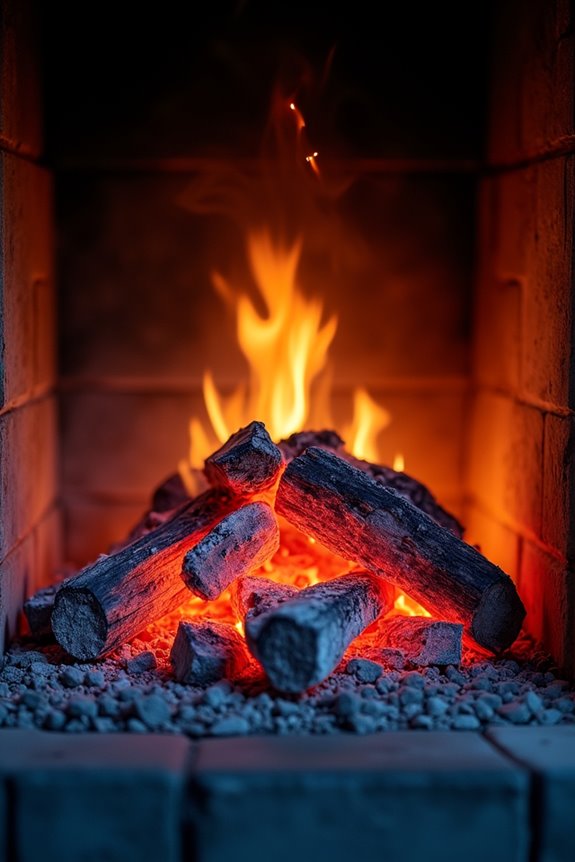
You’ve got to understand that your firebox is basically a controlled inferno reaching 600°F to 1,200°F during normal burns, and that’s where the real magic happens for both heat output and safety! The temperature inside varies wildly depending on your wood type (seasoned hardwoods like oak crush it compared to softwoods) and how much air you’re feeding the flames—burn it hot and clean at 1,100°F to 1,500°F, or starve it of oxygen and watch creosote buildup turn your chimney into a fire hazard. Knowing these internal temps helps you nail the sweet spot between cozy warmth and preventing dangerous exterior surface heat that could ignite nearby materials.
Internal Combustion Temperatures
Ever wondered what’s actually happening inside your fireplace when flames are dancing away? Your firebox temperature typically ranges from 600°F to 1,200°F during normal operation. Here’s the exciting part: when you burn seasoned hardwoods like oak or maple at higher rates, you’re pushing those temperatures toward 1,100°F to 1,500°F! That’s hot enough for seriously clean combustion.
But here’s where moisture content matters. If your wood’s too wet or green, your firebox temperature drops significantly. Lower temps mean creosote buildup—a real problem. You’ll want properly seasoned wood with low moisture content for optimal performance.
Think of it this way: the right wood plus good airflow equals maximum heat and efficiency. You’re not just building a fire; you’re mastering the science of combustion!
Safety and Heat Distribution
So here’s the thing about those blazing 1,100°F to 1,500°F firebox temperatures—they’re incredible for combustion, but they don’t automatically mean your living room’s going to turn into a sauna!
Here’s why: massive heat distribution challenges exist. Your firebox temperature shoots sky-high, yet substantial energy escapes up the chimney. That’s just physics working against you.
EPA-certified stoves solve this puzzle beautifully. They trap internal heat better while keeping exterior surfaces safer—genius engineering! You’re getting serious room warmth without scorched furniture or singed eyebrows.
Think of it this way: firebox temperature and actual heat distribution are totally different animals. A roaring fire looks amazing, but radiant heat and convective warmth depend on your stove’s design and ventilation setup.
Want maximum comfort? Choose certified equipment. Your family stays warm and safe. That’s the sweet spot!
Chimney Flue Temperatures and Heat Loss
What’s happening inside your chimney right now? Your flue temperature sits between 200°F and 500°F—hot enough to push smoke out but cooler than your firebox. Here’s the thing: understanding this temperature matters because it directly affects heat loss and safety.
Your flue temperature between 200°F and 500°F directly impacts heat loss and safety—understanding this matters.
Why flue temperature matters:
- Stronger draft keeps temperatures higher, improving exhaust efficiency
- Low temperatures cause smoke to creep back into your room
- High temps risk damaging chimney materials
- Complete combustion reduces creosote buildup significantly
- Proper damper settings maintain ideal flue temperature ranges
Think of your chimney as your fireplace’s lungs. When they’re working right, heat escapes efficiently while harmful gases exit safely. Regular cleaning keeps everything flowing smoothly, preventing heat loss and protecting your home. You’ve got this!
How to Check Your Fireplace’s Draft and Ventilation
You can assess your draft strength by observing smoke behavior and measuring flue temperatures with an infrared thermometer—aim for that 200–500°F sweet spot during operation. Next, you’ll want to inspect your chimney visually (or hire a professional with specialized cameras) to spot blockages, creosote buildup, or structural issues that kill your updraft. Finally, optimize airflow by cleaning debris, adjusting your damper opening, and ensuring fresh air can reach your firebox without letting heat escape unnecessarily!
Draft Strength Assessment Methods
How would you like to know if your fireplace is breathing properly? You can assess draft strength and chimney draw using several straightforward methods:
Assessment Techniques:
- Observe flame behavior—steady flames indicate healthy draft strength
- Use incense sticks or fog machines to visualize smoke movement patterns
- Measure flue temperature with an infrared thermometer for safety verification
- Perform a smoke test by lighting a match near the fireplace opening
- Consider professional manometer testing for precise pressure measurements
Watch your flames dance! Steady, upward movement means your chimney draw’s working beautifully. Flickering or smoking backward? That’s your signal something needs attention. A quick incense stick test shows whether smoke travels up smoothly or hesitates. You’re essentially checking if your fireplace breathes like it should. Simple observations tell you plenty about what’s happening inside that chimney!
Chimney Inspection and Cleaning
Once you’ve confirmed your fireplace’s got good draft strength, it’s time to look inside that chimney itself—because even the best airflow can’t overcome a clogged flue! Annual inspections reveal creosote buildup, blockages, and connection issues that sabotage performance. You’ll want to schedule professional cleaning when you notice persistent smoke, soot around the cap, or that telltale creosote accumulation during inspection. Here’s the thing: creosote is flammable stuff that builds up from burning wood. Think of it like your chimney’s enemy! Regular cleaning reduces fire risk significantly and restores your draft to peak efficiency. Signs you need immediate action? Down-drafted fires or smoke pouring into your room. Don’t ignore these warnings—your safety depends on keeping that flue clear and functioning perfectly!
Airflow Optimization Techniques
What’s the secret to a fireplace that actually heats your room instead of just looking pretty? It’s all about mastering your chimney draft and airflow!
You want consistent, balanced ventilation—not too strong, not too weak. Here’s how you’ll optimize it:
- Check your damper position; it should open fully during fires
- Install a chimney cap to prevent downdrafts from wind and rain
- Keep your flue properly sized for your firebox dimensions
- Clean creosote buildup annually to maintain clear airflow
- Avoid blocking vents with furniture or heavy curtains
When your chimney draft works correctly, heat stays in your living space instead of escaping up the chimney. Test your airflow by holding a lit match near the damper—smoke should pull upward smoothly. You’ll notice warmer rooms and steadier flames immediately!
Wood Type’s Impact on Fire Temperature and Burn Time
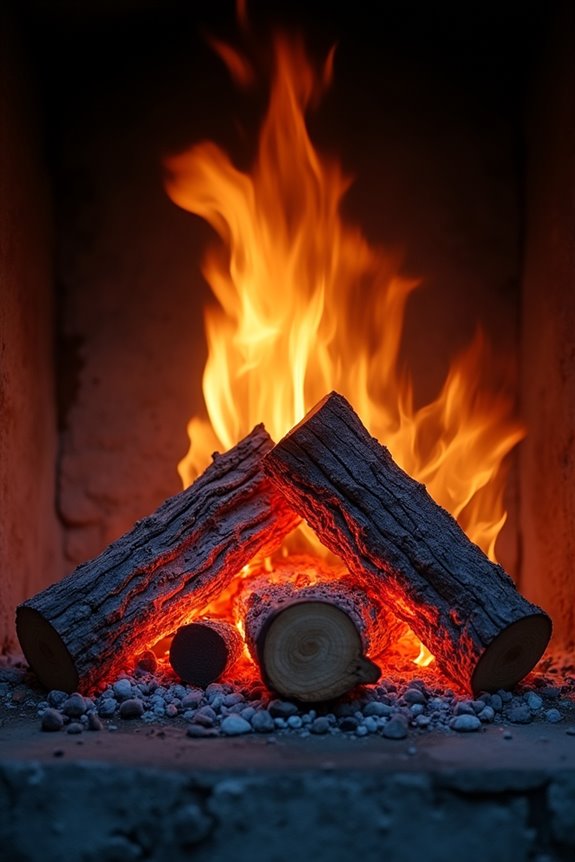
Ever notice how some firewood seems to burn way better than others? That’s because wood type seriously matters! Hardwood like oak and maple burns hotter and longer than softwoods such as pine. You’ll get way more sustained heat—that’s the real game-changer for your fireplace experience.
But here’s the thing: seasoned wood with low moisture content? That’s your secret weapon. Freshly cut wood won’t cooperate. Seasoned wood burns hotter, more efficiently, and produces higher BTU output per burn. Think of it like this: denser hardwoods pack more energy into every log.
The result? Your firebox reaches 1,100°F to 1,500°F with quality wood. You’re not just building ambiance—you’re creating genuine, reliable warmth that’ll make your space feel genuinely cozy!
Airflow and Draft: The Keys to Controlling Temperature
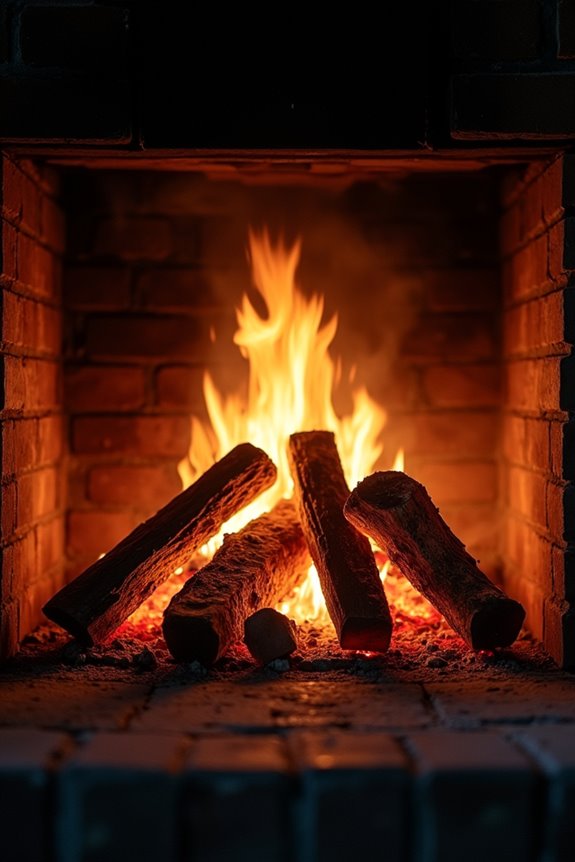
You’ve probably noticed that controlling your fireplace temperature isn’t just about the wood you burn—it’s really about managing the air flowing through your firebox and up the chimney! Think of it like this: adequate oxygen feeds your flames to reach those impressive 1,100°F to 1,500°F temperatures, while your chimney draft either whisks that heat away or lets it linger in your room, depending on whether it’s too strong or too weak. By adjusting your damper and front air inlets, you’re basically holding the power to dial your fireplace’s heat output up or down—which is why understanding airflow and draft is genuinely the game-changer for getting the warmth you want.
Oxygen Supply and Combustion
your fireplace’s temperature isn’t just about how much wood you throw in—it’s really about how much air feeds that fire. Oxygen and combustion are inseparable partners in creating those impressive flames and heat you’re after.
When you’ve got adequate oxygen supply, complete combustion happens. That means hotter temperatures and way more efficient heat output. But here’s the catch—too little air actually cools your fire down and cuts your heat production markedly.
Think of it like this:
- Plenty of oxygen = Complete combustion and maximum temperatures
- Restricted airflow = Incomplete combustion and cooler fires
- Poor ventilation = Creosote buildup and lower firebox temperatures
- Good air inlets = Stable, efficient burns
- Blocked vents = Wasted fuel and frustration
You’re controlling your fireplace’s performance through airflow management!
Chimney Draft Strength Impact
Have you ever noticed how some fireplaces roar with heat while others seem to waste most of their warmth? That’s your chimney draft at work! Your chimney draft is basically the airflow pulling smoke upward, and it’s absolutely crucial to your heat output.
Here’s the thing: too strong a draft pushes valuable heat straight up the chimney, leaving your room chilly despite a blazing fire. Too weak, and smoke backs up while combustion suffers. You want that sweet spot—steady, consistent airflow that keeps your firebox hot and your room warm.
| Draft Strength | Room Temperature | Heat Output | Smoke | Creosote |
|---|---|---|---|---|
| Too Strong | Cooler | Poor | Minimal | Low |
| Ideal | Warm | Excellent | Controlled | Minimal |
| Too Weak | Variable | Reduced | Heavy | High |
| Inconsistent | Swinging | Unreliable | Erratic | Problematic |
| Properly Adjusted | Comfortable | Optimal | Clean | Reduced |
Clean your chimney regularly and adjust your damper carefully. You’ll notice the difference immediately!
Temperature Control Through Ventilation
Now that we’ve looked at how draft strength shapes your fireplace’s performance, it’s time to understand the real power player: controlling temperature through smart ventilation!
You’ve got more control than you think. By adjusting your damper, you’re effectively controlling airflow—the oxygen your fire needs to burn efficiently. More air means hotter flames and better heat output. Less air? Your fire smolders, producing less warmth.
Here’s what makes the difference:
- Damper position directly influences burn rate and flame height
- Chimney draft pulls heat efficiently when properly balanced
- Clean flue passages maintain stable temperatures (200°F–500°F range)
- Seasoned wood burns steadily with consistent airflow
- Avoiding overloads prevents combustion instability
Think of it like breathing—your fireplace needs oxygen to thrive. You’re not just watching flames; you’re managing your home’s comfort!
Wood vs. Gas Fireplaces: Which Gets Hotter?
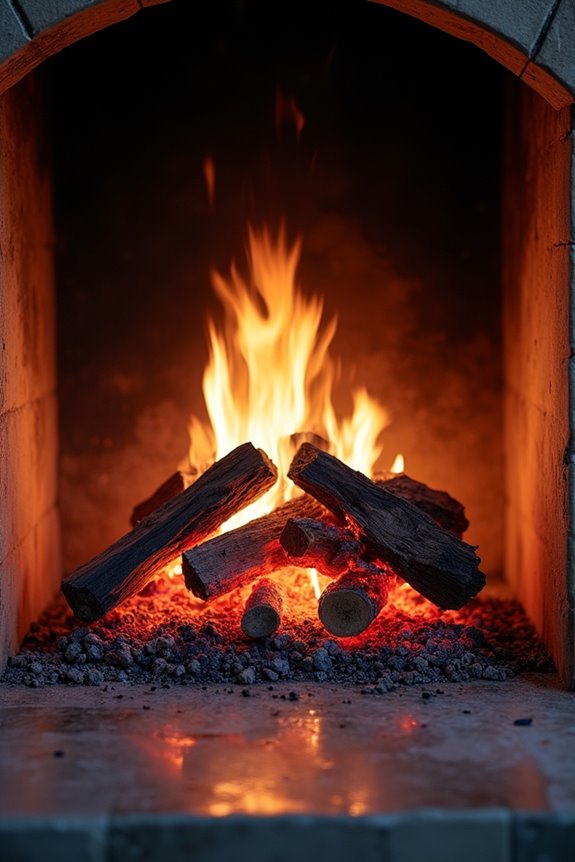
When you’re deciding between wood and gas fireplaces, the answer to “which burns hotter?” might surprise you!
Wood flames actually reach higher peak temperatures than gas—sometimes hitting 1,500°F! But here’s the thing: those impressive numbers don’t tell the whole story about keeping your home warm.
| Fireplace Type | Peak Temp | Room Heat | Efficiency |
|---|---|---|---|
| Wood | 1,100–1,500°F | Lower | 10% |
| Gas | 400–1,000°F | Higher | 70–90% |
Gas fireplaces deliver more consistent, usable warmth because they transfer heat efficiently throughout your space. Wood fires lose up to 90% of their heat straight up the chimney! You’re getting a wood fireplace for that cozy ambiance and authentic crackle, not necessarily maximum heating power. Gas gives you reliable, practical warmth when heating matters most. Which fits your needs better?
Why Gas Fireplaces Heat Rooms More Consistently
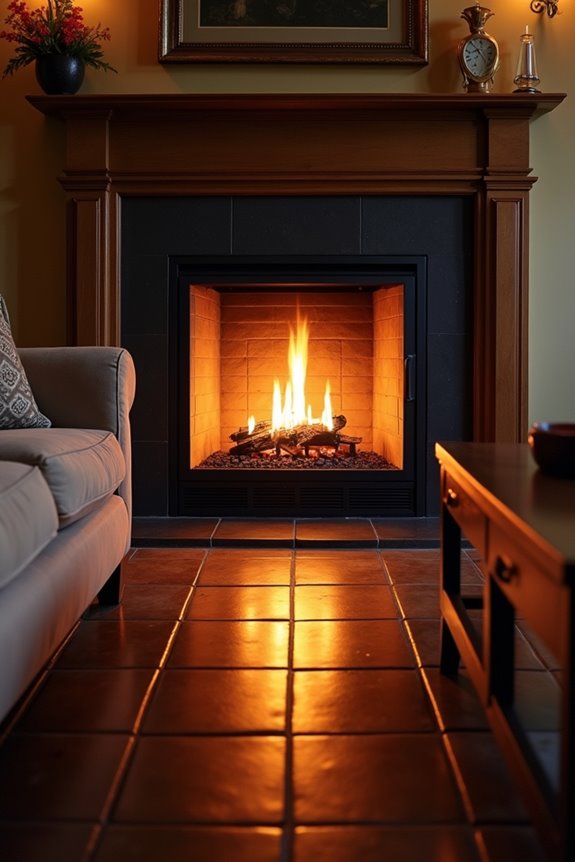
Ever notice how a wood fire seems to rage one moment and die down the next? Gas fireplaces eliminate that frustration. You control your gas heat output precisely, setting exact temperatures instead of hoping flames cooperate. Here’s why you’ll appreciate this consistency:
- Adjustable flame settings let you dial in perfect warmth
- Controlled burners prevent temperature swings throughout your room
- Ventless models trap heat inside instead of losing it up chimneys
- Predictable burn patterns mean steady comfort all evening
- No wood quality issues affecting your heating performance
Unlike wood’s unpredictable nature, gas delivers convection and radiant warmth evenly. You’re not babysitting flames or adding logs constantly. Your fireplace simply maintains the temperature you’ve chosen, keeping your space cozy and comfortable. That’s the belonging experience you deserve—reliable warmth without the guesswork!
Open Hearths vs. Sealed Stoves: Efficiency Compared
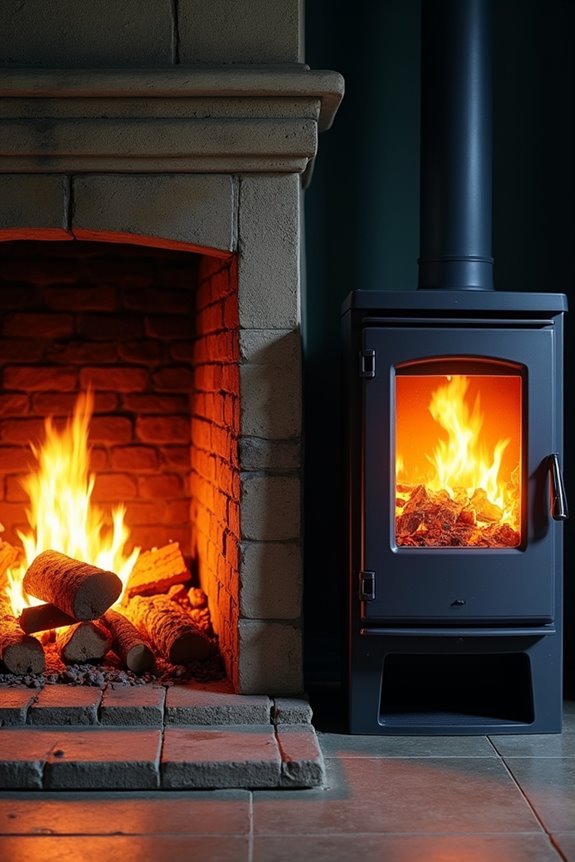
Have you ever felt the warmth from a traditional fireplace and wondered where all that heat actually goes? Here’s the truth: open hearths lose about 90% of their heat straight up the chimney! That’s massive heat loss compared to sealed EPA-certified stoves, which achieve around 70% efficiency.
Why the difference? Open fireplaces reach impressive peak temperatures—1,000 to 1,500°F—but most escapes as radiant heat. Sealed stoves, meanwhile, contain and distribute warmth through convection and their hot surfaces, delivering significantly more usable BTUs to your living space.
You’ll also notice sealed stoves maintain consistent room temperatures with lower exterior surfaces, while open hearths demand careful maintenance to prevent creosote buildup and draft problems. When you’re choosing between them, consider this: sealed stoves simply work smarter, not harder!
Can Your Fireplace Overheat a Room?
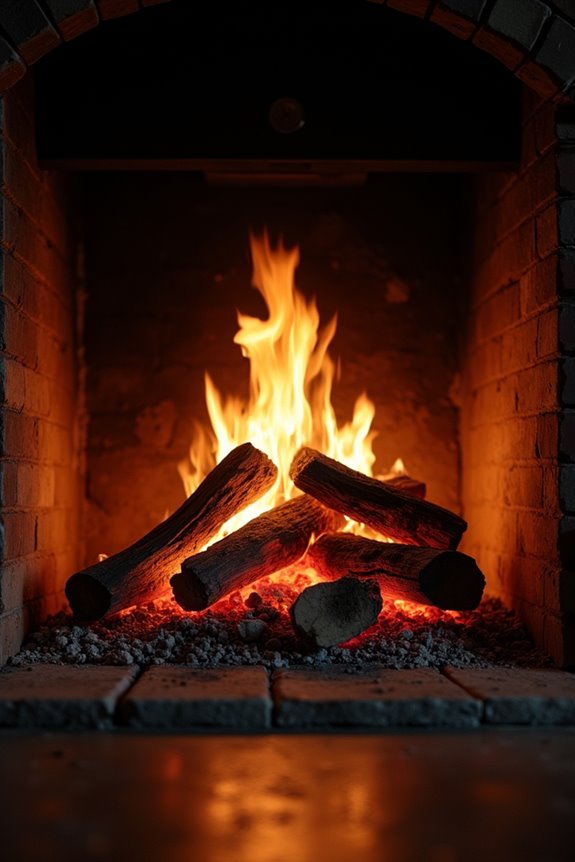
So, is it actually possible for your fireplace to make a room too hot? Absolutely! You can experience overheating if your fireplace is oversized for your space or runs at high intensity too long. Here’s what you should know:
- Large fireplaces in small rooms cause uneven heat distribution
- Open wood fireplaces waste roughly 90% of heat up the chimney
- EPA-certified stoves and inserts perform far more efficiently
- High-intensity fires create dangerous temperature spikes
- Proper sizing prevents overheating problems
The good news? You’ve got control! Use dampers to regulate airflow, maintain good draft, and run ceiling fans to circulate warmth evenly. These simple steps keep your space comfortable without dangerous overheating. Install CO detectors and maintain proper clearances for safety. With smart management, your fireplace becomes the cozy focal point you actually want!
Monitor Fireplace Temperature With a Stove Pipe Thermometer
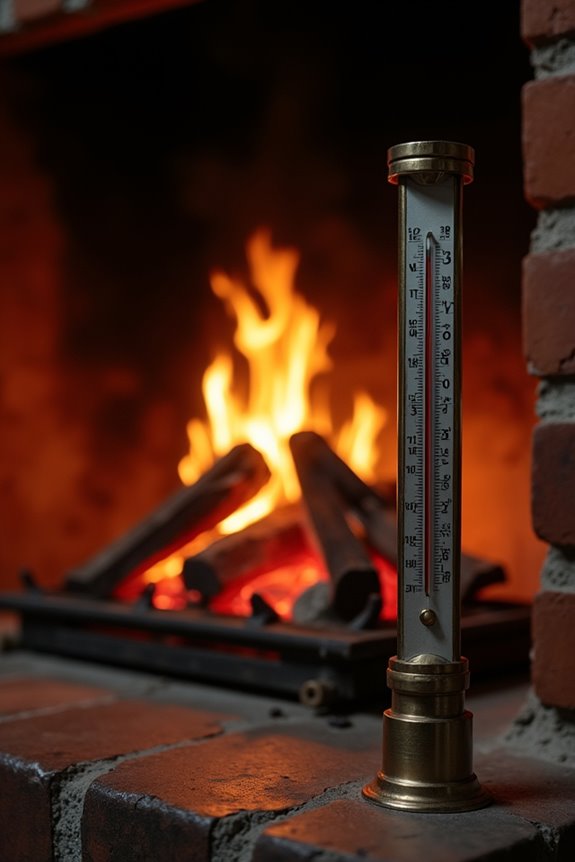
You’ll want to grab a stove pipe thermometer—it’s honestly one of the best investments I’ve made for my fireplace—because monitoring those flue temperatures (ideally between 400°F and 900°F depending on your stove design) helps you nail the perfect balance of safety and efficiency. Picking the right thermometer and learning how to read it correctly means you can adjust your airflow and wood load on the fly, keeping creosote buildup at bay while preventing any dangerous temperature spikes. Let’s break down why this simple tool matters so much, which thermometer works best for your setup, and how you’ll actually use those readings to keep everything running smoothly!
Why Temperature Monitoring Matters
Ever wonder why your fireplace seems to work great one day and struggles the next? Temperature monitoring matters more than you’d think! Using a stove pipe thermometer keeps you connected to what’s happening inside your chimney. When flue temperatures drop below 400°F, creosote buildup accelerates dangerously. Too high—above 650°F—and you risk chimney damage. Here’s why you’ll want to stay informed:
- Prevents dangerous creosote accumulation in your flue
- Catches efficiency problems before they worsen
- Guides your air inlet and damper adjustments
- Protects your chimney from excessive heat stress
- Ensures consistent, safe heat delivery to your home
Real-time readings give you control! You’re not guessing anymore. That stove pipe thermometer becomes your friendly guide, helping you maintain the sweet spot where combustion runs smoothly and your fireplace delivers steady warmth all season long!
Choosing the Right Thermometer
What makes one stove pipe thermometer better than another? You’ll want a model that reads flue gas temperatures accurately between 400°F and 900°F. Look for thermometers with easy-to-read faces—digital displays or large analog dials work great! Here’s what matters: durable construction, clear markings, and quick response times.
Consider magnetic stove pipe thermometers. They stick directly to your chimney, requiring zero installation hassle. You’re joining countless wood stove enthusiasts who swear by this simple tool!
Choose one that monitors the temperature range your stove actually needs. Most modern stoves perform best around 400°F to 650°F on top, so pick accordingly. Quality matters here—don’t skimp on cheap models that give inaccurate readings. Your investment pays off through better efficiency and safer operation!
Reading and Interpreting Results
Once that thermometer’s stuck to your stove pipe, here’s the real question: what’re you actually looking at?
You’re monitoring two critical zones. Your firebox temperature should hover around 1,100°F–1,500°F for optimal burning. But here’s what matters most: your flue temperature, which should stay between 300°F–900°F depending on your stove design.
What those numbers mean:
- Below 300°F = smoke backs up, creosote builds fast
- 300°F–500°F = the sweet spot for most wood stoves
- 500°F–900°F = still safe, but watch for chimney damage
- Above 900°F = you’re pushing dangerous territory
- Unstable readings = moisture in your wood or airflow problems
See those fluctuations? That’s your stove talking! Seasoned wood and proper airflow create stable, efficient temperatures you can trust.
High-Temperature Hazards and Burn Prevention
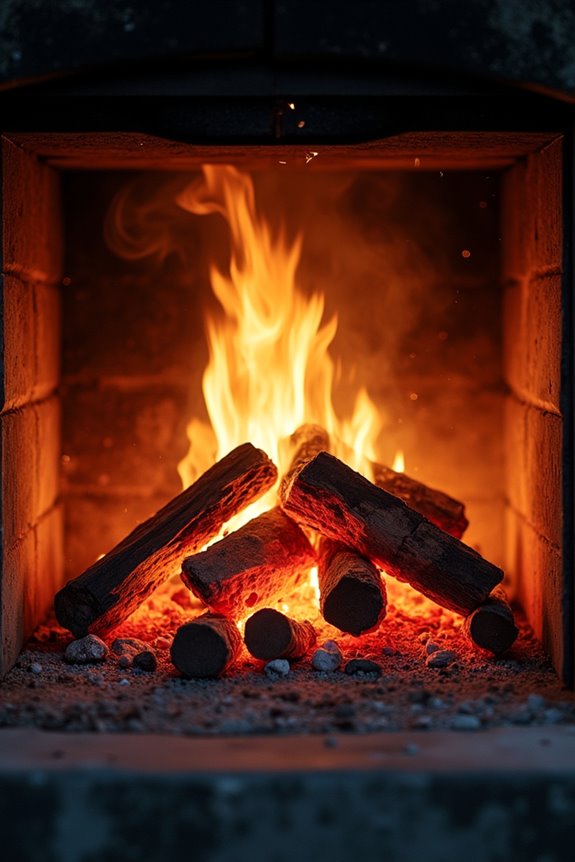
Just how serious can those fireplace temperatures get? Pretty serious! Your fireplace’s exterior surfaces reach 300°F to 600°F—hot enough to cause nasty burn hazards, especially around curious kids and pets. That’s why clearances matter tremendously.
Fireplace exteriors reach 300°F to 600°F—hot enough to cause serious burn hazards, especially for kids and pets.
Here’s what you’re really protecting against:
Creosote buildup accelerates in flue temperatures between 400°F to 900°F. This sticky substance ignites easily, threatening your chimney and home. Regular cleaning prevents disaster.
Burn prevention essentials:
- Install proper screens or doors
- Maintain 3-foot clearances from combustibles
- Use CO detectors religiously
- Ensure adequate ventilation
Think of these precautions as your fireplace’s safety team. They’re not optional—they’re absolutely necessary! Respect the heat, follow guidelines, and you’ll enjoy cozy fires safely. Your family’s protection depends on taking these steps seriously.
Creosote Buildup: Causes, Prevention, and Cleanup
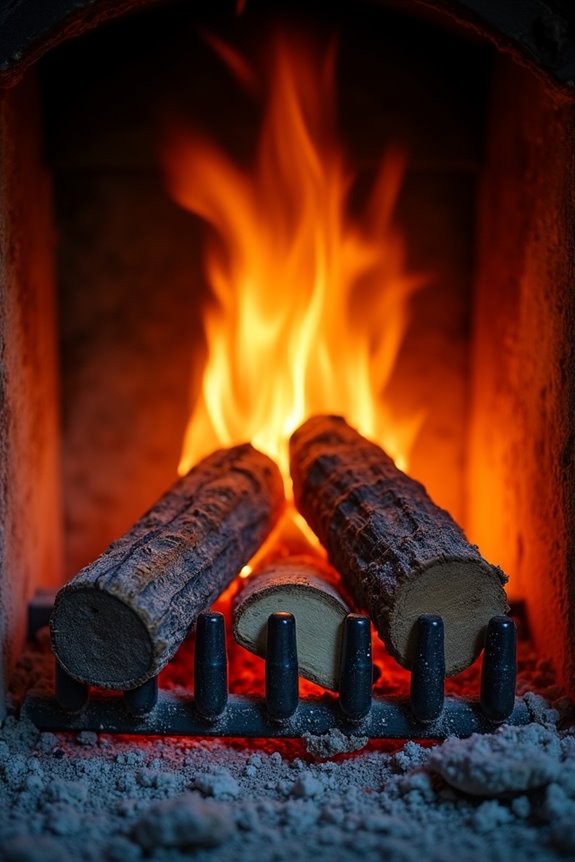
Why does creosote form, and how can you stop it? When wood smoke cools on your chimney’s inner walls, creosote—a sticky, dangerous substance—builds up. You’ll recognize three forms: gaseous tar, dry powder, and thick sludge. Each type tells you something about your combustion quality and draft strength.
Here’s how you prevent creosote buildup:
- Burn seasoned, dry hardwoods exclusively
- Maintain flue temperatures above 450°F consistently
- Ensure strong, steady draft throughout burning
- Schedule chimney cleaning after burning 1–3 cords annually
- Inspect chimneys regularly for buildup beyond a few millimeters
Good combustion creates cleaner fires. You’ll reduce creosote risks—including dangerous chimney fires—by following these straightforward practices. Consistent maintenance keeps your fireplace safer and more efficient!
Fireplace Maintenance for Safe, Efficient Operation
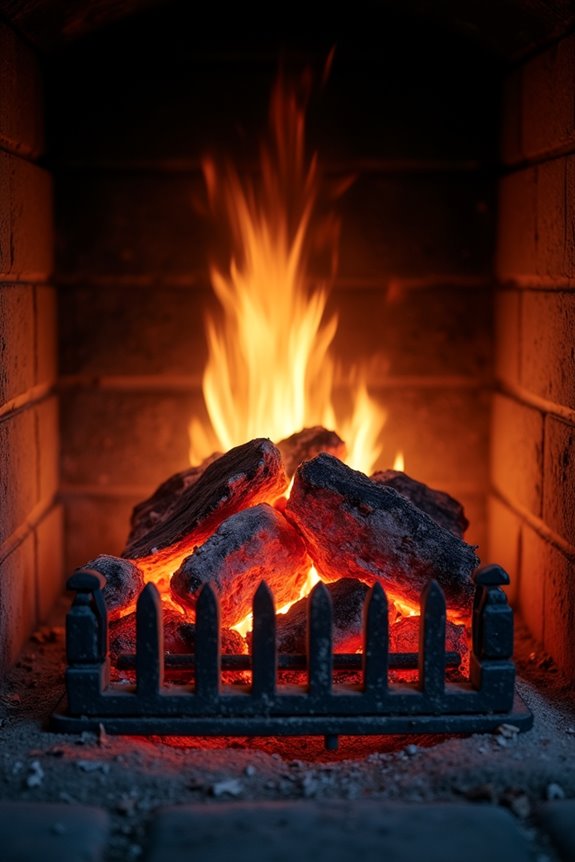
How do you keep your fireplace running safely without stress? Start by installing CO detectors—they’re your silent guardians against carbon monoxide risks. You’ll want to monitor temperatures with a stove thermometer, aiming for 400–650°F on top and 1,000–1,500°F inside for wood-burning models. Here’s the thing: regular chimney cleaning prevents creosote buildup, which can actually ignite! For heat safety with open fireplaces, maintain proper clearances around your unit and use protective screens. EPA-certified wood stoves beat traditional fireplaces hands down—they’re way more efficient. Never burn trash or treated wood; those release hazardous fumes. Ensure good ventilation throughout your home. These simple steps keep your fireplace operating smoothly while protecting your family. You’ve got this!
Choosing the Right Fireplace Type for Your Home
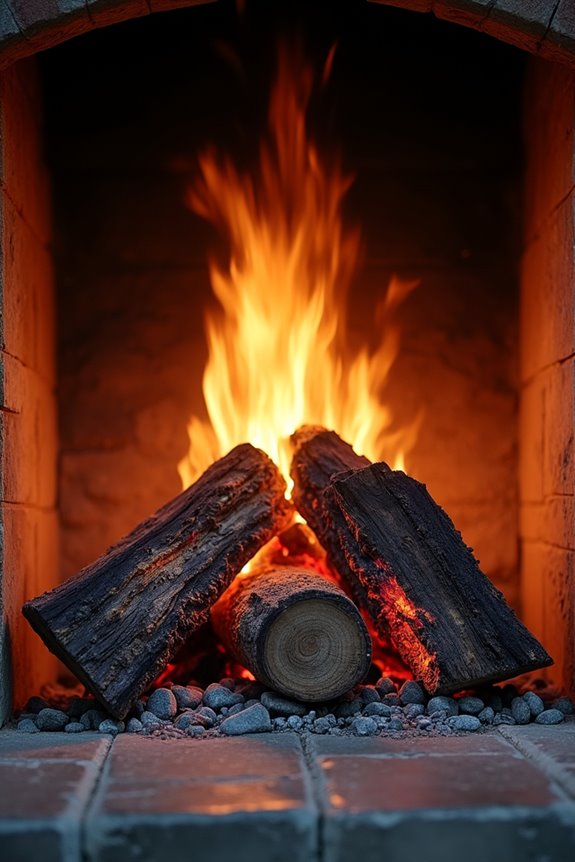
When you’re standing in front of two different fireplaces—one crackling with wood, one glowing with gas—you’ve got to know what you’re really getting.
Here’s the real talk: wood burns hotter, reaching 1,100 to 1,500°F in the firebox. Gas fireplaces? They max out around 400 to 1,000°F. But—and this matters—much of that wood heat escapes up your chimney in an open hearth, wasting energy you’re paying for.
Consider what matters most to you:
- Heat production needs for your space size
- Consistency you want day-to-day
- Maintenance time you’re willing to invest
- Efficiency ratings like EPA certification
- Venting concerns and heat loss tolerance
EPA-certified wood stoves beat older models substantially. Gas gives you reliable, controllable warmth without the mess. You’ll find your perfect match by honestly assessing your priorities!