Electric fireplaces generate genuine, usable heat through heating coils, ceramic plates, or infrared elements—not just pretty flames! You’re looking at real warmth: 120V models produce around 4,600–5,600 BTUs, warming roughly 400 square feet, while 240V hardwired units reach up to 8,900 BTUs for larger spaces. The flame effect? That’s purely ambiance you can control separately from the heat. These units deliver actual comfort comparable to space heaters, making them fantastic for zone heating in bedrooms or living rooms. Want to know which setup matches your specific room size?
How Electric Fireplaces Generate Heat
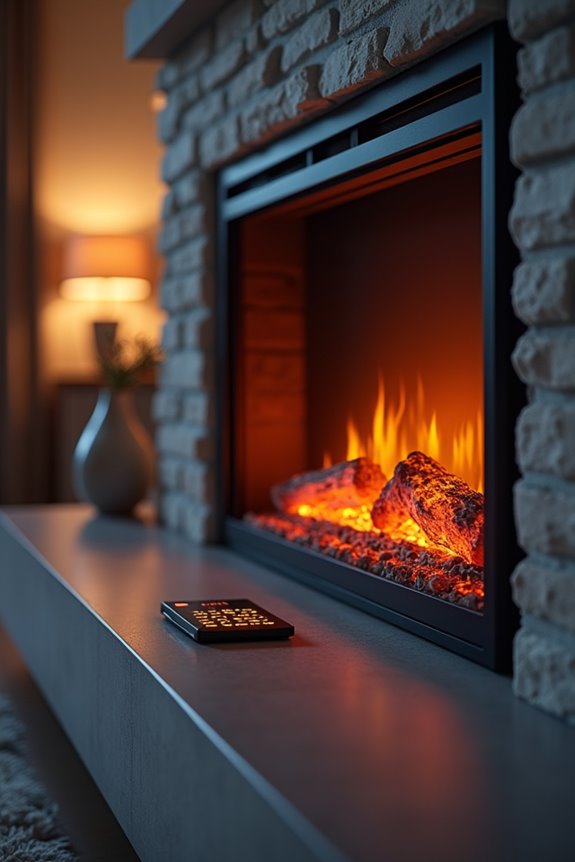
Have you ever wondered what actually makes an electric fireplace warm up your room? It’s simpler than you’d think! Inside, a heating element—usually a metal coil or ceramic plate—generates heat when electricity powers it. A fan then circulates that warmed air throughout your space using convection, which is just a fancy way of saying hot air moves around naturally.
Here’s the magic: your electric heating works by warming air directly. Standard 120V models produce about 4,600–5,600 BTUs (that’s roughly 1,500 watts), comfortably heating 400–500 square feet. Want more power? Hardwired 240V units reach 8,900 BTUs, warming up to 1,000 square feet!
Some models even use ceramic plates for radiant warmth, creating that cozy fireplace feeling you crave without traditional logs.
How Many BTUs Do You Need for Your Room?
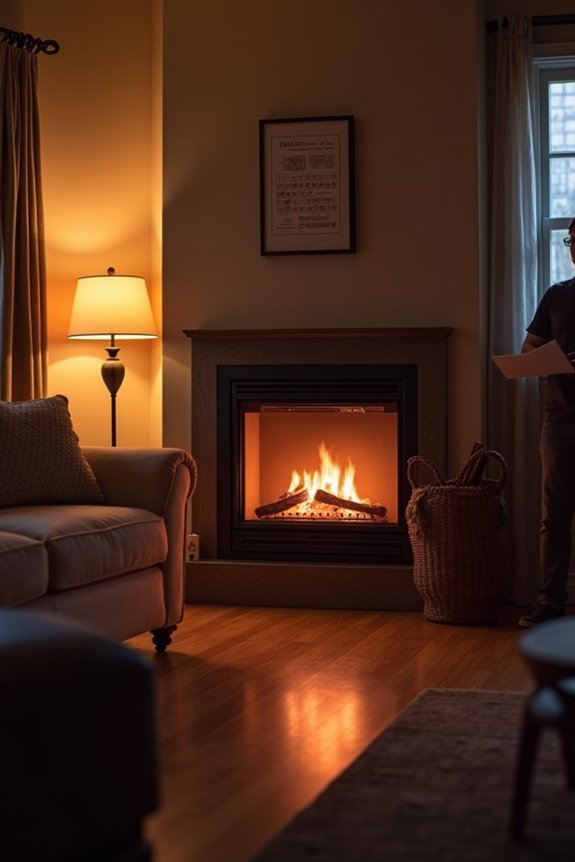
To pick the right electric fireplace for your space, you’ll want to first measure your room in square feet—it’s easier than it sounds! Once you know whether you’re heating a cozy 300-square-foot bedroom or a sprawling 1,000-square-foot living room, you can match that size to the BTU output you’ll actually need, since a 120V unit won’t cut it for larger spaces the way a 240V hardwired model will.
Calculating Your Room Size
What’s the secret to picking an electric fireplace that’ll actually warm your space without wasting energy? Start by measuring your room’s length and width, then multiply them together. You’ve got your square footage!
Here’s the magic formula: multiply your square feet by 20 BTUs. A cozy 150-square-foot bedroom? You’re looking at 3,000 BTUs. A spacious 500-square-foot living room? Aim for 10,000 BTUs.
But wait—insulation matters! Well-insulated rooms need fewer BTUs since heat stays put. Drafty spaces? You’ll need more power.
Pro tip: pair your calculations with a thermostat-based system. It’ll automatically match your fireplace’s output to actual room conditions, keeping you comfortable without guesswork. You’ve totally got this!
Matching BTU Output Needs
Now that you’ve calculated your room’s square footage, it’s time to match it with an electric fireplace that’ll actually deliver the heat you need.
Here’s the friendly math: aim for roughly 5,000 BTUs per 400 square feet. For smaller rooms around 400–500 sq ft, a standard 120V model works great, pumping out 4,600–5,600 BTUs. Got a larger or open-concept space? You’ll want a 240V hardwired unit—these beasts reach up to 10,000 BTUs and warm about 1,000 square feet!
Don’t overlook wattage either. Higher-wattage models (up to 1,500 W) increase your heating capacity dramatically, though your electricity bill’ll reflect that extra power.
Match your room size to the right heating capacity, and you’ll finally enjoy cozy warmth without guessing games!
120V vs. 240V: What’s the Difference?
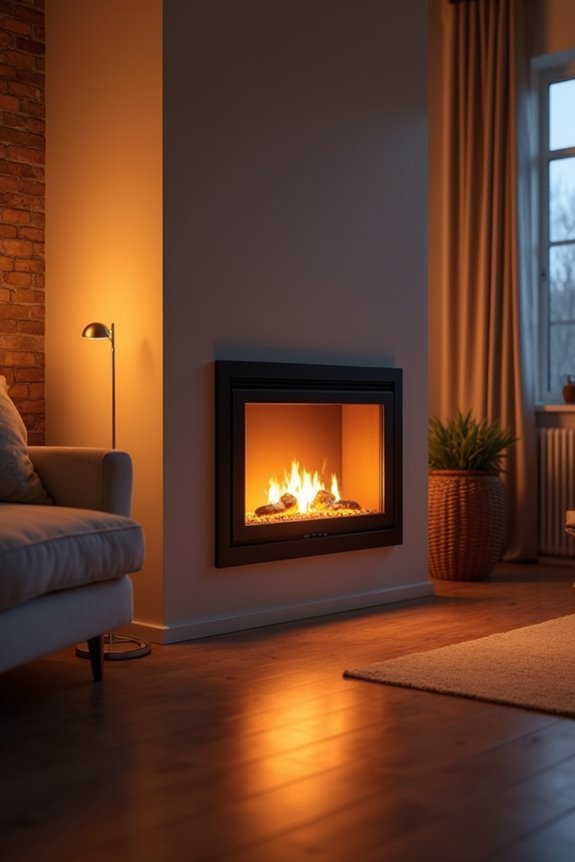
You’ve got two main electrical options when picking an electric fireplace, and honestly, the choice comes down to your room size and what your home can handle! A standard 120V unit plugs into any outlet and maxes out around 1,500 watts—perfect for smaller spaces like bedrooms—while a hardwired 240V model demands professional installation but delivers way more power, reaching up to 8,900 BTUs to warm those sprawling living rooms. The real difference isn’t fancy flame effects; it’s that higher voltage means more heat output, so matching your fireplace’s electrical specs to your room’s square footage keeps you cozy without overspending on installation or energy.
Voltage And Heat Output
Ever wonder why some electric fireplaces blast out serious heat while others feel more like a warm hug?
It all comes down to voltage and wattage! Here’s the deal: your 120V fireplace maxes out around 1,500 watts, producing roughly 5,000 BTUs. That’s cozy for about 400 square feet. But switch to a 240V hardwired model? You’re looking at 2,000 watts pumping out 6,800–8,900 BTUs instead!
Think of it this way: higher voltage means more electrical current flowing through, which translates directly into greater heat output. You’re not just getting a warmer room—you’re getting real heating power for larger spaces, up to 1,000 square feet.
Want serious warmth? 240V’s your answer. Need something portable? 120V works great for smaller areas.
Installation Requirements And Capacity
So, what’s actually involved in getting one of these fireplaces up and running? The installation requirements differ based on voltage, and here’s what you need to know:
- 120V units plug into standard outlets—seriously, that’s it! You’ll get roughly 1,500 watts and 4,600–5,600 BTUs for spaces around 400 square feet.
- 240V models require dedicated circuits and professional wiring to your home’s 240V supply—a bigger commitment, but you’ll gain serious heating power!
- High-voltage setups deliver up to 10,000 BTUs, warming spaces near 1,000 square feet effortlessly.
- Supplemental versus primary heating determines which voltage suits your needs best.
Here’s the real deal: choose 120V for smaller rooms or supplemental warmth. Want primary heating for larger spaces? Go 240V! Your room size and insulation ultimately guide this decision.
Heat Coils vs. Ceramic Plates vs. Infrared: How Each Works
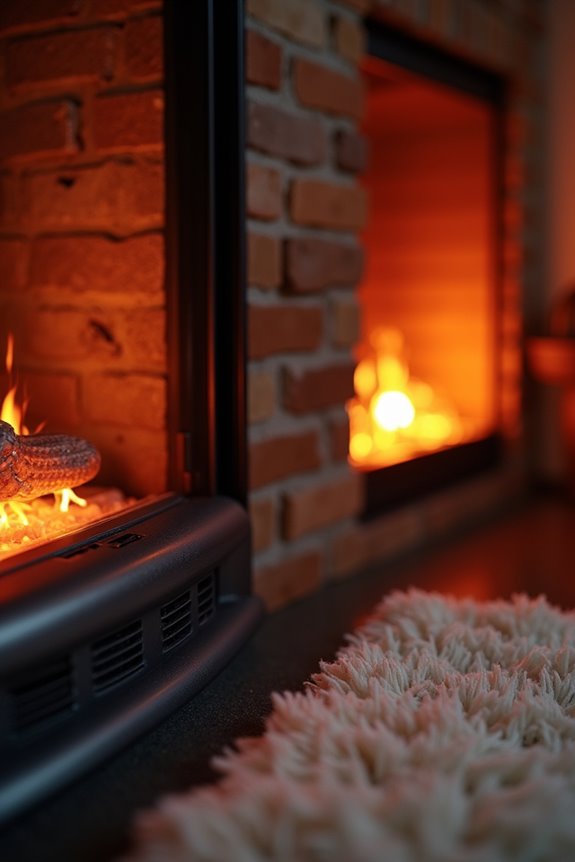
What’s actually happening inside your electric fireplace when you flip it on? Three main heating systems work together or separately to warm your space!
Heat coils use a built-in fan to push warm air throughout your room—think convection in action. Ceramic plates heat slower but emit radiant warmth directly to you and nearby objects, which feels incredibly cozy. Infrared heating? That’s the game-changer for larger spaces! It warms people and objects directly rather than just heating air, making it perfect for humid environments where traditional heating struggles.
Many modern units combine all three methods. You’ll get that immediate airflow comfort plus steady radiant warmth. It’s like having multiple heating strategies working simultaneously for maximum comfort and efficiency!
The Flame Creates Ambiance, Not Heat
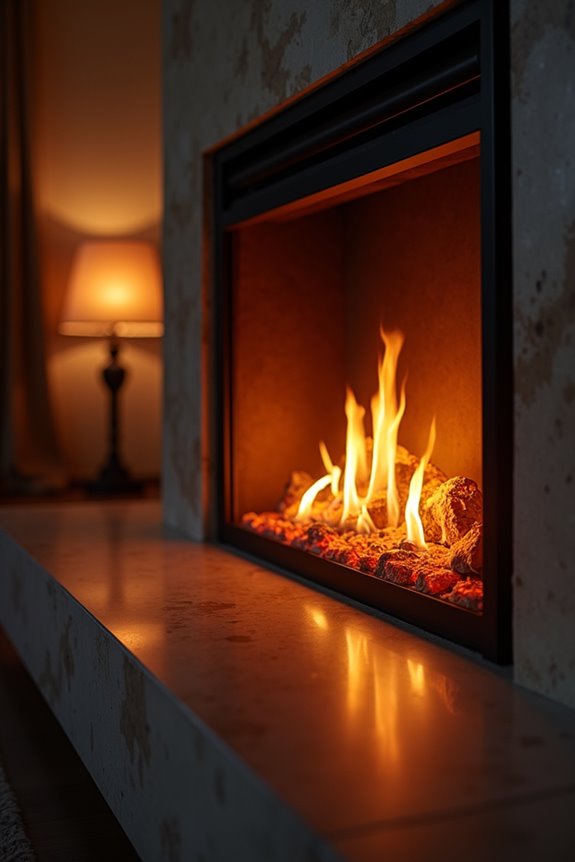
You’ve probably noticed that beautiful flickering flame in your electric fireplace—but here’s the thing: it’s all visual magic from LEDs, not actual heat production! The flame effect and the heating element are totally separate systems, which means you can enjoy that cozy ambiance in summer without cranking up the temperature. This setup gives you real flexibility—run the flames solo for mood and atmosphere while the actual warmth comes from your heat coils, ceramic plates, or infrared elements working independently behind the scenes.
Visual Appeal Without Warmth
Have you ever noticed how an electric fireplace’s dancing flames seem totally real—yet your room stays cool? That’s the magic of LED lights and mirrors creating stunning flame ambience without any heat output! You’re getting pure visual effect, and honestly, it’s brilliant.
Here’s what you can enjoy:
- Operate the flame ambiance independently from the heater
- Adjust brightness and color to match your mood
- Keep decorative flames on year-round, even in summer
- Create cozy atmosphere without warming your space
The flame effect becomes your room’s focal point, drawing everyone’s attention. You get that fireplace charm—the crackling visuals, the warm glow—without the actual warmth. Perfect for renters who want ambiance without permanent changes, or anyone seeking decorative appeal. Your electric fireplace gives you style on your terms!
Real Heat Comes Separately
So here’s the thing: those mesmerizing flames you’re admiring? They’re purely for show! The actual warmth comes from a completely separate electric heater tucked inside your unit. You control these independently, meaning you can enjoy beautiful ambiance without generating any heat—or crank up the BTUs for serious warmth while dimming those flames.
| Feature | Flame Only | Heat Only | Both Together |
|---|---|---|---|
| Ambiance | Yes | No | Yes |
| Warmth | No | Yes | Yes |
| Energy Use | Minimal | Higher | Maximum |
This separation gives you flexibility. Want cozy atmosphere without raising your electric bill? Run just the flames! Need serious warmth for winter? Boost that heater independently. You’re not locked into one experience—you’re designing exactly what works for your space and mood!
How Much Space Will Your Fireplace Actually Heat?
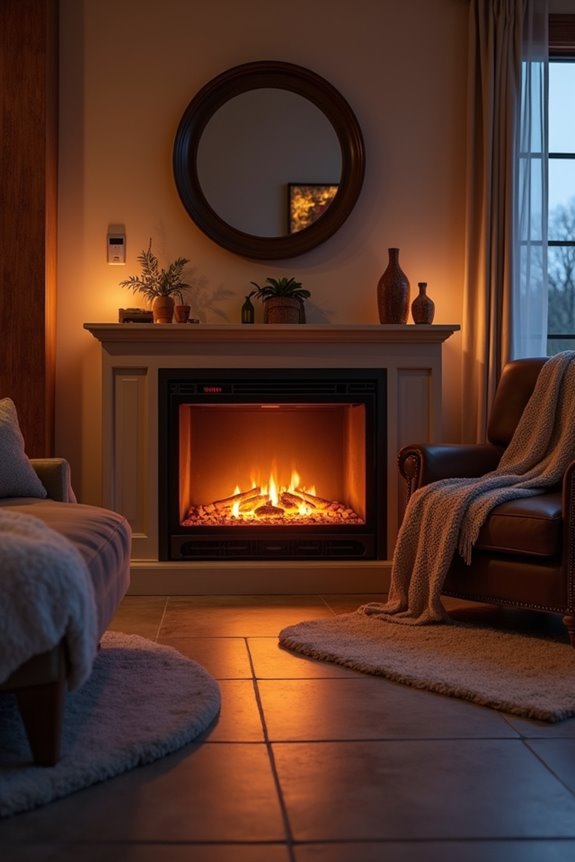
When you’re shopping for an electric fireplace, here’s the real question that matters: how many square feet can this thing actually warm?
Standard models deliver different heating capacities:
- 120V fireplaces reach about 5,000 BTUs, warming roughly 400 square feet
- 240V hardwired units hit 8,900 BTUs, heating 600–1,000 square feet
- Most units use around 1,500 watts at maximum heat output
- Actual room size depends on insulation, ceiling height, and drafts
Here’s the honest truth: these aren’t whole-house solutions. You’ll get the best results using them for zone heating in smaller to mid-sized rooms. Think bedrooms, offices, or cozy living spaces rather than sprawling open floors. Your room’s insulation matters tremendously. Better insulation? You’ll stretch that heating area further!
How to Control Heat Output and Temperature
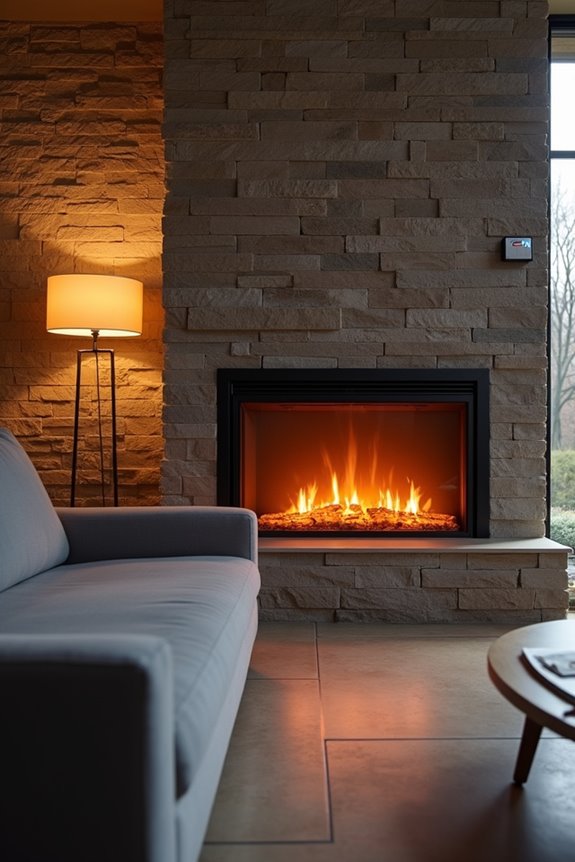
Want to dial in your comfort level without turning your room into a sauna? You’ve got options! Most electric heaters feature adjustable settings that let you control heat output precisely. You can dial down to lower wattage for gentle warmth or crank it up for maximum power. Think of it like adjusting your shower—find your sweet spot!
| Setting | Wattage | BTUs | Best For |
|---|---|---|---|
| Low | 750W | 2,300 BTUs | Light warmth |
| Medium | 1,000W | 3,400 BTUs | Moderate comfort |
| High | 1,500W | 5,100 BTUs | Maximum heat |
Here’s the cool part: many models let you operate the flame effect independently from heat. Want ambiance without warmth? Done! Need heat only? That works too! You’re totally in control of your comfort experience.
Safety Features That Keep Heat Contained
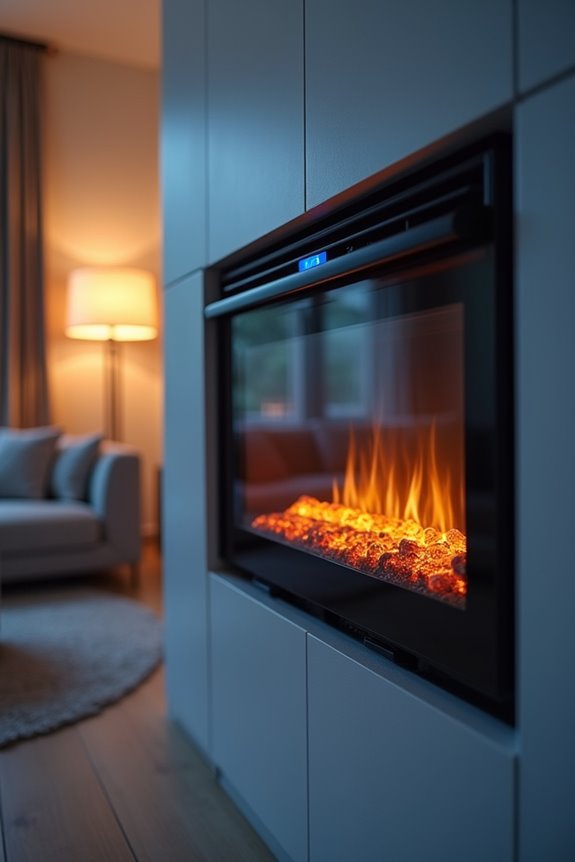
You’ll love how electric fireplaces prioritize your family’s safety with cool-to-touch exterior surfaces and glass fronts that stay safe to touch, even when the 1,000–2,000 watt heater’s running full blast! Automatic overheat protection systems shut everything down if internal temperatures climb too high—think of it as your fireplace’s built-in bodyguard. Plus, since there’s no combustion happening, you’re not dealing with carbon monoxide risks or emissions, which means you can let your kids and pets roam freely around the unit without worry.
Cool-To-Touch Exterior Surfaces
How’s this for peace of mind: you can run your electric fireplace at full heating power, and the outer casing won’t burn your hand!
Here’s what makes this possible:
- Insulated housings trap heat internally, preventing it from reaching exterior surfaces
- Internal heat management systems redirect warmth away from the glass front and outer panels
- Advanced engineering ensures safe contact temperatures even during active heating cycles
- Cool-to-touch design works across all styles—wall-mounted, freestanding, inserts, and built-in models
You’re getting genuine safety without sacrificing warmth. The glass front and panels stay touchable because manufacturers engineered them that way. This matters big-time if you’ve got kids or curious pets around. You can enjoy cozy ambiance without constantly worrying about accidental burns. That’s the kind of feature that lets you relax fully!
Automatic Overheat Protection Systems
Beyond that cool-to-touch exterior, electric fireplaces pack another impressive safety layer: automatic overheat protection systems that work like a guardian watching over your unit. You’ve got safety sensors embedded in the heating element and internal fan that constantly monitor temperatures. If things get too hot—think of it like your fireplace’s built-in smoke detector—an automatic shut-off kicks in immediately. This isn’t some delayed response; it happens fast! The system stops operation before dangerous heat buildup occurs, protecting both your fireplace and surrounding furniture. Most units require manual reset after cooling, giving you control over when they restart. You’re essentially getting professional-grade heat management without worrying about overheating risks. That’s genuinely reassuring when you’re enjoying cozy evenings!
Safe Operation For Families
What makes electric fireplaces genuinely family-friendly? You’ll appreciate how multiple safety features work together, keeping your household protected while enjoying cozy warmth.
Consider these essential protections:
- Cool-to-touch glass fronts prevent accidental burns when curious kids or pets get close
- Automatic overheat protection sensors shut everything down if temperatures climb dangerously high
- Independent heat and flame controls let you enjoy ambiance without actual heating
- Vent-free design eliminates harmful emissions that threaten indoor air quality
Here’s what makes the difference: you’re getting genuine warmth (up to 5,000 BTUs for standard units) without combustion risks. The safety features aren’t afterthoughts—they’re built-in protections that let you relax! You can honestly leave your electric fireplace running while managing household tasks, knowing overheat protection’s got your back. That’s real peace of mind for families who want both comfort and security.
Running Just the Flames, Just the Heat, or Both
One of the coolest features of electric fireplaces—and I mean this literally and figuratively—is their flexibility! You control everything. Want ambiance without warmth? Run just the flame effect. Craving cozy heat? Activate the heater independently. Most models let you do both simultaneously.
Here’s what you’re actually getting: 120V units deliver 500–1,500 watts, producing roughly 4,600–5,600 BTUs of heat output. Those 240V powerhouses? They’ll hit around 8,900 BTUs, seriously warming your space. A built-in fan distributes warmth when you activate both features together.
The thermostat control really shines here—you set your desired temperature, and the fireplace maintains it automatically. You’re not stuck choosing between flickering flames and toasty warmth. You get exactly what you need, when you need it. That’s genuine comfort meeting style!
Energy Consumption When Heating Is Active
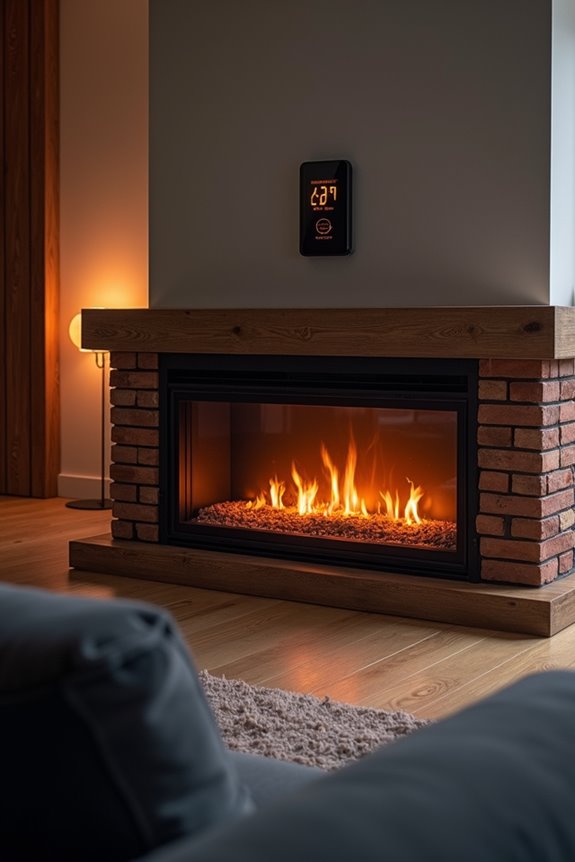
How much electricity does your electric fireplace actually guzzle when that heater kicks in? You’ll want to know this before your next bill arrives!
When heating’s active, here’s what you’re really dealing with:
- Most models draw 1,000 to 2,000 watts, averaging around 1,500 watts max
- Standard 110V units produce roughly 4,600–5,600 BTUs, warming 400 square feet
- Hardwired 240V models reach up to 10,000 BTUs for spaces up to 1,000 square feet
- Operating costs run about 20 cents hourly at $0.13 per kWh
The good news? Electric fireplaces boast incredible efficiency—they convert nearly all consumed electricity into heat with zero venting losses. That’s genuinely impressive compared to traditional fireplaces! You’re getting exactly what you pay for: straightforward, no-waste heating that keeps your space cozy without wasting precious energy.
Operating Cost Breakdown for Your Budget
So you’re wondering if running your electric fireplace will drain your bank account? Here’s the real deal: at maximum heat, you’re looking at roughly 20 cents per hour using standard electricity costs of $0.13/kWh. That’s totally manageable!
Use the cost formula to calculate your specific expenses: divide your wattage by 1,000, multiply by hours used, then multiply by your local kWh rate. Running 1,500 watts for two hours? You’re spending about 40 cents.
The best part? Higher wattage models deliver more BTUs—up to 8,900 in premium units—giving you superior warmth without astronomical bills. Plus, display-only mode uses just 10–12 watts, costing almost nothing. Your budget stays happy while you enjoy cozy heat!
Electric Fireplace Heat vs. Space Heaters: What’s the Difference?
Ever stood in front of an electric fireplace and wondered if you’re getting real heat or just pretty flames?
Ever wondered if an electric fireplace’s heat is real or just for show?
Here’s the honest truth: you’re getting both, and they’re genuinely different from space heaters! While both run around 1,500 watts, here’s what sets them apart:
- Heat delivery method – Electric fireplaces use fan-assisted coils or ceramic elements, while space heaters rely on radiant or convection heating
- BTUs of heat – A 1,500-watt electric fireplace heater produces roughly 5,100 BTU, warming 400–500 square feet
- Flame control – You can enjoy ambiance separately from the heat output
- Voltage options – Standard 120V models emit 4,000–5,000 BTU; 240V hardwired units reach 8,900 BTU for larger spaces
The real difference? Electric fireplace heaters deliver warmth plus visual comfort. Space heaters prioritize heating alone. Your choice depends on whether you value that cozy flame aesthetic alongside temperature control!
Electric Fireplaces as Supplemental vs. Primary Heat
Think of your electric fireplace like a cozy sweater—great for extra warmth, but you’ll still need your main heating system! Here’s the truth: electric fireplaces work best as supplemental heating, not your home’s primary heat source.
Standard 120V units deliver 4,000–5,000 BTUs, warming roughly 400 square feet. That’s perfect for zone heating in your bedroom or living room while you reduce electricity costs elsewhere. However, they can’t handle heating your entire house efficiently.
| Heating Type | BTU Output | Coverage | Best Use | Cost |
|---|---|---|---|---|
| 120V Standard | 4,000–5,000 | 400 sq ft | Single rooms | Lower |
| 240V Hardwired | 8,900 | 1,000 sq ft | Larger zones | Higher |
| Primary System | Varies | Whole home | Main heating | Essential |
Want the smartest approach? Combine your electric fireplace with your central heating for maximum comfort and savings!
What Are the Most Common Myths About Electric Fireplace Heat?
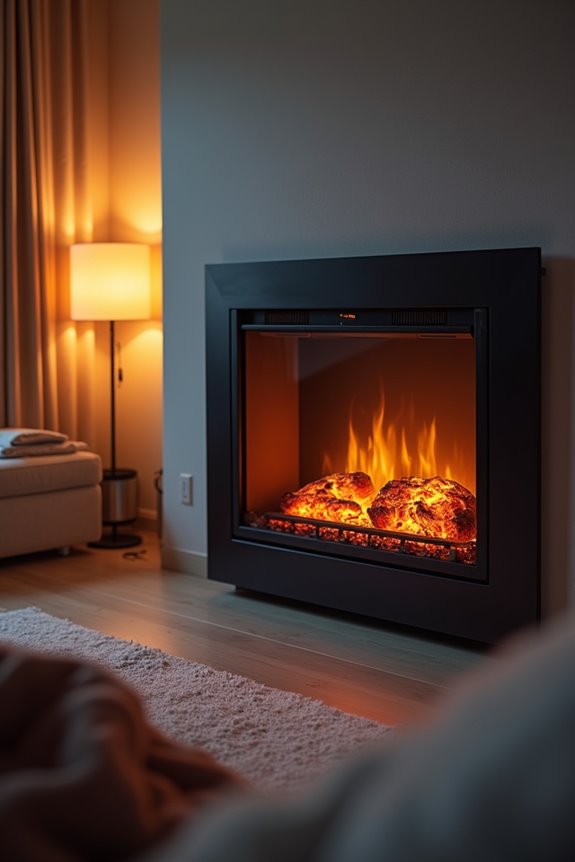
Now that you understand how electric fireplaces fit into your heating strategy, let’s bust some stubborn myths that keep people from getting the most out of these clever devices!
You’ve probably heard misconceptions that simply aren’t true:
- Heat output is weak – Many models deliver 5,000 BTU (about 1,500 watts) in 110V units, with 240V versions reaching 10,000 BTU!
- Flames are purely decorative – Actually, LED flame effects work alongside real electric heaters for actual warmth distribution.
- You can’t control heat separately – Wrong! Many units let you adjust heat settings independently from flame effects.
- They’re energy hogs – They convert nearly all electricity into heat with minimal standby draws.
These devices aren’t just pretty decorations. They’re genuinely effective heating solutions that deserve your consideration!
Matching Wattage to Your Room Size
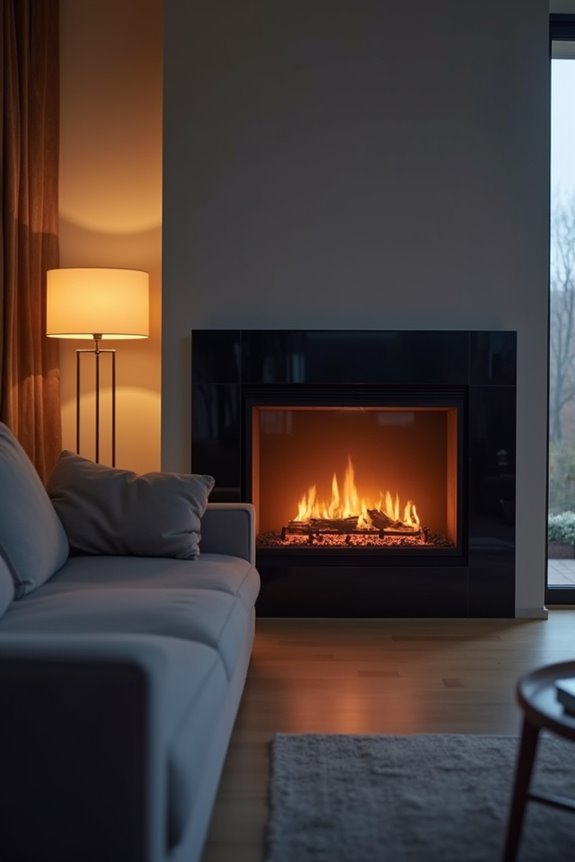
What’s the secret to getting actual warmth from your electric fireplace instead of just admiring pretty flames? It’s matching your wattage to your room size!
Here’s the formula: calculate your room’s square footage, then aim for roughly 8–10 BTUs per square foot. A 400-square-foot bedroom? You’ll want around 1,500 watts, which delivers approximately 4,600–5,000 BTUs. Got a sprawling 800-square-foot living room? Consider upgrading to a 240V hardwired model producing 8,900 BTUs for better heating coverage.
Think of wattage as your heating muscle. Higher wattage means more BTUs and wider room coverage—it’s that straightforward! Don’t settle for inadequate warmth. Match your fireplace’s power to your space, and you’ll actually feel the difference, creating that cozy atmosphere you’re seeking.