

A scratch kitchen builds every dish from whole ingredients—fresh vegetables, quality proteins, flour—giving you total control over what’s on each plate. You’re avoiding preservatives, boosting nutrition, and creating genuinely delicious food. Success means stocking seasonal produce, standardizing recipes with precise weights, training staff relentlessly, and honestly? Starting with a hybrid approach blending scratch components with strategic premade bases. It’s harder than it looks—labor costs hit 60-70% of your budget—but when you nail consistency through tasting protocols and quality audits, you’ve built something special. There’s plenty more to discover about scaling without sacrificing that authentic taste.
What Exactly Is a Scratch Kitchen?
Ever wonder what makes some restaurant meals taste incredibly fresh while others feel a bit… artificial?
That’s scratch cooking! You’re building dishes from base ingredients—flour, fresh vegetables, quality proteins—instead of relying on frozen meals or canned goods. It’s genuinely different.
In a scratch kitchen, you’re in-house, creating everything from start to finish. No preservatives. No shortcuts. Just real food made with locally sourced produce whenever possible. Seasonal tomatoes become your pasta sauce. Farm-fresh eggs transform into fluffy omelets.
Here’s what you’ll notice: vibrant colors, incredible flavors, superior nutrition. When you skip additives and preservatives, your food tastes how food should taste.
Think of it as cooking like your grandmother did—intentionally, thoughtfully, deliciously. You’re joining a community of people who genuinely care about what they eat and serve others.
Why Fresh Ingredients Matter for Scratch Kitchens
So you’ve got the concept of scratch cooking down—now let’s talk about why the ingredients you choose matter just as much as the technique you’re using. When you commit to fresh ingredients in your scratch kitchen, you’re not just cooking differently—you’re building trust with everyone you serve.
Here’s what fresh really delivers:
- You know exactly what’s inside every dish, dodging preservatives and mystery additives that hide in frozen or canned items
- Your food tastes noticeably better because fresh fruits, vegetables, and herbs retain their natural flavors and vibrant colors
- Nutrition stays intact through in-house preparation instead of sitting in storage for months
Local sourcing and farm-to-table practices amplify these benefits. You’re supporting your community while serving meals bursting with seasonal produce. That’s healthy eating with purpose!
Health Benefits of Running a Scratch Kitchen
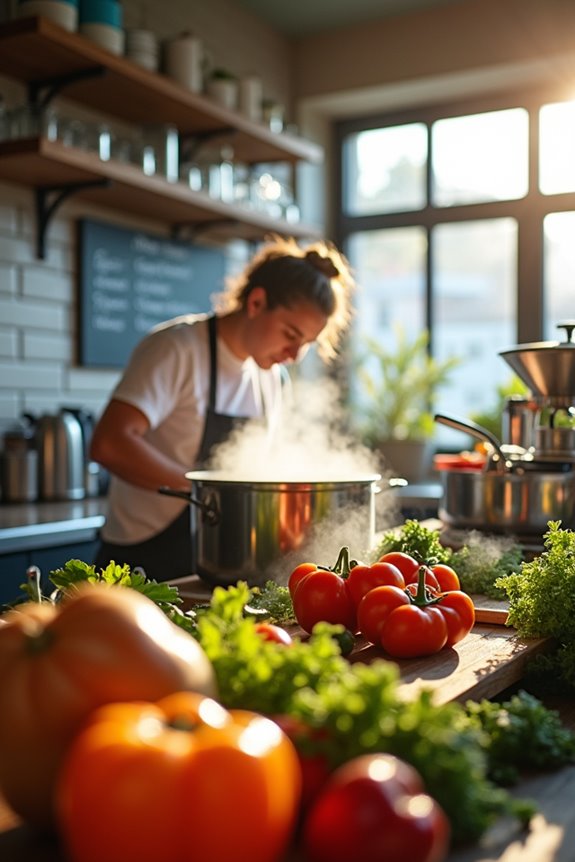
Why should you care about what goes into your kitchen? When you run a scratch kitchen using fresh ingredients, you’re actively protecting your health and your customers’ wellbeing. You’ll skip the hidden chemicals and preservatives lurking in frozen or canned foods—that’s huge!
Whole foods from farm-to-table sources deliver genuine nutrition your body actually recognizes. You’re getting real vitamins, minerals, and fiber without the additives. Transparency becomes your superpower; you’ll know exactly what’s on every plate.
Here’s the truth: scratch cooking transforms nutrition from confusing label-reading into simple clarity. Fresh ingredients mean better energy, clearer skin, and stronger immunity for everyone eating your food. You’re not just serving meals; you’re building a community that values real, honest nourishment!
Stocking a Scratch Kitchen With the Right Fresh Ingredients
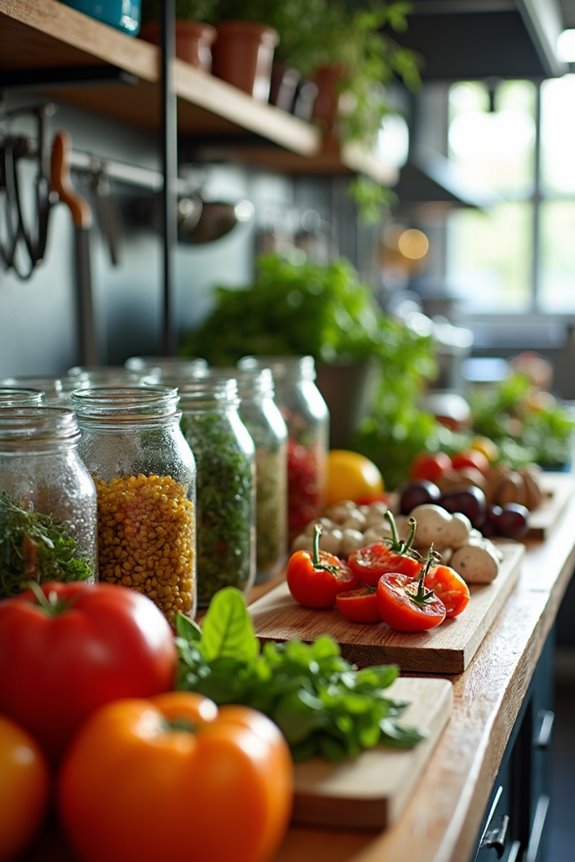
Fresh ingredients—they’re the beating heart of any scratch kitchen, and getting them right transforms everything you cook. You’ll want to build relationships with local farmers and suppliers who share your commitment to quality. Here’s your foundation:
- Visit farmers markets weekly to discover seasonal produce bursting with flavor and nutrients your customers crave
- Establish farm-to-table partnerships that guarantee freshness while supporting your community
- Plan menus around what’s in season rather than forcing ingredients out of their prime
Stock your scratch kitchen with whole vegetables, quality proteins, and fresh herbs for in-house preparation. Skip frozen items and canned goods entirely. This approach demands more effort than shortcuts, sure, but you’ll taste the difference immediately. Your commitment to local sourcing builds trust with diners who want to know exactly what they’re eating. That’s the scratch kitchen advantage!
What Equipment Do You Need to Start?

commercial knives, cutting boards, and industrial mixers that handle real quantities. Your storage demands walk-in refrigerators and blast chillers to keep raw ingredients, ready-to-cook components, and finished dishes organized safely. For emulsification and sauces, invest in immersion blenders and food processors that create genuine dressings from scratch. Batch cook capabilities matter tremendously—steam kettles and braising pans let you produce meals efficiently. Don’t skip hot and cold holding units either. Finally, implement HACCP-compliant workflows with color-coded utensils, proper dishwashing capacity, and labeled prep stations. Yes, it’s an investment. But you’re joining a community of operators who refuse shortcuts and pride themselves on real quality.
How Do You Standardize Recipes and Prep?

You’ll want to nail down your recipes with precise weights and step-by-step procedures so every cook produces identical dishes—whether it’s your first day or your hundredth! Setting up clear documentation (think detailed recipe cards with allergen info, portion sizes, and plating specs) takes the guesswork out of training and keeps quality consistent across all your shifts. Regular taste panels and line checks let you catch problems early and adjust recipes only when you’ve got solid data backing the change, not just hunches!
Documentation And Consistency Standards
Whether you’re running a single location or managing multiple scratch kitchens, standardization’s your secret weapon for consistency—and honestly, it’s easier than you’d think!
You’ll create detailed recipe cards with exact weights, cooking times, and portion yields. Include version control and dates so everyone knows they’re using the current standard. Here’s what makes this work:
- Digital or printed cards keep your team aligned across every shift
- Line audits catch deviations before they become habits
- Chef sign-offs build accountability and pride in quality
Document everything: equipment needs, temperature controls, rejection criteria. Schedule regular audits to verify adherence. When your cooks follow the same blueprint, you’re not just reducing mistakes—you’re creating the belonging that comes from working together toward excellence.
Staff Training And Execution
Once your team’s got solid recipe standards in place, the real magic happens during training—because even the best documentation doesn’t mean much if your cooks aren’t executing it the same way every single time.
Here’s your winning formula: pair new kitchen staff with onboarding mentors who’ve mastered your standardized recipes. Use visual SOP sheets—those step-by-step instruction guides—posted right at stations for quick reference during rush. Structure training milestones: hands-on practice first, then supervised service, finally certification checks.
Why does this matter? You’re building consistency and confidence simultaneously! Regular performance feedback through waste metrics and adherence tracking keeps everyone accountable. Schedule monthly refreshers because muscle memory fades. Your team becomes your competitive edge when they’re trained right and truly invested in excellence.
Quality Control And Measurement
Precision is everything in a scratch kitchen—it’s what separates a restaurant where every plate tastes identical from one where customers wonder what changed. You’ll standardize recipes through exact measurements and documented procedures. Your mise en place lists become your safety net, ensuring prep consistency.
Implement these quality control practices:
- Temperature control checks verify doneness and food safety simultaneously
- Sensory benchmarks (taste, texture, appearance) anchor standards everyone recognizes
- Regular audits and plate checks catch deviations before they reach customers
Pre-portioning ingredients with clear labels eliminates guesswork during rushes. You’re building trust with your team and guests. Conduct shadow tests where cooks follow recipes exactly, then compare results. Document everything. This systematic approach transforms your kitchen into a reliable machine where excellence becomes habit, not accident!
How Do You Train Staff to Execute Consistently?
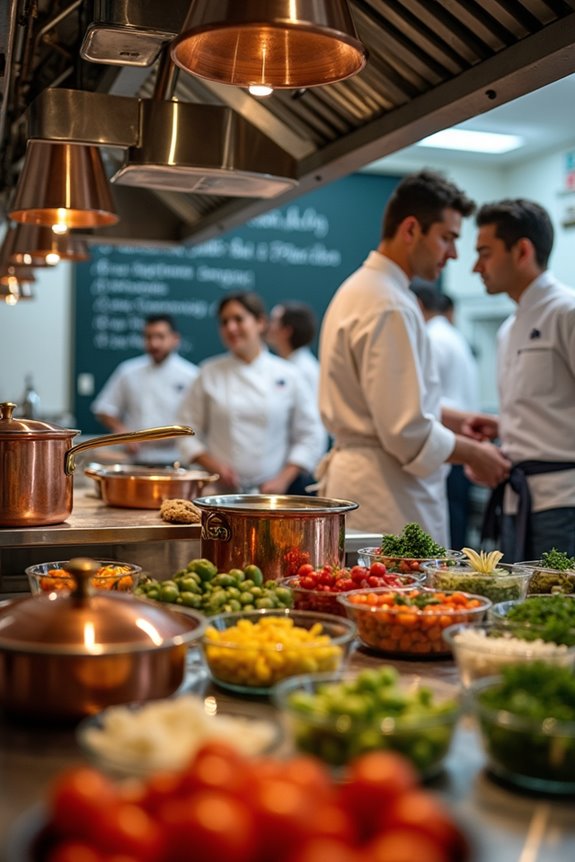
How do you get your whole team—across every shift and every station—to make the same delicious scratch meal the exact same way, every single time?
Centralized training! You’ll invest in detailed menus and inspiration guides that standardize everything: flavor profiles, portion sizes, even plating techniques. Think of it like giving your team a recipe roadmap they can’t miss.
Hire chefs with restaurant backgrounds to lead these sessions. They’ll teach your staff the *why* behind each technique, not just the *how*. When people understand scratch cooking fundamentals, consistency follows naturally.
Build these training sessions into your regular schedule. Make them interactive. Show measurements. Demonstrate proper knife skills. Let everyone practice together.
Your team becomes your scratch kitchen’s backbone. When they’re trained well, you’re not just serving food—you’re delivering the same quality experience, every single shift.
Speed-Scratch Strategies: Where to Use Shortcuts Without Losing Quality
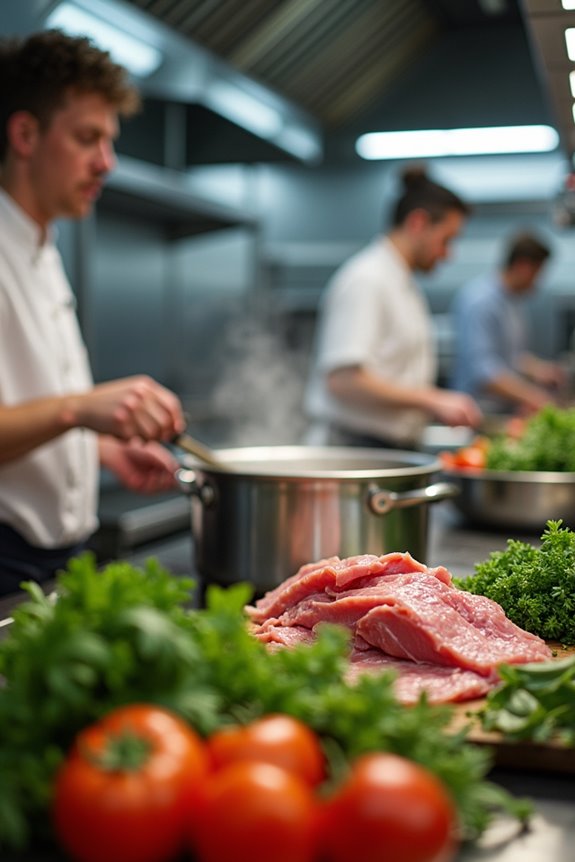
You don’t have to choose between speed and quality—you can actually have both! The real trick is knowing *where* to take strategic shortcuts: you’ll want to use premium semi-prepared ingredients like Lamb Weston Hand Cut Fries or Unilever mayo bases for components that need consistency, while you save your scratch energy for the final cooking steps and signature touches that make your food taste genuinely homemade. Think of it like building with LEGO—you’re using quality premade blocks to construct faster, but you’re still the one designing and finishing the masterpiece!
Balancing Quality With Efficiency
What if you could keep that authentic scratch-kitchen taste while cutting your prep time in half?
That’s speed-scratch in action. You’re strategically blending premade components with fresh cooking techniques. Think using Unilever’s mayo base for house-made dipping sauces—you skip emulsification risk and labor-intensive whisking while maintaining signature flavor.
Here’s what makes this approach work:
- Selective shortcuts reduce kitchen stress without sacrificing quality
- Labor savings free your team for creative, high-impact tasks
- Flavor preservation keeps customers returning for authenticity
The trick? Identify which elements truly need scratch preparation and where base products genuinely enhance efficiency. You’re not abandoning scratch-kitchen principles; you’re working smarter. Staged rollouts let you gradually increase scratch-made components without overwhelming staff or budgets. This balanced approach transforms how you operate—delivering restaurant-quality food while respecting your team’s capacity and your bottom line.
Strategic Ingredient Shortcuts
Speed-scratch strategies let you build a foundation of quality without grinding your team to exhaustion. You’re not abandoning scratch cooking—you’re working smarter. A mayo base like Unilever’s becomes your secret weapon, transforming into five different dipping sauces with signature spices and finishing touches. This approach delivers genuine labor savings while maintaining that coveted house-made taste your customers expect.
| Component | Time Saved | Quality Impact |
|---|---|---|
| Mayo base | 40 minutes | Excellent |
| McCormick blends | 25 minutes | Excellent |
| Pre-prepped vegetables | 30 minutes | Very good |
| Small-batch finishing | 15 minutes | Outstanding |
You’ll minimize emulsification errors through proper training and process control. Speed-scratch isn’t cutting corners—it’s strategic ingredient shortcuts that preserve your brand’s authenticity while freeing your team for what matters most: creating memorable dishes.
Scratch Kitchen Costs: Managing Expenses Without Cutting Corners

Running a true scratch kitchen—where everything’s made from raw ingredients—can drain your budget faster than a leaky faucet if you’re not careful. You don’t need to choose between quality and affordability, though. Here’s your playbook:
Running a true scratch kitchen can drain your budget faster than a leaky faucet if you’re not careful.
- Use partially prepared components (like pre-cut vegetables) to slash back-of-house labor without sacrificing that homemade taste
- Implement standardized processes so your team works efficiently, reducing waste and prep time
- Blend base components with scratch-made elements to maintain your scratch kitchen feeling while boosting margins
Partner with suppliers like Lamb Weston or McCormick for integrated solutions supporting cost savings. You’re essentially creating strategic shortcuts—using semi-prepared ingredients that mimic scratch flavors. This hybrid approach lets you stay true to your values while keeping expenses realistic. You’ve got this!
Scratch Kitchen Food Safety: Daily Protocols That Work
How do you keep your customers safe while celebrating everything homemade? In your scratch kitchen, daily protocols make all the difference!
Start with proper sanitation—sanitize surfaces, cutting boards, and knives between tasks. This prevents cross-contamination and keeps harmful bacteria away. Wash produce thoroughly, then refrigerate at 40°F or below.
Next, use thermometers! Check all cooked proteins reach safe temperatures. Label and date everything, implementing first-in/first-out rotation so older ingredients get used first.
Handwashing isn’t optional—it’s essential! Wash hands before handling food, after touching anything questionable.
Your daily protocols protect your reputation and customers’ health. These practices aren’t burdensome; they’re your competitive advantage! You’re building trust with every meal you serve. That’s what scratch kitchens are all about—quality and care combined.
Build Your Signature Dish: Fresh Ingredients That Tell Your Story
What makes customers return again and again? Your scratch kitchen’s signature dish!
You’re building more than food—you’re crafting your restaurant’s identity. Start with fresh ingredients sourced from local farms, then transform them using house-made components that showcase your kitchen’s soul. This farm-to-table approach tells customers you genuinely care.
Your signature dish should feature:
- A distinctive preparation method that sets you apart from competitors
- Seasonal produce that changes with nature’s rhythm, keeping regulars excited
- House-made sauces and fresh herbs you’ve lovingly prepared from scratch
Consider a heritage tomato salad with house-made burrata and basil oil. That’s your story! The vibrant colors create visual appeal, while the local sourcing reinforces your commitment to quality. Remember, signature dishes aren’t complicated—they’re intentional. Your customers aren’t just eating; they’re joining your scratch kitchen community.
Maintaining Quality in Your Scratch Kitchen: The Tasting Protocol
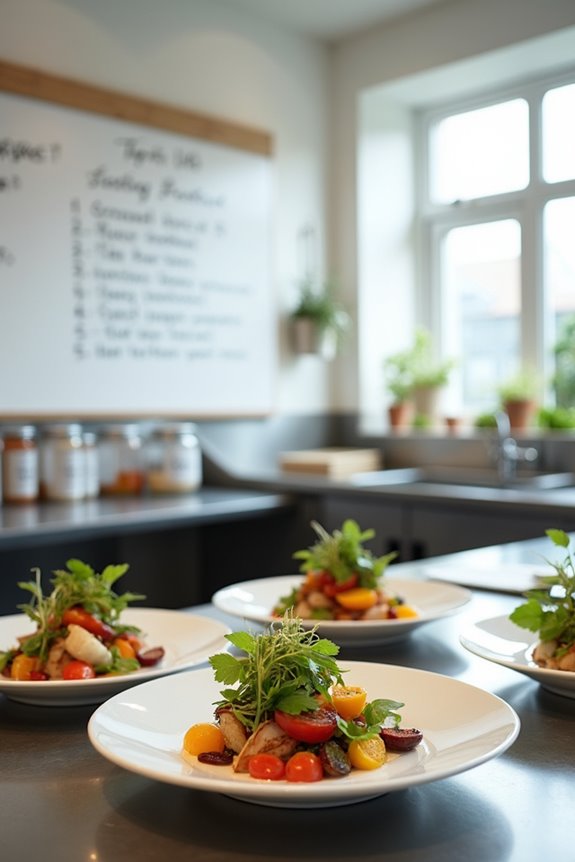
Once you’ve nailed that signature dish, you’ve got to keep it tasting exactly the same every single time—and that’s where your tasting protocol comes in. Your standardized recipes and measured ingredients form the foundation, but consistency demands more. You’ll create sensory criteria—appearance, aroma, texture, flavor—and score them formally. Regular calibration sessions with your team align everyone’s palate expectations, reducing kitchen variability across shifts.
| Element | Your Action | Frequency | Outcome |
|---|---|---|---|
| Sample prep | Use exact weights | Every tasting | Accuracy |
| Environment | Control temperature/lighting | Always | Reliability |
| Scoring sheet | Rate objectively | Per dish | Consistency |
| Guest feedback | Gather impressions | Weekly | Improvement |
Document everything! Your results guide menu adjustments, supplier selections, and training. Guest feedback informs iterative improvements while preserving your scratch techniques and fresh ingredient integrity. This discipline transforms good cooking into exceptional, predictable excellence your guests crave.
Why Your Scratch Kitchen Failed: Cost, Staff, and Menu Mismatch
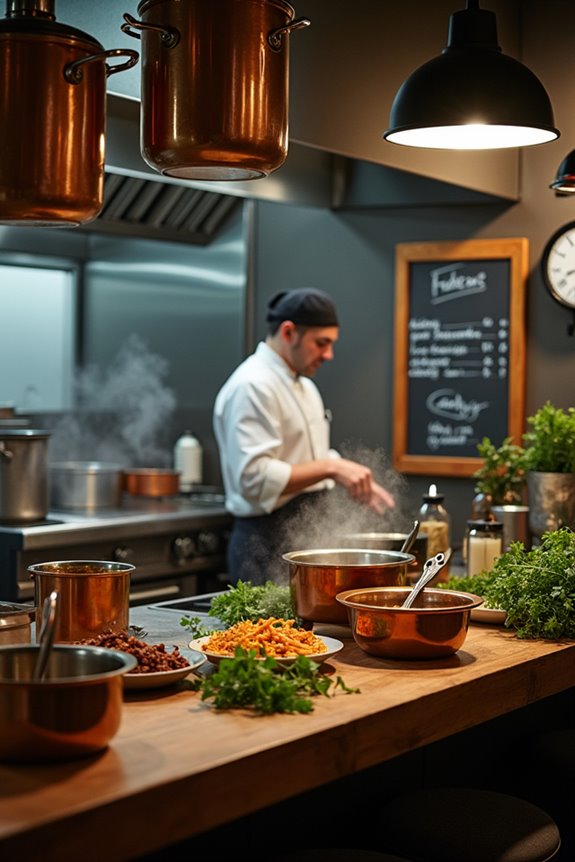
You’ve got beautiful fresh ingredients, killer recipes, and a vision—so why’s your scratch kitchen bleeding money? Most likely, you’re facing a classic trio of problems:
- Menu mismatch: Your ambitious dishes demand skills and equipment your team doesn’t possess
- Labor costs: Back-of-house staff training and prep work consume 60-70% of your budget
- Underestimated expenses: Scratch cooking requires way more labor than you anticipated
Here’s the truth: scratch kitchens fail when ambition outpaces reality. You can’t run complex menus with limited staff or budget. Instead, blend scratch items with quality premade products. Start smaller. Build strategically. This hybrid approach preserves flavor while protecting your bottom line. You’re not compromising—you’re being smart. That’s how successful operations survive!
Can You Scale Scratch? Challenges When Opening a Second Location

Opening a second location? You’re about to discover that doubling your physical footprint doesn’t just double your challenges—it can triple them! Quality consistency becomes your biggest headache because you’ll need standardized recipes, precise portioning guides, and synchronized cooking times across both kitchens, plus you’re suddenly managing twice the labor, equipment, and supplier relationships. Here’s the good news: hybrid approaches (mixing scratch components with strategic premade bases) and centralized prep rooms can help you keep that “made-from-scratch” identity while actually making expansion manageable!
Maintaining Quality Across Locations
As your first location’s success starts turning heads, you’ll face a tough question: can you actually scale a scratch kitchen without losing what makes it special?
Here’s the honest truth: you can! But it takes strategy. Focus on these essentials:
- Local sourcing and supplier programs (like McCormick or Lamb Weston) keep ingredients fresh while ensuring consistency across both locations
- Standardized recipes become your secret weapon—they’re detailed blueprints preventing guesswork and maintaining that signature taste
- Centralized prep stations let you batch-prepare components without sacrificing the scratch-made feeling your customers love
Training’s non-negotiable. Your team needs to understand *why* consistency matters, not just *how* to execute it. Implement phased rollouts—introduce new systems gradually rather than overwhelming staff. Clear performance metrics help everyone stay aligned.
You’re building something bigger now. That’s exciting!
Scaling Labor and Equipment Investments
can you actually afford to build a second scratch kitchen that mirrors your first one?
Honestly, most operators can’t. Full-scale scratch kitchens demand skilled culinary staff and expensive equipment—costs that double when you’re scaling. That’s why successful restaurateurs adopt a hybrid approach, blending scratch-made components with semi-prepared elements. You’ll maintain incredible flavor while cutting labor and capital expenses considerably.
Consider a commissary kitchen. Sharing centralized production across locations minimizes equipment investments and staffing needs. You’re controlling ingredient consistency without duplicating everything.
Start small with your second location. Phase in scratch-made components gradually as operations stabilize. Partner with suppliers for bases, sauces, and spices—they’ll handle complexity while you focus on quality control.
Scaling requires strategy, not shortcuts!