
That rotten-egg smell? It’s hydrogen sulfide—a toxic gas that’s actually dangerous! When you breathe it in, you’re risking headaches, nausea, and dizziness within minutes. Prolonged exposure irritates your lungs and respiratory system. The real kicker: methane mixed with oxygen becomes explosive in confined spaces. Your P-trap’s water seal usually blocks these gases, but if it dries out or your pipes crack, trouble seeps in. Don’t ignore this—it signals serious plumbing problems requiring professional attention!
What Is Sewer Gas and Why Does It Smell?
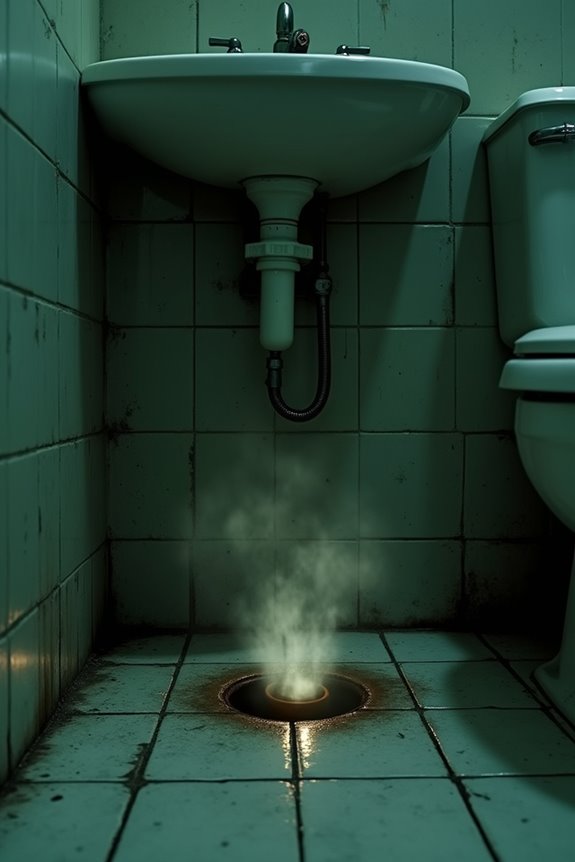
Ever wonder why your bathroom sometimes smells like rotten eggs? That’s sewer gas—primarily hydrogen sulfide—escaping from your sewer pipe or septic system. Honestly, it’s pretty gross stuff!
Sewer gas forms when organic waste breaks down in your plumbing. Your P-trap (that U-shaped pipe under your sink) normally blocks these odors. But here’s the thing: when your P-trap dries out, gases slip right through! Issues like a faulty toilet seal, blocked vent pipe, or cracked pipes let sewer gas invade your space.
You’ll recognize it instantly—that unmistakable rotten-egg stench signals trouble. Don’t ignore it! This smell means your plumbing’s safety barrier isn’t working properly. Understanding what’s happening helps you take action quickly and protect your home!
Main Sewer Gases in Your Home
Your home’s sewer system produces three main culprits: hydrogen sulfide (that rotten-egg smell), methane (a colorless gas that’s actually flammable), and carbon dioxide (which displaces oxygen in poorly ventilated spaces). You’ve probably noticed that sulfide smell after heavy rain—that’s because water pressure in your pipes forces gases upward faster, making the odor stronger and potentially more hazardous to breathe. Each of these gases affects your body differently, from headaches and dizziness to respiratory irritation, which is why understanding what’s actually coming from your drains matters for keeping your family safe!
Hydrogen Sulfide Characteristics
What’s that rotten-egg smell creeping up from your bathroom drain? That’s hydrogen sulfide, the main culprit behind sewer gas odors in homes like yours! This gas forms when organic matter breaks down in pipes, and it’s not something you should ignore.
Here’s what makes hydrogen sulfide particularly concerning: it’s highly toxic and flammable. Even brief exposure causes headaches, nausea, and dizziness. Prolonged contact? That’s when serious respiratory irritation happens. The real kicker is that hydrogen sulfide is heavier than air, so it settles in low-lying bathroom areas, especially where ventilation is poor.
Your dry traps, cracked pipes, or venting issues during rainfall create perfect escape routes for sewer gas. That rotten-egg odor signals you need professional help fast to protect your family’s health!
Methane And Health Risks
While hydrogen sulfide gets all the attention with that telltale rotten-egg stench, there’s another sneaky culprit lurking in your sewer gases that you can’t smell at all—methane. You don’t realize it’s there until real problems develop!
Methane poses serious explosion risk in confined spaces like basements and crawl spaces. When methane accumulates alongside oxygen, it becomes dangerously flammable. That’s genuinely scary stuff.
Beyond fire hazards, methane itself causes respiratory irritation and health concerns during toxic exposure. You might experience headaches, dizziness, and fatigue without knowing why. Prolonged contact worsens respiratory conditions significantly.
Here’s the thing: proper ventilation is your best friend. Good airflow prevents methane and hydrogen sulfide buildup, protecting your family from sewer gas dangers. Don’t ignore persistent bathroom odors—they’re warning signs demanding immediate professional evaluation!
Carbon Dioxide Exposure Effects
Beyond hydrogen sulfide’s infamous stench and methane’s sneaky fire hazard, there’s a third dangerous player in your sewer gases—carbon dioxide. You might not smell it, but that’s exactly what makes CO2 exposure so risky!
When septic and sewer leaks occur, bacterial decomposition creates carbon dioxide that accumulates in poorly ventilated spaces. Here’s what happens: you experience headaches, dizziness, shortness of breath, and nausea—especially in bathrooms with limited airflow. At extreme levels, you’re facing genuine asphyxiation risk.
Smart bathroom safety means monitoring your indoor air quality regularly. Elevated CO2 levels signal poor ventilation and possible sewer gas intrusion. You’ll want CO2 monitoring devices that alert you early. This proactive approach protects your family and transforms bathroom safety into peace of mind!
How Sewer Gas Gets Into Your Home
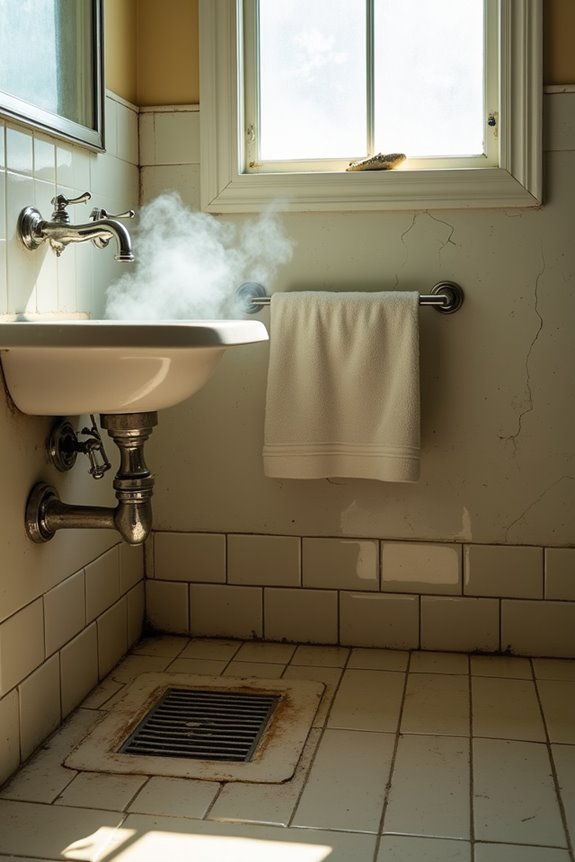
You’d be surprised how often sewer gas sneaks into your home through two main culprits: pipe damage and ventilation failures. Cracked pipes, corroded sealants, and deteriorated wax rings create openings where gases escape right into your living spaces, while blocked or poorly designed vents prevent those gases from safely exiting outside—instead, they back up into your bathroom fixtures. The good news is that understanding these entry points helps you catch problems early before they become health hazards!
Pipe Damage And Deterioration
One of the biggest culprits behind that awful bathroom smell? Pipe damage and deterioration. Your cracked pipes are literally inviting sewer gas into your home! When pipes crack or break, they lose their ability to seal gases properly. These leaks allow hydrogen sulfide and other nasty odors to escape right through your walls and floors.
Here’s the thing: damaged pipes get worse over time. Small cracks expand. Hidden leaks worsen. Whether it’s your main sewer line or vent pipes, deterioration creates pathways for gas entry. You might not see the damage initially—it’s often hidden behind walls or under floors—but you’ll definitely smell it!
Regular pipe integrity checks are essential. Don’t ignore persistent bathroom odors. They’re warning signs that your pipes need attention now, not later!
Ventilation System Failures
Ever wonder why your bathroom smells like a sewer even after you’ve cleaned everything? Your ventilation system might be failing you!
Here’s what’s happening:
- Blocked vent pipes prevent sewer gases from escaping outdoors, forcing them back into your home
- Roof debris like leaves or animal nests clog vents, creating pressure buildup that pushes foul odors inside
- Cracked vent piping leaks gases directly into walls instead of expelling them safely outside
- Gurgling drains signal ventilation failure—multiple drains draining slowly means trouble
You’re not alone in facing this! Professional evaluation, including smoke testing, pinpoints hidden blockages and damage. This technique reveals exactly where gases escape. Don’t ignore these warning signs. Getting your vent system assessed restores proper airflow and eliminates that stubborn sewer smell once and for all!
Is Sewer Gas Dangerous?
Why does that bathroom smell sometimes feel worse than just unpleasant? Because sewer gas is genuinely dangerous! This toxic mixture contains hydrogen sulfide and other harmful components that pose real health risks to you and your family.
When you’re exposed to sewer gas, you might experience headaches, nausea, dizziness, or throat irritation. That’s your body’s warning system! Prolonged exposure introduces bacteria and pathogens into your environment, creating serious infection risks.
Here’s what matters most: that smell signals underlying problems. Leaks, blocked vents, or broken pipes allow dangerous gas to escape into your home. Beyond health concerns, sewer gas creates a legitimate safety hazard—it’s flammable!
Don’t ignore persistent odors. They indicate structural damage requiring immediate professional inspection. You deserve a safe, healthy bathroom. Taking action now protects your household from both immediate and long-term dangers.
Short-Term Health Effects of Sewer Gas
When you’re exposed to sewer gas, your body’s going to tell you something’s wrong—you might experience headaches, nausea, dizziness, and eye or throat irritation pretty quickly. Beyond those physical signals, you’ve also got to watch out for sneaky neurological effects like drowsiness and trouble concentrating, which can mess with your alertness and safety (especially if you’re driving or operating machinery). Here’s the thing: your respiratory system’s particularly vulnerable, so if you’ve got asthma or any lung conditions, sewer gas exposure hits even harder and faster.
Immediate Physical Symptoms
Because sewer gas hangs around your bathroom like an unwelcome guest, you’ll probably notice some pretty uncomfortable symptoms pretty quickly. Hydrogen sulfide—that rotten egg smell—triggers reactions your body can’t ignore.
Here’s what you might experience:
- Headaches that feel like a dull pressure building behind your eyes
- Dizziness making you feel unsteady or lightheaded
- Nausea that comes and goes without warning
- Respiratory irritation causing coughing or throat scratching
Sewer gas exposure in poorly ventilated bathrooms concentrates faster, amplifying these effects. You’ll notice acute exposure hits harder when air can’t escape properly. Hydrogen sulfide at even low levels causes headaches and nausea within minutes. Your body’s basically saying, “Hey, something’s wrong here!” These immediate physical symptoms aren’t just annoying—they’re your warning system working overtime.
Neurological and Cognitive Effects
Here’s where things get really concerning—sewer gas doesn’t just make you feel physically awful; it can actually mess with your brain’s ability to think clearly! When you’re exposed to hydrogen sulfide and other nasty compounds in a poorly ventilated bathroom, your neurological effects kick in fast. You might experience dizziness, confusion, or that foggy feeling where you can’t concentrate. Sounds scary, right?
The exposure risk is real, especially for vulnerable populations like kids, elderly folks, and anyone with respiratory issues. These neurological effects aren’t permanent, but they’re definitely uncomfortable! Your brain struggles to process information normally during exposure. That’s why recognizing a sewer smell matters—it’s your warning sign. Don’t ignore cognitive impairment symptoms. Open windows immediately, improve ventilation, and get fresh air!
Respiratory System Impact
Have you ever noticed how quickly that sewer smell makes you cough? That’s hydrogen sulfide and other sewer gases irritating your airways! Here’s what happens when you’re exposed:
- Immediate coughing and throat irritation from inhaling those harsh chemicals
- Shortness of breath that makes you feel uncomfortable in your own bathroom
- Headaches and dizziness that can linger after you’ve left the room
- Worsening asthma symptoms if you already struggle with respiratory conditions
Even brief exposure in poorly ventilated bathrooms can trigger real problems. Your respiratory system’s basically saying “help me!” when sewer gases invade. If you’ve got asthma or sensitive lungs, you’re experiencing worse symptoms than others. Turn on your ventilation fan immediately! Prolonged exposure demands professional assessment and better airflow solutions to protect your breathing health.
Long-Term Health Risks From Prolonged Exposure
What happens when you’re constantly breathing in those awful bathroom smells? You’re exposing yourself to hydrogen sulfide and other dangerous sewage odors that can seriously harm your health over time.
Chronic exposure to these gases triggers persistent respiratory irritation, causing headaches and dizziness that keep returning. You might notice concentration problems and fatigue creeping into your daily routine—that’s your body telling you something’s wrong! The bacteria and pathogens in sewage dramatically increase your infection risk, especially with prolonged exposure health risks.
Here’s the real concern: these aren’t just temporary annoyances. Long-term contact with sewage odors can compromise your immune system and overall wellness. Your respiratory system needs protection! Don’t ignore persistent bathroom smells—they’re warning signs of deeper problems requiring immediate attention and professional help.
How to Know If Your Bathroom Has a Sewer Gas Problem
Now that you understand how dangerous these odors can be, let’s figure out whether you’ve actually got a sewer gas problem brewing in your bathroom.
You’re not imagining things if you’ve noticed something off! Here’s what to watch for:
- That rotten-egg smell: Hydrogen sulfide creates a distinctive odor that ranges from faint to overwhelming
- Gurgling or bubbling sounds: These noises from your pipes signal venting problems or a dry P-trap issue
- Water backups: Slow drains in sinks, showers, or toilets alongside odors suggest main sewer line trouble
- Odors worsening after rain: This pattern typically indicates sewer line leaks
If you’re noticing these signs, you’ve got company—this happens more often than you’d think! Don’t wait around hoping it disappears. Call a plumber to diagnose whether you’re dealing with a simple dry P-trap or something more serious. Your health risks demand professional attention now.
Common Causes of Bathroom Sewer Smells
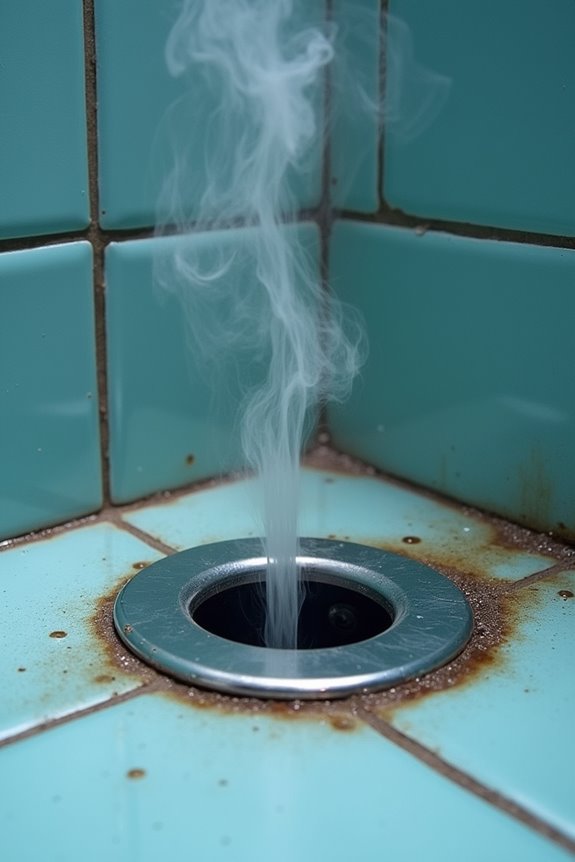
You’d be surprised how often that nasty smell creeping into your bathroom comes from something surprisingly fixable!
A dry P-trap is often the culprit. This U-shaped pipe beneath your sink normally holds water, creating a seal that blocks sewer gases from entering your space. When it dries out, those gases escape freely.
A dry P-trap beneath your sink lets sewer gases escape freely when the water seal dries out.
Drain clogs packed with hair and soap scum trap moisture, breeding bacteria that smell like sewage. Meanwhile, your toilet’s wax ring—that rubber seal between the toilet and floor—can crack or wear out, letting sewer gases seep through.
Don’t overlook your vent pipes! These need to function properly, or gases accumulate indoors. Finally, a sewer backup or full septic tank forces sewage directly into your bathroom, creating serious problems requiring immediate professional help.
When to Call a Plumber
Sometimes that sewer smell doesn’t budge no matter what you try, and that’s your cue to call in the pros!
You’re dealing with a serious situation when:
- Water backs up in your sinks, showers, or tubs alongside persistent odors—this screams main sewer line trouble
- Multiple fixtures smell bad simultaneously, indicating a problem beyond your P trap seal that needs plumbing diagnostics
- A rotten-egg odor persists despite your best efforts, especially if you’re experiencing sewer gas exposure symptoms like headaches or nausea
- Emergency plumbing services become necessary when you notice gas exposure signs or strong ongoing smells threatening your family’s safety
Don’t hesitate! Professional plumbers use sewer camera inspection and other specialized tools to pinpoint blockages or cracked pipes you can’t see. Trust me—calling early saves you headaches (literally!) and prevents costly damage. You’ve got this!
What a Plumber Will Do to Fix the Smell
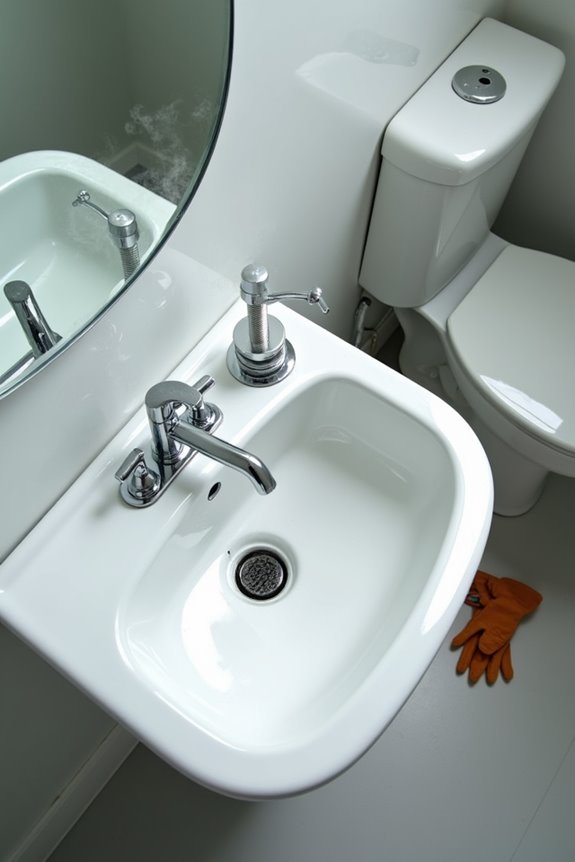
What’s the first thing a plumber pulls out of their truck when they arrive at your place? A camera inspection! They’ll snake that device through your pipes to spot blockages, cracks, or misalignments letting sewer gas escape into your bathroom.
| Problem | Solution |
|---|---|
| Broken wax ring | Replace and reseal toilet |
| Blocked vents | Clear or repair vent pipes |
| Pipe damage | Hydro-jetting or trenchless repair |
| Septic issues | Tank pumping and maintenance |
If your P-trap’s dried out or your wax ring’s compromised, they’ll fix it! For vent problems, they’ll restore proper venting so sewer gas stays where it belongs—outside. They might recommend hydro-jetting to clear buildup or trenchless repair methods avoiding major excavation. Their preventive maintenance stops future bathroom odor recurrence. You’re getting professional expertise handling sewer gas safely!
Five Ways to Prevent Sewer Gas in Your Bathroom
How’d you like to stop that nasty sewage smell before it ever starts?
You’ve got real power here. Prevention beats calling a professional plumber every time. Start protecting your space now:
- Keep your P-trap filled by regularly using fixtures; water seals block sewer gas from entering your bathroom
- Inspect your toilet wax ring yearly—damaged seals cause backflow and odors faster than you’d think
- Clear blocked vent pipes ensuring proper venting; clogged vents push gases backward into living spaces
- Maintain drain maintenance through routine cleaning and enzymatic cleaners, avoiding chemical overuse that damages pipes
You’ll also want solid bathroom ventilation running during and after showers. Address septic issues promptly too—tree roots and full tanks create sewage backups nobody wants!
These steps? They’re genuinely doable. You’ve totally got this!