
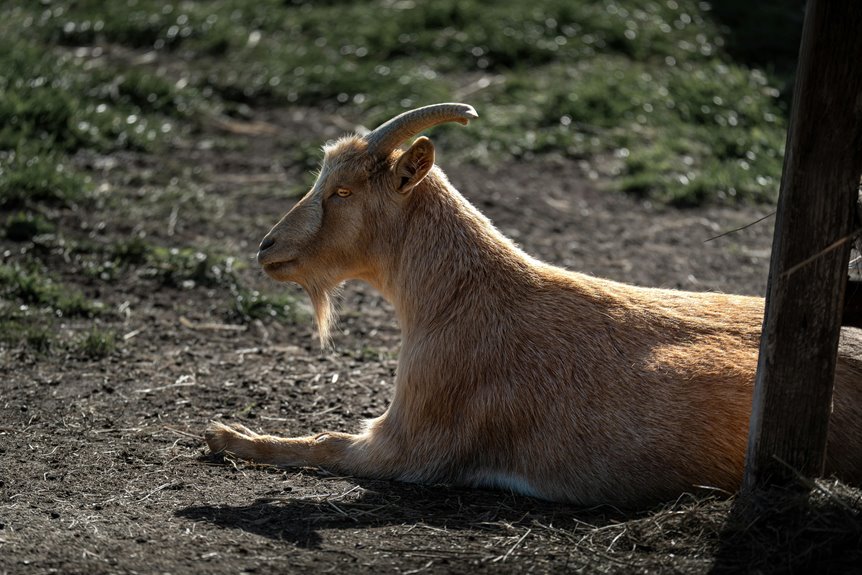
Yes, you can keep backyard goats—but it depends on your city’s rules! Contact your local animal control or development services office first, since zoning laws vary dramatically by municipality. Most cities allow miniature breeds in residential zones with specific requirements: 400 square feet outdoor space per goat, 5-foot fencing, and predator-proof shelter. You’ll likely need permits and annual licenses. Keep at least two goats for companionship, budget for feed and vet care, and follow strict hygiene practices. Curious about specific breed restrictions or housing setup details?
Check Your City’s Zoning Laws First
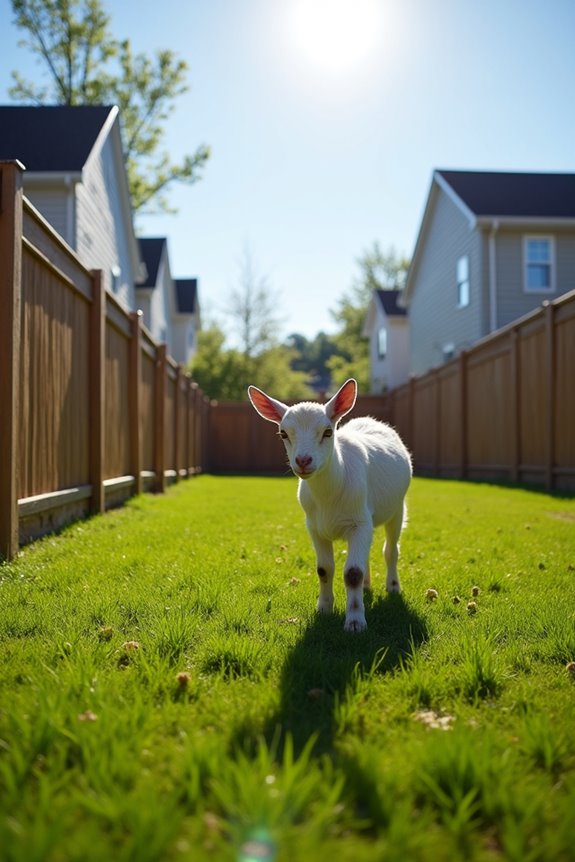
Before you bring home your first goat, here’s the thing—you’ve got to check your city’s zoning laws first!
Your city ordinances, not state law, actually determine whether goats in city limits are permitted. Every municipality has different rules, so what’s allowed in your neighbor’s town might be totally prohibited in yours. Think of zoning laws as your community’s rulebook for backyard animals.
Here’s what you’ll discover: some cities welcome goats enthusiastically, while others ban them completely. Your job? Contact your local Development Services office and ask about livestock provisions for your specific address. They’ll clarify everything—whether goats are allowed, what fencing requirements exist, and minimum enclosure sizes you’ll need. Don’t guess! Getting answers upfront saves frustration later and keeps you legally compliant.
Contact Your Local Animal Control for Specifics
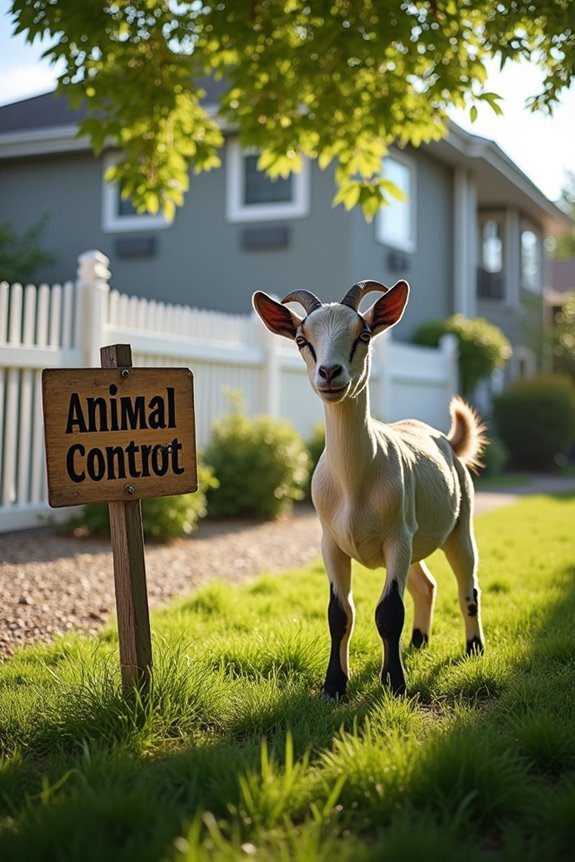
Once you’ve reviewed your city’s zoning laws, it’s time to get the real details—and that means calling your local animal control or city code office directly! Here’s why this matters: rules vary wildly between municipalities, and what works in one Texas city might not work in another. When you call, ask specifically about goats. They’ll tell you about setback requirements (how far from property lines), enclosure standards, and fencing heights. Some cities require permits or licenses. Don’t skip this step! You’ll feel confident knowing you’re complying with local regulations. Plus, these officials genuinely help backyard farmers succeed. They’ve answered these questions countless times and want you to keep goats responsibly.
Understand Lot Size and Goat Limits
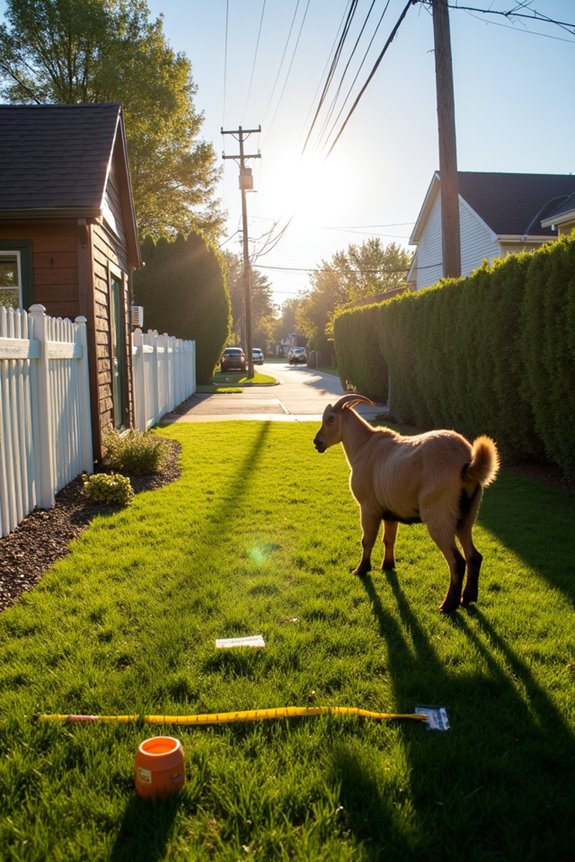
Your lot size is basically your goat-keeping ticket, so you’ll need to understand zoning requirements and setbacks—which means how far your enclosure must sit from your neighbors’ property lines. Most cities require a minimum space per goat (often 200-400 square feet per animal), and you might discover that your residential zone only allows miniature breeds or limits you to just two goats, like San Diego does for single-family homes. Before you fall in love with the idea of goats munching your backyard, grab your local municipal code or call animal control to find out what your specific lot size actually allows!
Zoning Requirements And Setbacks
Since goats are regulated by local city ordinances rather than state laws, you’ll need to dig into your specific city’s zoning rules to find out what’s actually allowed on your property. Your city’s Zoning Map application reveals your zone name and corresponding Development Regulations Table—that’s where the magic happens! These tables specify exact setback requirements for goat enclosures. You’re typically looking at around 5 feet for side setbacks and roughly 13 feet for rear setbacks, though these vary by zone. The minimum outdoor enclosure size also depends entirely on your zone-specific regulations. Don’t guess! Contact your local Development Services Department to confirm your zone and setback requirements. They’ll point you toward the exact measurements governing goats in zone setbacks for your address. Getting this right upfront saves serious headaches later!
Minimum Space Per Goat
How much land do you actually need for a goat?
You’d be surprised! Goats don’t require massive acreage to thrive. In San Diego, for example, you’re allowed two goats on a single-family lot with just 400 square feet of outdoor enclosure minimum. That’s roughly the size of a small bedroom!
Here’s what goats must be kept within: a predator-proof, vented shed with direct access to a 5-foot-tall exterior enclosure. The shed protects them from weather and predators, while the fenced area gives them space to roam safely.
Think about your lot size first. Your city’s zoning codes determine goat limits based on residential zones. Smaller lots can still work! The key is providing adequate space per animal and ensuring proper fencing that prevents escapes.
Know Breed Restrictions and Dehorning Rules
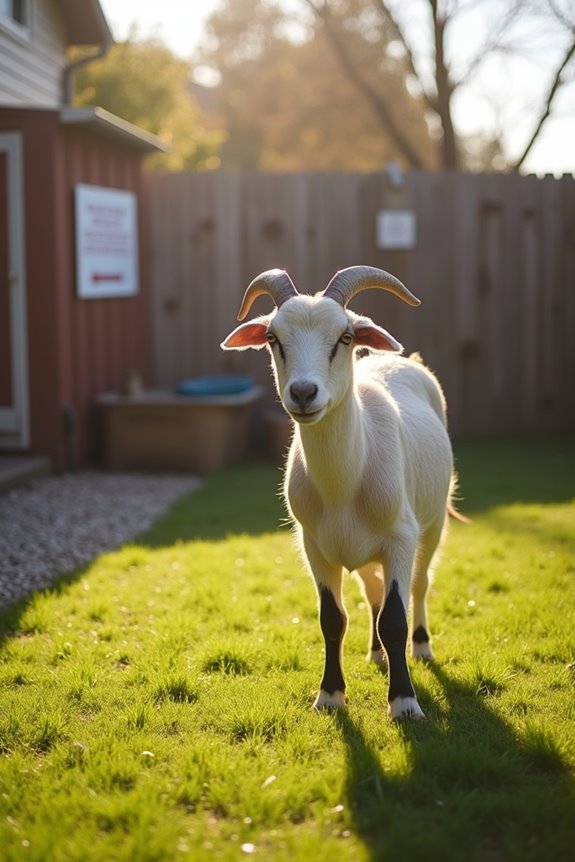
Different cities have wildly different rules about which goats you can actually keep—and that’s where things get tricky! You’ll discover that breed restrictions vary dramatically depending on where you live.
Here’s what you need to know:
- Seattle mandates pygmy, dwarf, or miniature breeds only and requires dehorning for all goats
- San Diego permits two miniature goats for single-family homes with specific setback and enclosure requirements
- Chicago allows goats in urban settings without breed-specific restrictions, though home slaughter isn’t permitted
Before you bring home your future goats milk producer, check your city’s ordinances carefully! Some municipalities demand annual licenses, while others focus on dehorning requirements. Don’t assume your neighbor’s setup works for you—regulations shift between cities. Contact your local animal control office and ask specific questions about breed approval and dehorning mandates. This homework protects both you and your future herd!
Apply for Your License and Budget Annual Costs
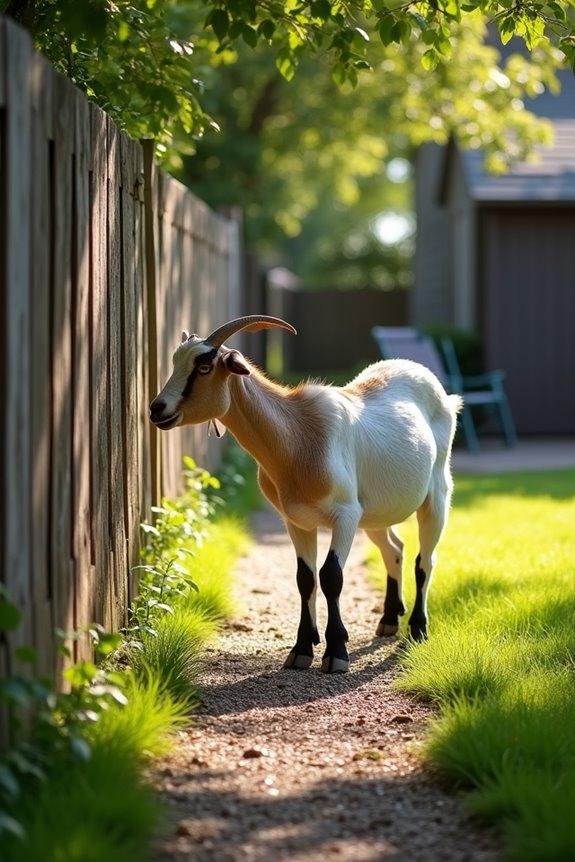
Once you’ve picked your breed, you’ll need to tackle the licensing side of things—and honestly, this part varies wildly depending on where you live! You’ll want to contact your local city office or animal control to find out if you need annual permits (some cities do, some don’t), what fees apply, and whether inspections are required. Then comes the budget reality: factor in fencing, shelter, quality feed, vet checkups, and those licensing fees to see if backyard goat-keeping actually fits your wallet!
Licensing Requirements And Fees
Before you bring those adorable goats home, you’ll need to tackle the paperwork side of things—and yes, there’s definitely a licensing requirement waiting for you!
Your goats require proper documentation depending on where you live. Here’s what you’re looking at:
- Contact your local animal services department to learn specific licensing fees and renewal schedules for your zone
- Budget annually—costs vary markedly by city and county, so Seattle’s requirements differ from Texas municipalities
- Understand your city’s code—Houston, San Antonio, and Dallas each have unique ordinances governing livestock
Don’t let paperwork intimidate you! Most communities make this straightforward when you know where to look. Call your development services office and ask about goat-specific regulations. They’ll guide you through everything, making your backyard goat dream totally achievable and compliant!
Annual Maintenance Budget Planning
How much does it really cost to keep goats happy and healthy in your backyard? You’ll want to budget around $1,500–$3,000 annually per goat. Feed costs typically run $30–$50 monthly, while bedding adds another $20–$40. Veterinary care, including hoof trims and vaccinations, averages $200–$400 yearly. If you’re producing goat milk for personal use, factor in pasteurization equipment costs. Don’t forget fencing maintenance and shelter repairs! These expenses aren’t glamorous, but they’re essential. Being honest about these costs means you’re setting yourself up for success. Your goats depend on consistent, quality care. Once you’ve mapped out these numbers, you’ll feel confident joining the backyard goat community!
Build Shelter and Fencing to Code
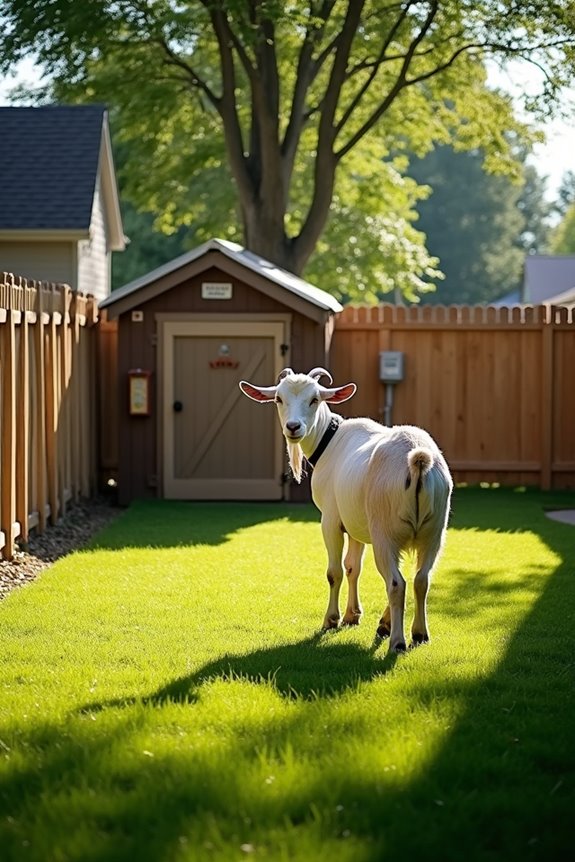
Since you’ve gotten the legal green light to keep goats, it’s time to build their home—and yes, it’s got to meet specific requirements! Goats must be kept in structures that follow your city’s zoning rules, which means checking setbacks first. Your shed needs to stay 5 feet from side property lines and 13 feet from rear lines. The exterior enclosure requires at least 400 square feet of space—that’s roughly the size of a two-car garage!
Your shelter checklist:
- Secure fencing that prevents escapes (goats are escape artists!)
- Climb-resistant design since goats love jumping
- Sturdy materials withstanding their energetic nature
Contact your City’s Development Services Department before building. They’ll confirm your specific zone requirements and ensure you’re building right. Think of it as your partnership with local officials!
Get Two Goats and Plan Basic Care
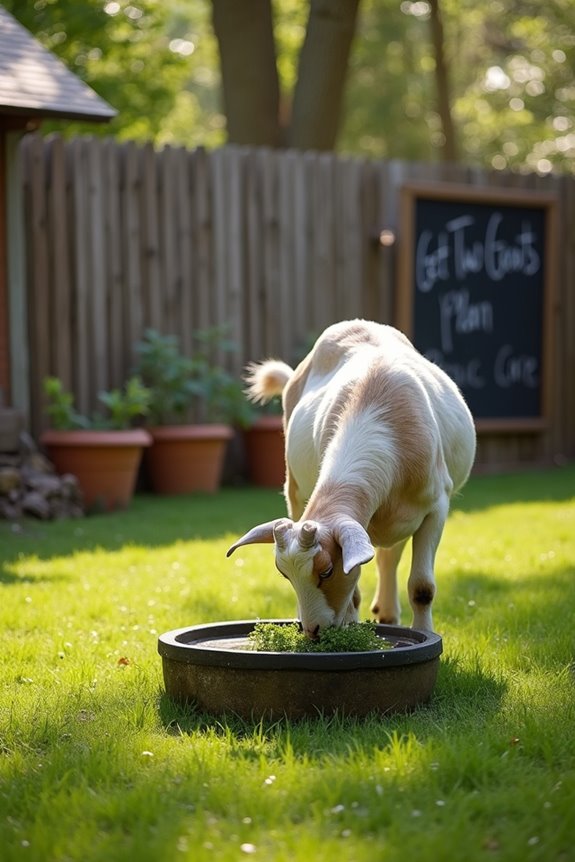
You’ll want to get two goats minimum because they’re herd animals that actually get lonely and stressed without a buddy—trust me, a solitary goat is an unhappy goat! Before bringing them home, you’ve got to set up a predator-proof shed with good ventilation and waterproof walls, plus that 5-foot climb-resistant fence we talked about earlier. Once you’ve nailed down shelter and fencing, you’re ready to tackle the daily care stuff: feeding, watering, hoof trimming, and keeping those escape artists contained!
Herd Animals Need Companions
Ever wonder why a single goat seems so lonely in a backyard? Goats must be kept in at least two animals for genuine companionship. These herd creatures thrive together, not alone!
Your goats need each other for emotional support and social interaction. Think of them as best friends who can’t be separated. Here’s what you’ll appreciate about keeping pairs:
- Social bonding: Two goats entertain and comfort one another daily
- Reduced stress: Companions prevent anxiety and destructive behaviors
- Natural behavior: Herd dynamics encourage healthier, happier animals
- Shared activities: They’ll play, eat, and explore together
Trust me, watching two goats interact brings genuine joy! They’ll bleat to each other, jump around together, and create an entertaining backyard dynamic. This companionship isn’t optional—it’s essential for their wellbeing. Your investment in two goats pays dividends through their happiness and contentment!
Essential Shelter And Housing
Now that you’re committed to getting two goats for companionship, it’s time to build them a proper home! Your goats must have a sturdy shed that protects them from weather, predators, and the elements. Think of it as their cozy retreat!
The shelter needs ventilation so they breathe fresh air, waterproofing to stay dry, and easy-to-clean flooring for daily maintenance. Your goats must also access an outdoor enclosure directly from the shed—aim for at least 400 square feet of space. That’s roughly the size of two parking spaces!
Surround everything with 5-foot-tall, climb-resistant fencing. Goats are escape artists, trust me! Check local zoning regulations first; setbacks determine exactly where you can place structures on your property. Getting this foundation right means healthier, happier goats!
Fencing And Confinement Requirements
What’s the most important thing standing between your goats and a quick escape? Sturdy fencing!
You’ll need at least a 5-foot-tall fence with secure, external fasteners that resist climbing. Your goats are clever escape artists, so don’t underestimate them. Here’s what you’re looking at:
- Height and security: 5-foot minimum fencing with climb-resistant design and exterior-mounted latches
- Space requirements: At least 400 square feet per goat in your outdoor enclosure (yes, they need room!)
- Local compliance: Check your city’s specific zoning regulations and setback requirements from property lines
Your outdoor enclosure must also be predator-proof, waterproof, and vented. Easy cleaning matters too—you’re maintaining this regularly! While requirements vary by location like San Diego, they’re non-negotiable. Contact your local agricultural extension office for exact specifications. Getting this right means happy, secure goats and peaceful neighbors!
Prevent Bacteria Transmission: Handwashing Essentials
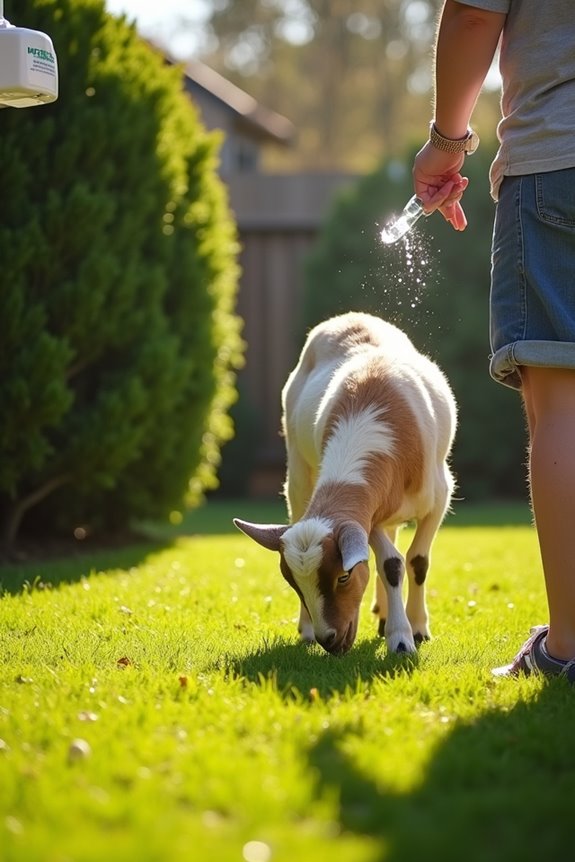
How serious is the bacteria risk when you’re handling backyard goats? Pretty serious! Goats shed harmful bacteria like Salmonella, Campylobacter, and E. coli O157:H7. But don’t worry—you’ve got this!
Here’s what responsible goat ownership regulations expect: wash your hands thoroughly after every goat interaction. Scrub all surfaces for at least 20 seconds using soap and water, then dry with a clean towel. That’s it!
Before preparing meals or eating, change your clothes and sanitize exposed skin. Never wear dirty gloves or clothing from goat areas into your kitchen—that’s how bacteria spreads.
These simple habits protect your family while keeping you confident as a goat owner. You’re taking the right steps by learning this stuff. Your backyard herd depends on your dedication!
Pasteurize Milk Before Consuming or Cheese-Making
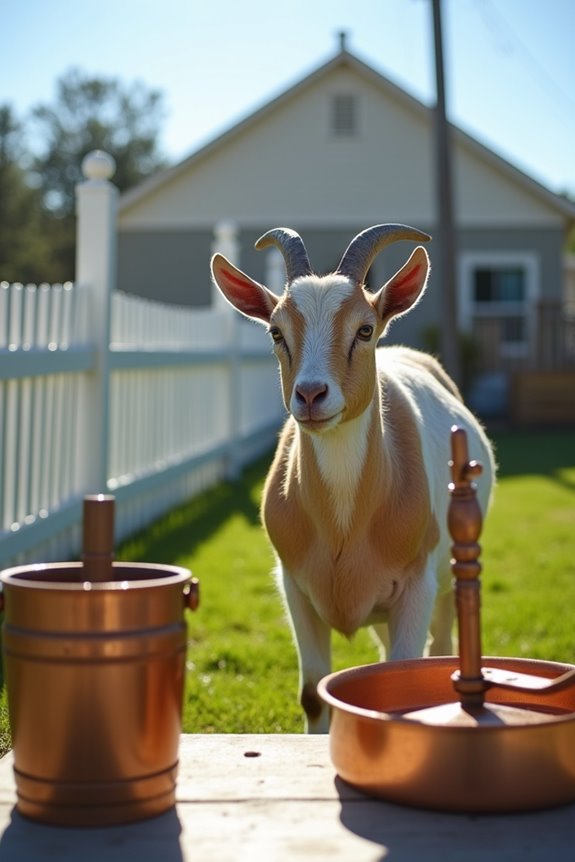
If you’re milking your goats and dreaming of fresh cheese or creamy milk, there’s one essential step you can’t skip: pasteurization.
Pasteurization heats your milk to 145°F for 30 minutes, killing harmful bacteria like Salmonella and E. coli. Trust me, this simple process protects your family!
Here’s why you’ll want to do this:
- Safety first: Raw milk can carry dangerous pathogens that cause serious illness
- Better cheese: Pasteurized milk creates consistent, reliable cheese every single time
- Peace of mind: You’re joining countless backyard goat enthusiasts who prioritize health
Combined with the hand hygiene habits you’ve already mastered, pasteurization transforms your goat milk into something genuinely safe. You’re not just producing food—you’re creating something your community can trust and enjoy together!
Compost Manure to Destroy Harmful Bacteria
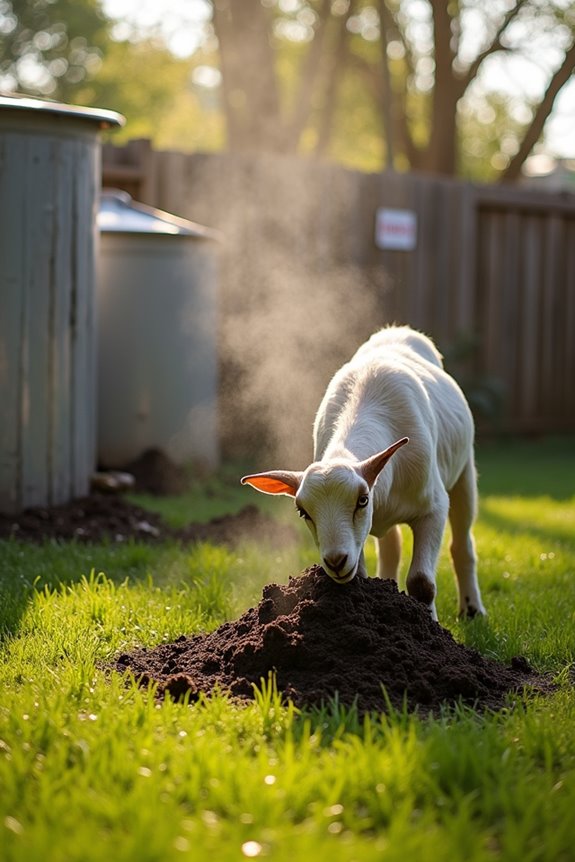
Now that you’ve got your milk handled safely, let’s talk about what comes out the other end—because managing goat manure properly is just as important for your family’s health!
Goat manure composting isn’t complicated, I promise. You’ll build a pile and let heat do the heavy lifting. The magic happens when your compost reaches 130-150°F—hot enough to kill nasty pathogens that could make anyone sick.
Here’s your game plan: turn your pile regularly, keep it moist like a wrung-out sponge, and mix in carbon-rich materials like leaves or straw. Check moisture and aeration weekly. Most importantly, never use finished compost on edible plants until you’re absolutely certain pathogens are destroyed.
Your backyard garden stays safe when you take composting seriously. It’s worth the effort!