
Your bedroom’s probably hot because cool air isn’t reaching it effectively—not because your AC’s broken! Check if furniture blocks return vents (move it 12 inches away), your thermostat’s placed near windows or heat sources (giving false readings), or your air filter’s clogged. Leaky ductwork, poor insulation, and single-zone systems that can’t direct airflow where you need it also cause frustrating hot spots. The good news? Most fixes are simple and affordable—we’ll show you exactly what to tackle next.
Check Your Thermostat Settings and Placement First
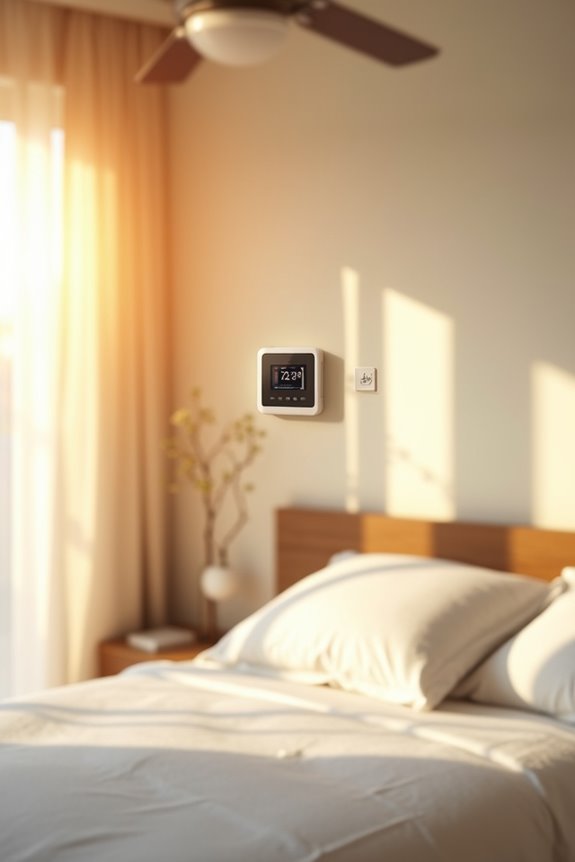
Have you ever considered that your thermostat might be the culprit behind your sweltering bedroom?
Your thermostat placement and settings directly impact your cooling efficiency and room temperature accuracy. Start by verifying your thermostat is set to Cool mode with a target several degrees below your actual room temperature. Here’s the thing: thermostats placed near windows, vents, or heat sources give false readings, triggering unnecessarily long cooling cycles.
Check if your thermostat sits on a different floor or far from your hot bedroom. That distance creates a real problem—it won’t accurately sense your bedroom’s actual temperature, leaving you sweating while the system thinks it’s comfortable elsewhere.
Try this: temporarily relocate your thermostat to a cooler, central location. Monitor whether your comfort improves. For digital models, replace batteries if the display looks dim. These simple adjustments often solve mysterious heating issues faster than you’d expect!
Unblock Return Air Vents and Registers
Your bedroom’s heat problem might actually be hiding behind your couch or under that area rug—furniture and clutter are blocking return air vents, which are the pathways that pull warm air back to your furnace to get cooled. Check every return vent in your bedroom and hallways, moving furniture at least 12 inches away and clearing any rugs or boxes that might be restricting airflow. Once you unblock these vents, you’ll be amazed how much more evenly your AC can cool the whole space!
Furniture Blocking Airflow
Ever wonder why one bedroom stays cool while another feels like an oven, even though they’re both connected to the same AC system? Furniture blocking airflow might be your culprit!
Your return vents need breathing room. When you position sofas, dressers, or beds directly in front of these grilles, you’re essentially suffocating your cooling system. The airflow obstruction prevents cool air from returning to your furnace, disrupting bedroom temperature balance throughout your home.
Here’s what I recommend: Walk around your room and identify all return vents. Move furniture at least 12 inches away from each one. Check behind curtains too—they’re sneaky air blockers! This simple repositioning lets your AC system pull air efficiently, finally delivering that consistent coolness you deserve.
Clearing Vent Obstructions
So here’s the thing—even if you’ve moved your furniture away from vents, you might still have hidden blockages choking your AC system! Return vents and supply registers need regular inspection to keep airflow moving freely. Check behind beds, under dressers, and along baseboards where dust bunnies love to hide. Even small obstructions like rugs, boxes, or drapes seriously diminish your cooling power. Here’s what you’ll do: grab a flashlight and inspect every vent opening carefully. Remove anything blocking them—dust buildup counts too! After rearranging furniture or adding new decor, recheck those vents immediately. You’d be surprised how much difference unobstructed airflow makes! Keep vents fully accessible, and you’ll notice balanced temperatures returning throughout your bedroom. This simple habit prevents those frustrating hot spots that drive you crazy!
Replace Your Dirty Air Filter
Your air filter’s probably clogged if you haven’t checked it in a while—and that’s likely your bedroom’s worst enemy! A dirty filter chokes off airflow, forcing your AC to work overtime while hot spots develop in rooms farthest from the unit. Swap in a fresh filter (check monthly, replace every 1–3 months), and you’ll be amazed how quickly cool air floods back into those neglected spaces!
Filter Clogs Reduce Airflow
Have you checked your air filter lately? Here’s the thing: a clogged filter is like a traffic jam for your cooling! When dust and debris pile up, your air filters can’t let air pass through properly. This restricted airflow forces your HVAC system to work overtime, struggling to push cooled air through your home. Your bedroom feels hot because less air actually reaches it.
Think of it this way—your cooling efficiency drops significantly. The system runs longer, uses more energy, and still can’t maintain comfortable temperatures in distant rooms. You’ll notice weak airflow from vents and increased dust around your home.
The fix? Replace filters every one to three months, more often if you’ve got pets. This simple step restores proper airflow and keeps your bedroom comfortably cool!
Monthly Replacement Restores Efficiency
When’s the last time you actually looked at your air filter? That dusty culprit might be exactly why your bedroom stays uncomfortably warm! Replacing your air filter every 1–3 months is genuinely life-changing for your cooling efficiency. Here’s the thing: a clean filter lets air flow freely through your system, so your AC works smarter, not harder. You’ll notice the difference immediately—better airflow means even cooling throughout your home, especially in those stubborn hot spots. Think of it like giving your AC permission to actually do its job! Set a monthly maintenance reminder on your phone. Swap out that filter, and watch your bedroom temperature drop while your energy bills shrink. You’ve got this!
Block Direct Sunlight With Better Window Treatments

But here’s where you’ll see real results: exterior solutions! An awning or shade cloth outside stops heat before it enters. Think of it like sunglasses for your windows. Combined with reflective window film, you’ll dramatically reduce heat intrusion. Your AC won’t work overtime anymore!
Seal Cracks and Improve Wall Insulation
Two major culprits are silently sabotaging your bedroom’s temperature: tiny cracks in your exterior walls and thin insulation that can’t stand up to the heat. Here’s the thing—warm outdoor air sneaks through those gaps while your cool air escapes, making your AC work overtime and your energy bills skyrocket.
You’ve got options! A professional insulation assessment reveals exactly where heat’s entering through your exterior walls. Then you can tackle the problem: seal cracks with quality caulk or expandable foam, and upgrade insulation if needed. Don’t forget recaulking windows and sealing wall-to-floor gaps either.
Why does this matter? Poorly insulated walls absorb sun heat all day, then release it slowly after sunset, undermining your cooling efforts. Addressing these issues transforms your bedroom into the comfortable sanctuary you deserve!
Inspect Ductwork for Leaks and Damage
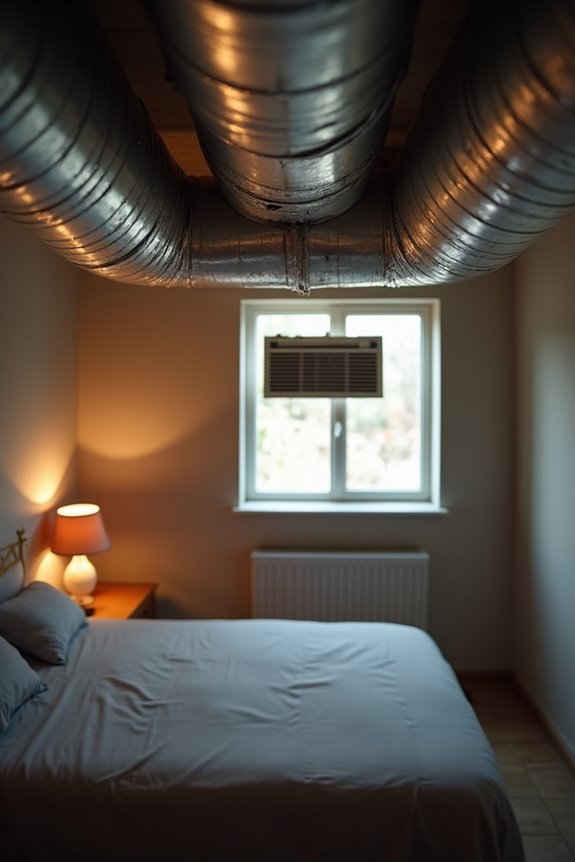
Ever wonder why your bedroom stays hot while other rooms cool down just fine? Your ductwork might be the culprit! Duct leaks and ducts damage silently sabotage your comfort. When cooled air escapes through cracks or loose connections before reaching your room, your AC works overtime for nothing.
Dirty or crushed ducts also restrict airflow, reducing cooling efficiency where you need it most. Gaps near exterior walls let warm outdoor air sneak in, fighting against your system’s efforts.
Here’s the good news: you don’t need to guess! A professional HVAC inspection identifies these problems through pressure testing or smoke testing. Technicians spot leaks, loose connections, and broken seams you’d never find alone. Getting your ducts checked transforms uneven cooling into consistent comfort throughout your home. Your bedroom deserves better!
Assess Whether Your AC Unit Is Sized Too Small
Could your AC unit itself be the problem? An undersized system might be your bedroom’s worst enemy. If your unit’s cooling capacity doesn’t match your home’s square footage, you’re fighting a losing battle.
Here’s what happens with improper AC sizing:
- Rooms farther from the unit stay noticeably hotter than others
- Your system runs constantly but never reaches the thermostat setpoint
- Higher indoor humidity makes hot bedrooms feel even worse
- Room temperature imbalances create frustrating comfort gaps
- Energy bills spike while comfort plummets
A professional sizing assessment reveals whether you need a larger unit. Upgrading to proper cooling capacity or adding zoning transforms that sweltering bedroom into your personal comfort zone. Trust me—this fix works!
Evaluate Window Quality and Air Leakage
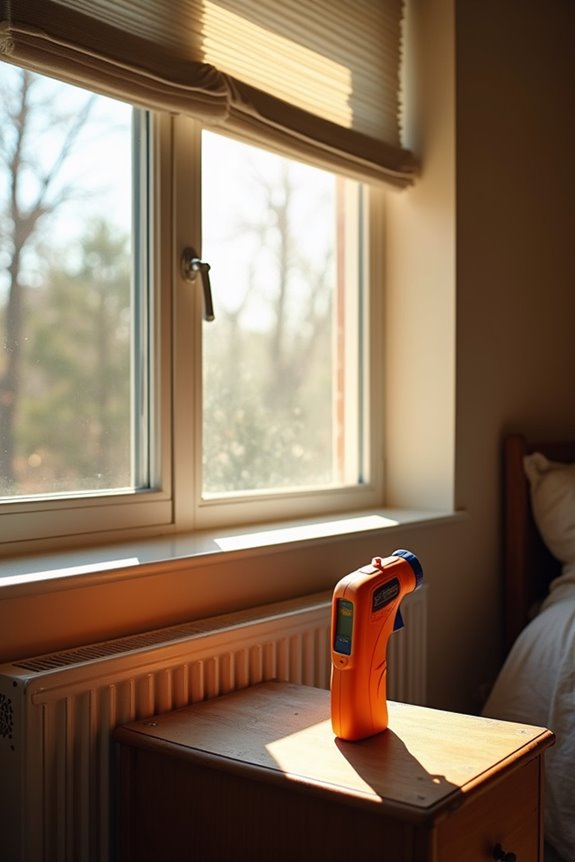
When’s the last time you really looked at your bedroom windows? They’re often the sneaky culprits behind that stubborn heat! Old or poorly sealed windows create air leakage that lets warm outdoor air infiltrate your room, making cooling efforts feel pointless. Check for deteriorated weatherstripping or cracked caulking around the frames—these gaps are heat gain highways.
Single-pane windows conduct heat poorly compared to modern double-pane options. Even exterior shades help minimally if your window glass itself isn’t insulating properly. Here’s the good news: sealing window leaks is totally doable! Recaulk gaps, replace weatherstripping, or upgrade glazing for real results. Feeling overwhelmed? A professional energy audit pinpoints exactly where air’s escaping and quantifies heat problems. You’ve got this!
Consider Single-Zone vs. Multi-Zone System Limitations
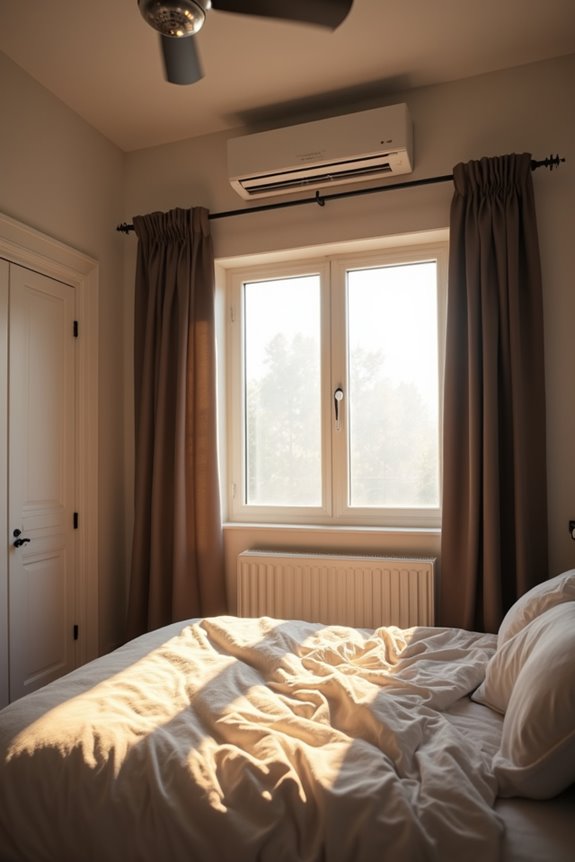
your AC system might be working perfectly fine—it’s just not distributing that cool air fairly!
Most homes use single-zone systems with one thermostat controlling everything. Your bedroom stays hot because:
- Single-zone setup means one thermostat can’t sense your bedroom’s actual temperature
- Unbalanced airflow reaches distant rooms last, leaving them warmer
- Thermostat location matters—if it’s downstairs, your upstairs bedroom suffers
- No individual dampers prevent directing more cool air where you need it
- Multi-zone systems let you control specific areas separately
The fix? You don’t necessarily need a complete system overhaul. Adding balancing dampers to your existing ducts or installing a dedicated return vent in your bedroom creates pseudo-zoning. These affordable upgrades redirect airflow without major renovation costs. You’ll finally get the comfort you deserve!