
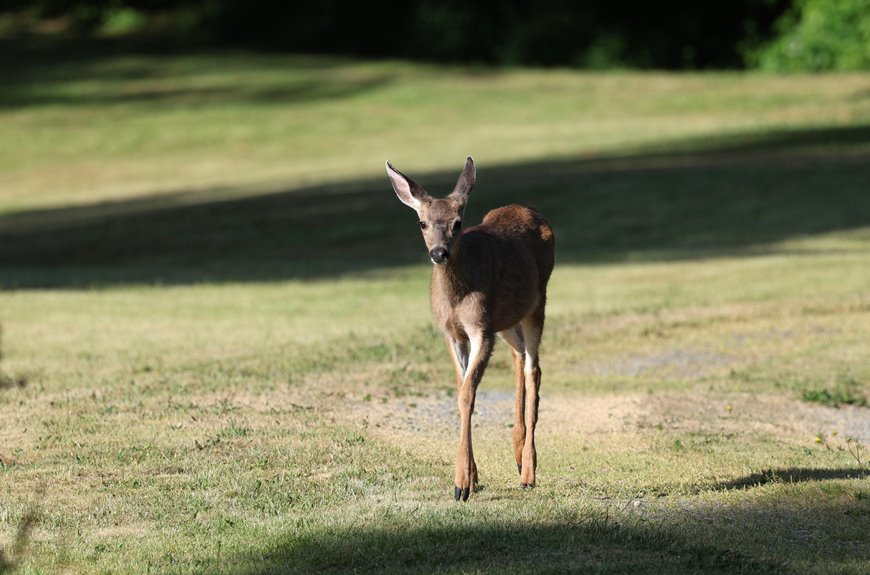
You can safely feed deer browse like tender twigs and clover, acorns for winter energy, apples in moderation, leafy greens, nuts like hickory, storage-friendly vegetables such as sweet potatoes, and native shrubs. Skip corn and bread—they’ll upset their stomachs! The key? Stick to what they’d naturally eat. A handful of nuts goes far, and mixing high-fiber foods prevents digestive disasters. Want the full breakdown on portions, storage tips, and which foods to absolutely avoid?
Deer’s Natural Diet: The Safe Feeding Foundation
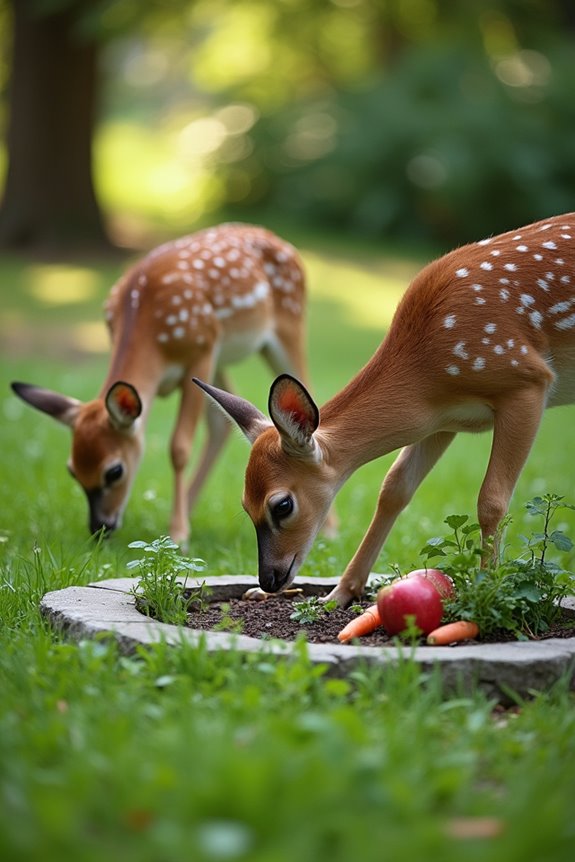
Ever wonder what deer naturally munch on when you’re not watching? They’re actually pretty selective eaters! In the wild, deer rely on three main food categories: browse, forbs, and mast. Browse includes leafy twigs and buds from woody plants—think of it as nature’s salad bar. Forbs are herbaceous plants that add dietary variety. Then there’s mast: acorns, nuts, and fruits that pack serious calories and fats, especially crucial during harsh winters.
Understanding this natural diet helps you become a responsible backyard feeder. You’ll want to mimic what deer already eat rather than introduce unfamiliar foods. Different regions offer different plants, but these three categories remain consistent. When you feed strategically, you’re essentially extending nature’s pantry—not replacing it. This approach keeps your local deer healthier and happier year-round!
Acorns and Hard Mast: Your Safest Winter Staple
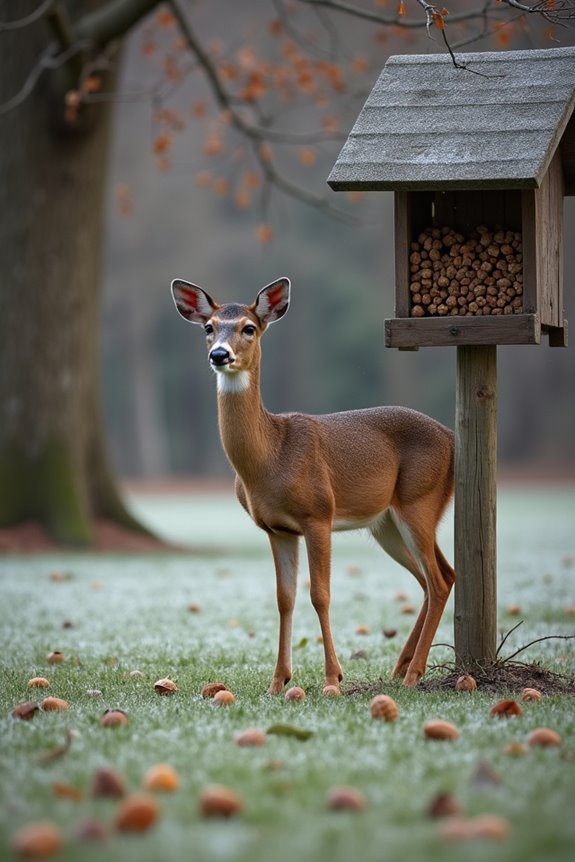
You’ll find that acorns are nature’s perfect winter gift for deer—they’re packed with fat and calories that help animals build essential reserves when food gets scarce! If you’ve got oak trees on your property or can collect acorns from nearby hardwood forests, you’re sitting on a nutritional goldmine that aligns perfectly with how deer naturally forage. The best part? Acorns are abundantly available in fall, accessible without special processing, and they provide the dense nutrition deer need to survive those tough late-fall and early-winter months.
Natural Winter Energy Source
When winter rolls around and your backyard deer start looking lean, have you considered what they’d naturally seek out in the forest? Acorns and hard mast are nature’s perfect winter energy bars! These nutrient-dense foods pack fats and calories that help deer build reserves for freezing months ahead.
You’re giving deer exactly what they need—high-energy fuel. Each acorn bite delivers more calories than many greens, supporting rapid weight maintenance when forage disappears. Here’s the beauty: you’re aligning with their instincts, reducing their dependence on processed feeds.
Just remember moderation matters. Those carbohydrates can upset digestion if overfed. Think of acorns as supplements, not replacements. Since oak crop yields vary yearly, hard mast availability fluctuates naturally. That’s why providing this forest-derived food source during lean periods makes you a genuinely supportive backyard steward.
Abundance And Accessibility Benefits
Why wait for complicated feeding schedules when nature’s already stocked your yard with free, nutritious food? You’re in luck if oak trees grace your property—they’re basically nature’s grocery store for deer!
Here’s what makes hard mast so genius:
- Zero prep required: Acorns drop naturally, so you don’t buy expensive supplements or stress about storage
- Perfect nutrition timing: Fall acorn abundance helps deer build fat reserves they desperately need for winter survival
- Wildlife-friendly living: Relying on natural hard mast means fewer human-provided feeds cluttering your yard
- Rumen-healthy fiber: These foods align perfectly with what deer’s stomachs evolved eating
The beauty? You’re supporting deer naturally while reducing your own workload. That’s a win-win situation that keeps both you and your backyard visitors thriving together!
Nutritional Profile For Deer
Acorns are basically nature’s power bars for deer—packed with the calories and fats they absolutely need when winter strips away their usual food sources. You’re looking at roughly 50% fat content, which is incredible for building energy reserves!
Here’s what makes hard mast so valuable: it supplies essential proteins supporting body condition and antler development as temperatures drop. Unlike supplemental feed that can disrupt their rumen health, acorns work *with* their natural digestion.
The beauty? You don’t need to do much. If oak trees thrive on your property, you’ve already created nature’s pantry. Just let them fall naturally and avoid raking them up completely.
Want backup insurance? Diversify with fiber-rich forage alongside that acorn bounty. Your deer will thank you with healthier bodies heading into spring!
Apples and Seasonal Fruits: Nutritious but Time-Sensitive Options
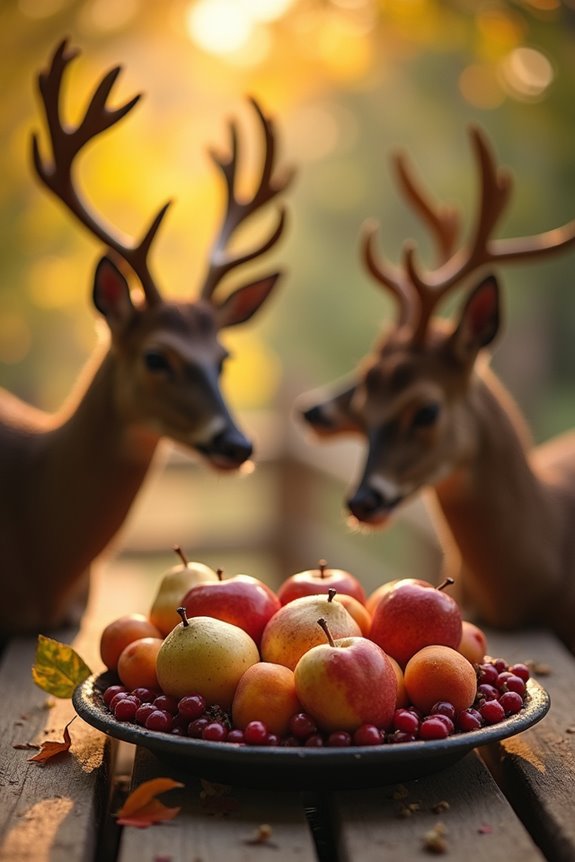
You’ll find that apples and seasonal fruits pack a nutritional punch—natural sugars, vitamins, and minerals that deer absolutely crave—but here’s the catch: they spoil fast, especially when temperatures swing between hot and cold. Your best bet is using these soft fruits for short-term feeding situations (think fall abundance rather than winter storage) and removing any uneaten pieces within a day or two to avoid attracting pests or spreading disease. Since fruits can cause digestive upset if they become your deer’s main meal, you’ll want to offer them alongside high-fiber options like hay or browse to keep their rumen functioning smoothly!
Nutritional Benefits for Deer
While deer’d love to munch on apples and berries year-round, the truth is that these fruits shine brightest during specific seasons. You’re actually supporting their natural needs when you offer them strategically!
Here’s why fruits matter:
- Quick energy boost: Apples and blackberries provide fast sugars that help deer survive lean periods without disrupting rumen health
- Vitamin-packed nutrition: Blueberries and soft mast supply essential nutrients that commercial feeds sometimes lack
- Fat reserve building: Late summer through early fall is prime time when deer need extra calories for winter survival
Think of fruits as nutritional supplements, not main courses. They work best alongside high-fiber options that keep your deer’s digestion running smoothly. You’re basically giving them a seasonal advantage—smart feeding that respects their body’s actual requirements!
Seasonal Availability and Storage
How do you keep apples fresh when deer can’t eat them all at once? You’ve got storage considerations that actually matter! Seasonal fruits spoil quickly, so timing is everything. Offer apples and berries when deer are most active—early mornings or dusk—so they’ll actually eat them before they rot. Can’t use fresh produce fast enough? Freeze-dried or dried fruit options work wonderfully for longer-term availability. Just watch out for added sugars or preservatives that might upset their digestive systems. Store extras in a cool, dry place if you’re buying in bulk. Here’s the real talk: rotating seasonal fruits keeps things fresh and prevents waste. Your backyard feeding station becomes more sustainable when you plan ahead. That’s how you become the deer community’s favorite neighbor!
Spoilage Risk in Field Conditions
Smart storage keeps fruit fresh, but here’s what actually happens once those apples hit the ground: they’ve got a ticking clock!
Soft fruits spoil faster than hard mast like acorns. You’ll notice browning, rotting, and mold within days—especially in warm weather. Here’s your game plan:
- Remove uneaten apples daily to prevent fermentation and pest attraction
- Check weather conditions; cooler temperatures extend freshness, while heat accelerates decay
- Rotate fresh offerings with longer-lasting options like nuts or mineral blocks
Think of it like this: leaving spoiled fruit around actually harms the herd more than helps. Decomposing apples attract harmful bacteria and insects that deer don’t need. You’re already doing great by caring enough to feed them properly—just manage portions strategically!
Leafy Greens and Wild Plants: Fiber-Rich Daily Options
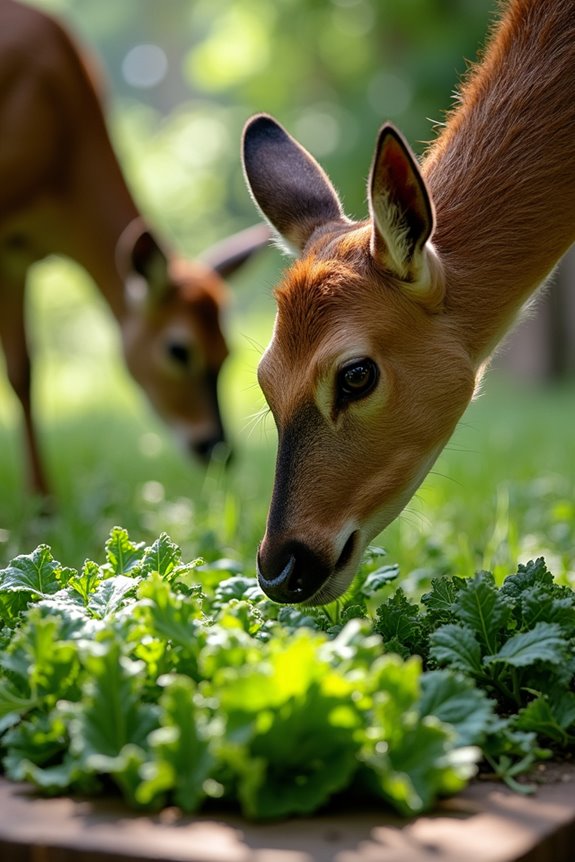
Ever wonder why deer in nature seem so healthy and energetic? They’re munching on fiber-rich leafy greens and wild plants all day long! You can replicate this natural diet in your backyard.
Browse from woody plants and fibrous leaves work perfectly as safe daily options. Think tender shoots, clover, and native shrubs—the same stuff they’d naturally consume year-round. Spring and summer? Deer absolutely love the fresh grasses and shrub growth available then.
Here’s the key: fiber keeps their digestive systems running smoothly. Skip high-starch greens and processed foods that’ll upset their stomachs. Instead, create a designated feeding area with accessible leafy greens. This encourages natural foraging while preventing overfeeding and waste.
Your backyard becomes a healthier haven when you offer what nature intended!
Nuts and Seeds: Winter Protein Boosters Deer Crave
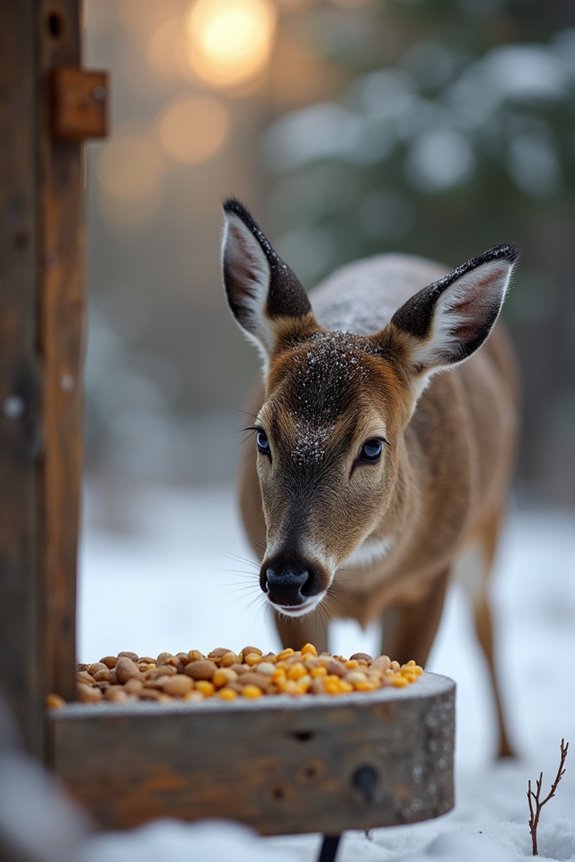
When temperatures drop and natural food sources shrivel up, deer’s bodies need extra protein to stay warm and strong—and nuts are nature’s perfect winter supplement!
You’ll want to focus on safe options that truly nourish:
- Acorns and hickory nuts from your yard offer ideal nutrition without harmful additives
- Organic almonds and cashews serve as excellent protein boosters when natural forage gets scarce
- Avoid shelled corn and human-grade nut mixes containing added sugars that upset their digestive systems
Here’s the key: use nuts to supplement—not replace—their natural diet. Think of them as their winter multivitamin! Combine these protein sources with high-fiber foods, and never overfeed. A handful goes far. Why? Because disrupting their gut microbiome causes serious problems. You’re not just feeding deer; you’re supporting their health through tough seasons. That responsibility feels good!
Budget-Friendly Vegetables That Last
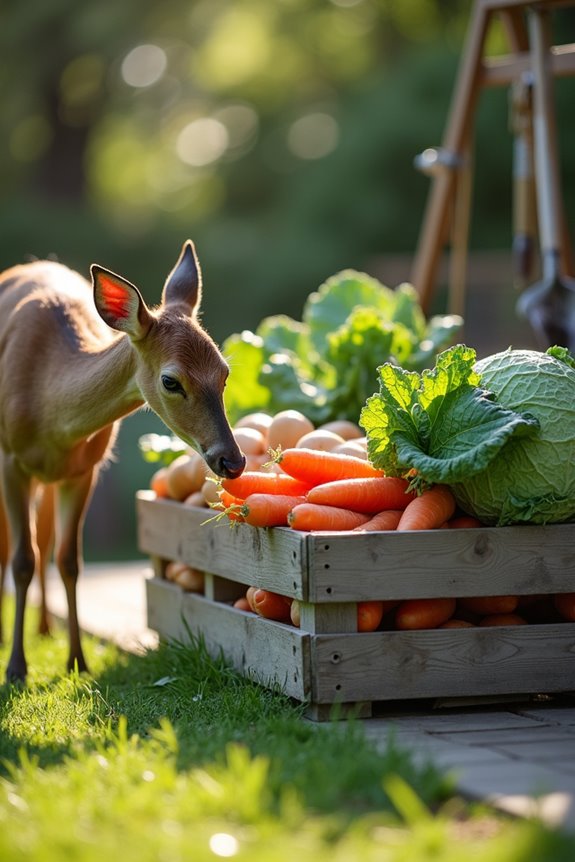
Your backyard feeding setup doesn’t need to drain your wallet—and that’s where hardy, storage-friendly vegetables come in! Sweet potatoes and winter squash store for months in cool, dry spaces, making them perfect budget deer feed options. Carrots and leafy greens? You can freeze or rotate them seasonally to extend availability year-round.
Here’s the smart part: cabbage and squash resist spoilage better than delicate produce, reducing waste and your costs. Limit corn though—it’s carb-heavy and lacks the fiber deer’s stomachs need.
Pro tip: pair these storage-friendly vegetables with natural forage or hay to balance nutrition and support rumen health during extended feeding. You’re not just saving money; you’re building a sustainable, healthy routine that keeps your deer thriving!
Foods That Harm Deer (And Why to Avoid Them)
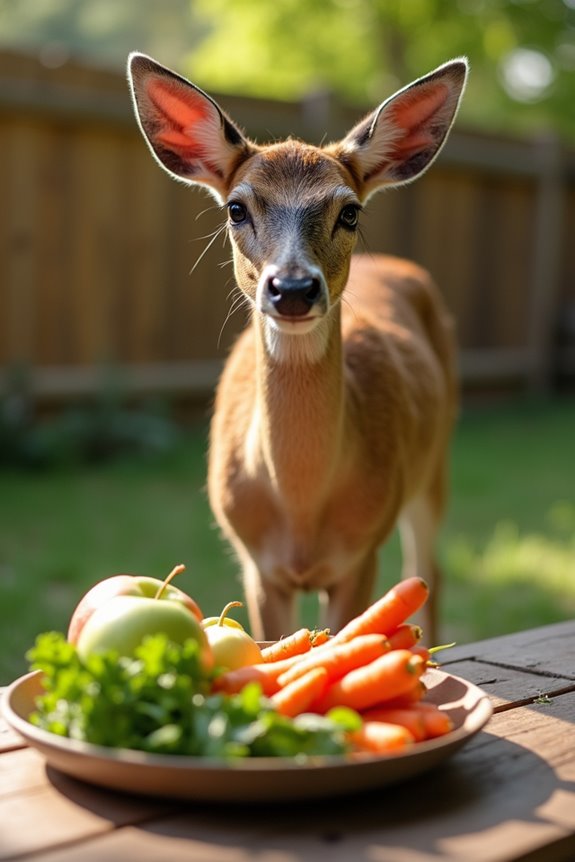
What foods do well-meaning deer feeders accidentally leave out that can actually hurt their backyard visitors?
Well-meaning deer feeders often unknowingly provide harmful foods like corn and bread that damage their delicate digestive systems.
You’d be surprised how many common foods damage deer’s delicate digestive systems! Here’s what to skip:
- Corn and bread – These starch-heavy culprits disrupt the rumen microbiome, causing severe diarrhea, dehydration, and potential starvation. Your deer might seem excited, but they’re heading toward serious trouble.
- Processed human foods – Shelled corn, nuts with sweeteners, or spices wreak havoc. Those additives aren’t meant for wild stomachs!
- Barley and wheat-based feeds – Indigestion strikes when you feed starch-heavy amounts regularly.
Here’s the truth: deer thrive on browse, forbs, and mast—their natural diet. Inconsistent, processed foods create gut upset and nutritional imbalance. Stick with what nature intended, and you’ll genuinely help your backyard herd flourish!