Your kitchen cabinets can last 10–30+ years depending on quality and care! Stock cabinets typically hit 10–15 years, while semi-custom ones reach 15–25, and custom solid wood cabinets? They’ll go 30 years or beyond. Here’s the real secret: water damage kills cabinets faster than anything else. Prevent it by fixing leaks, wiping spills immediately, and ensuring good ventilation. Tighten hinges regularly, use soft-close hardware, and apply protective finishes. These simple habits extend your investment by years—sometimes decades. Discover exactly which materials outlast others and specific maintenance routines that work.
How Long Kitchen Cabinets Actually Last
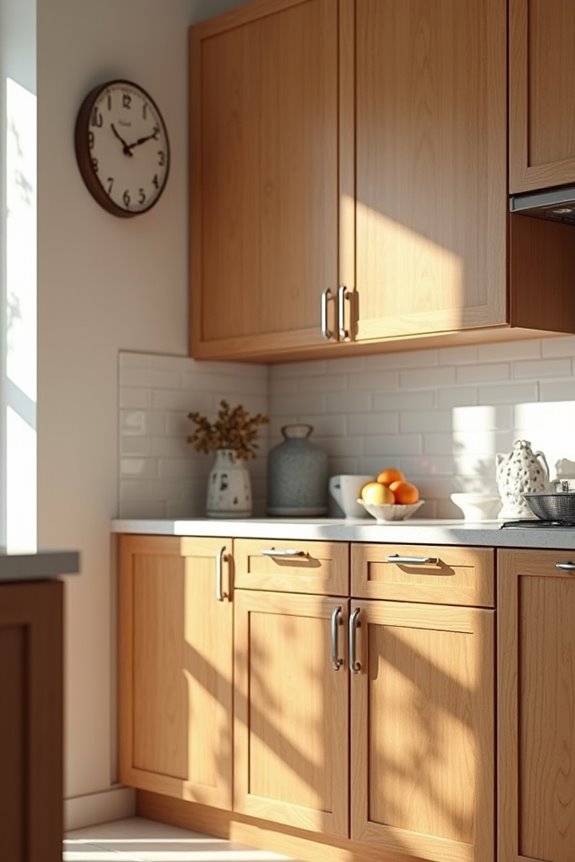
Ever wonder why your neighbor’s cabinets look brand new while yours are showing their age? The answer lies in cabinet lifespan and maintenance!
Why Your Neighbor’s Cabinets Look Brand New: It All Comes Down to Lifespan and Maintenance
Stock cabinets typically last 10 to 15 years, while semi-custom versions stretch to 15 to 25 years. Custom cabinets? They can go 30 years or beyond! Here’s the thing: materials matter immensely. Solid wood outlasts particleboard and MDF significantly. Think of it like comparing a sturdy oak tree to a weaker sapling.
Your cabinet lifespan depends on three key factors: material type, installation quality, and maintenance. Proper care extends everything. Moisture exposure? That’s your cabinets’ worst enemy!
You’re not stuck replacing everything though. Refacing or repainting refreshes the look while preserving the boxes. Watch for sagging doors, warping, or water damage—these signal trouble ahead. With smart maintenance choices, you’ll absolutely maximize your investment!
Stock vs. Semi-Custom vs. Custom Cabinets: Which Lasts Longest?
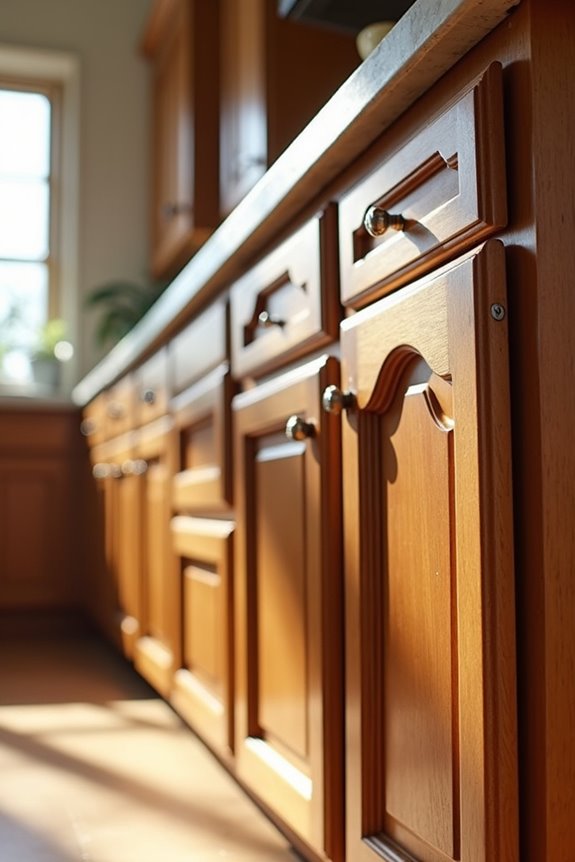
When you’re deciding between stock, semi-custom, and custom cabinets, you’re really choosing between different materials and construction quality that directly impact how long your investment’ll last. Stock cabinets use cheaper particleboard or MDF (medium-density fiberboard), which might only survive 10 to 15 years, while semi-custom cabinets with better materials can hang tough for 15 to 25 years, and custom solid wood cabinets? They’ll often outlast 30 years! Sure, custom cabinets cost more upfront, but paying extra for quality materials and craftsmanship means you’re actually saving money long-term since you won’t need replacements nearly as often.
Material Quality and Construction
Why do some kitchen cabinets survive decades while others start falling apart after a decade? The answer lies in what you’re actually buying.
Stock cabinets use particleboard or MDF—cheaper materials that weaken over time. Semi-custom and custom cabinets? They’re built from solid wood or high-quality plywood. That’s a game-changer for durability!
Think of it this way: particleboard absorbs moisture like a sponge, causing swelling and warping. Solid wood flexes naturally without breaking down. You’re investing in materials that genuinely withstand kitchen humidity, temperature shifts, and daily wear.
Here’s what matters most: quality materials directly determine how long your cabinets last. Choose wisely, and you’re setting yourself up for 25+ years of reliable storage. Skip on materials, and you’ll be renovating much sooner than you’d hoped!
Cost Versus Long-Term Value
you’re going to pay more upfront for cabinets that actually stick around.
Think of it like buying quality shoes versus cheap ones. Yes, stock cabinets cost less initially, but consider this:
- Stock cabinets last 10–15 years; semi-custom cabinets average 15–25 years
- Custom cabinets function beautifully for 30+ years with proper maintenance
- Higher-end options deliver better resale value when you eventually sell
- You’ll spend less on repairs and replacements over time
Semi-custom and custom cabinets justify their higher cost through longevity and durability. You’re investing in cabinets that won’t require replacement for decades! Sure, maintenance matters regardless of your choice, but premium construction means fewer headaches. Want cabinets that truly last? The lifespan difference makes the investment worthwhile.
How Cabinet Material Quality Affects Durability
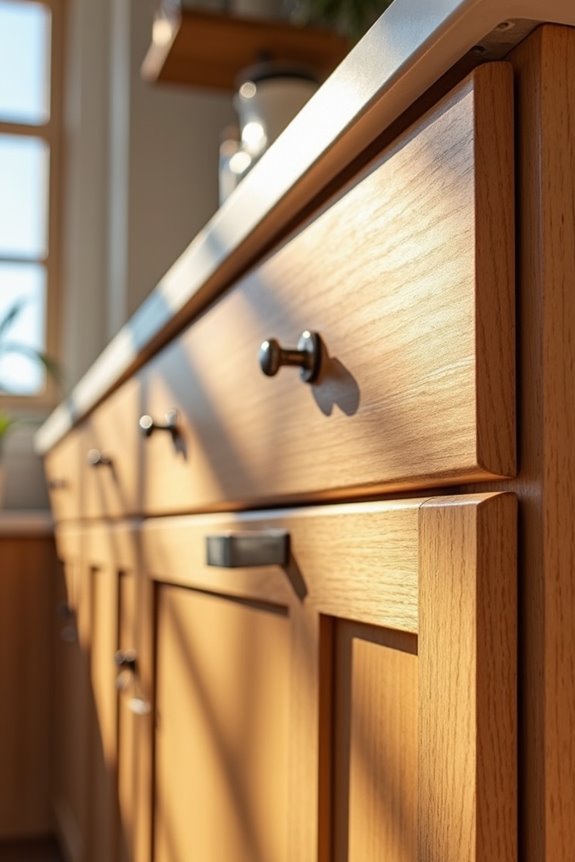
What’s inside your cabinet boxes matters—a lot! The material quality you choose directly determines how long your cabinets survive daily kitchen life.
| Material | Durability | Best For |
|---|---|---|
| Solid Wood | 20-30 years | Custom, high-end |
| Plywood | 15-20 years | Structural parts |
| MDF | 10-15 years | Budget-friendly |
Solid wood and plywood resist impacts and moisture better than particleboard or MDF. Here’s the thing: stock cabinets often use lower-grade composites that won’t handle heavy use as gracefully. When you invest in quality materials, you’re protecting your kitchen investment!
Moisture presents the biggest challenge—MDF swells when exposed to humidity, while solid wood stays stable. Proper installation and ventilation become your secret weapons, extending durability significantly. Choose wisely, and your cabinets become kitchen heroes!
Spotting Structural Damage vs. Cosmetic Wear
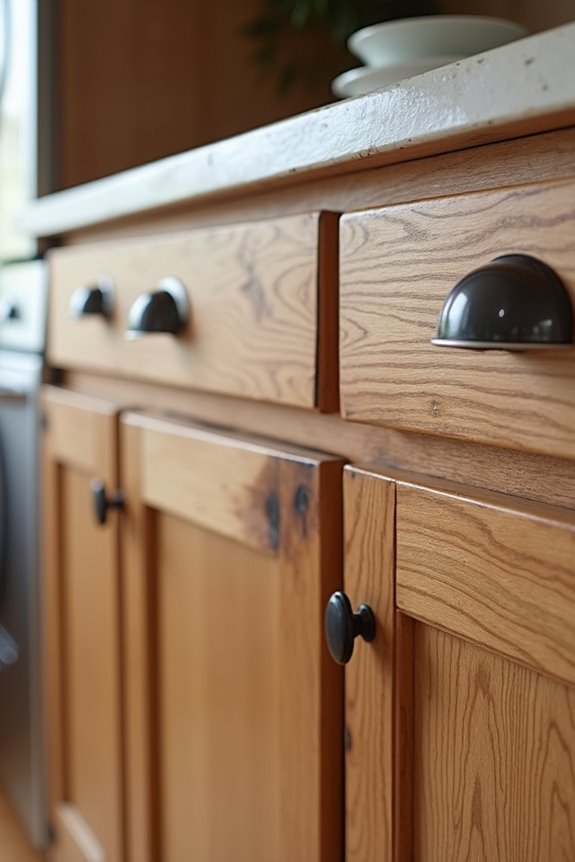
Now that you’ve picked quality materials, here’s the reality check: even the best cabinets show wear over time, and knowing what you’re looking at matters tremendously.
Even the best cabinets show wear over time—knowing what you’re looking at matters tremendously.
Here’s what separates real cabinet structure problems from simple cosmetic issues:
- Sagging shelves or warped doors signal structural failure
- Water damage causing swelling or mold indicates serious compromise
- Sticky drawers from worn tracks mean hardware deterioration is advancing
- Peeling finishes are just cosmetic—they won’t affect function
Think of it this way: a scratched door finish won’t compromise your cabinet’s integrity, but broken hinges or loose hardware will. Water damage heads straight to your cabinet’s core, creating structural weakness beyond surface wear.
You’re looking for patterns here. Minor cosmetic issues? Totally manageable. But sagging, swelling, or jammed drawers? Those signal your cabinet structure needs professional attention before deterioration spreads further.
Water Damage: Why It’s the #1 Cabinet Killer
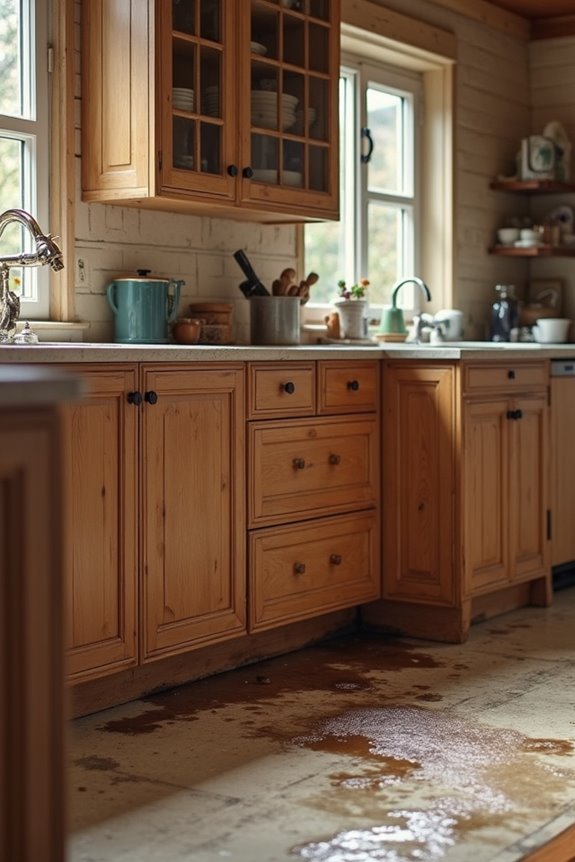
Why does water cause more cabinet damage than anything else? It’s simple: moisture destroys the core cabinet materials you’re relying on. Particleboard and MDF absorb water like sponges, causing swelling, warping, and delamination that compromises everything.
You’ll notice peeling finishes, mold growth, and doors that won’t close properly. High humidity and leaks accelerate this deterioration dramatically, cutting your cabinet lifespan from 15–20 years down significantly.
Here’s the good news: you can prevent most water damage! Fix leaks immediately, improve ventilation in your kitchen, and wipe spills near sinks right away. Regular inspections catch moisture problems early, before they spiral into expensive repairs.
Catching dampness and warping early saves you thousands. You’ve got this!
Daily Cabinet Cleaning: Simple Steps for Longevity
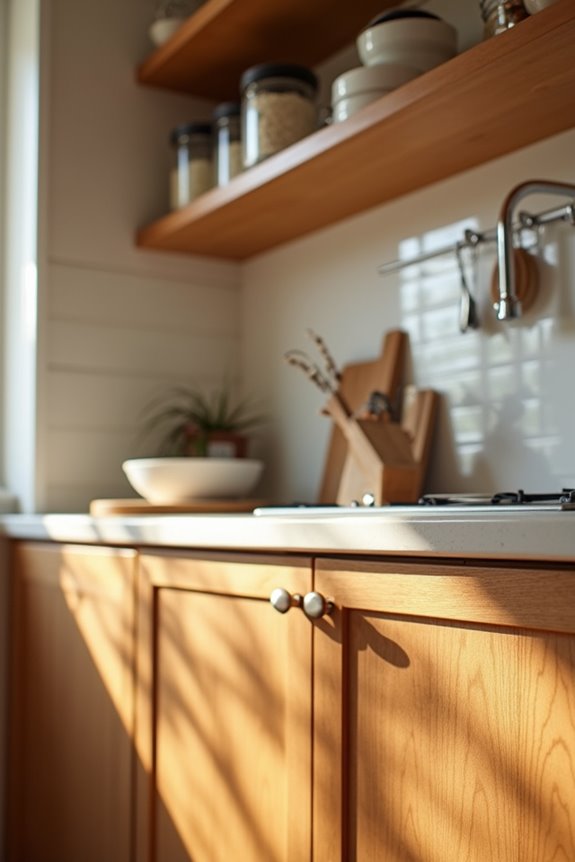
You’ve already learned how devastating water damage can be—so here’s the thing: a quick daily wipe-down is your best defense!
Your cleaning routine doesn’t need to be complicated. Here’s what actually works:
Your cleaning routine doesn’t need to be complicated—here’s what actually works to keep your cabinets protected.
- Wipe spills immediately with a damp microfiber cloth to prevent staining
- Dry surfaces thoroughly with a soft cloth to stop water absorption
- Line shelves with wax paper to minimize grime buildup
- Clean handles and corners weekly to remove accumulated grime
Every few months, tackle grease buildup with warm soapy water or baking soda. Think of it as protecting your investment—because you’re literally extending your cabinets’ lifespan! These simple steps keep your kitchen looking fresh while preventing damage that costs serious money down the road. You’ve got this!
Keep Surfaces Scratch- and Heat-Free: Practical Protection Methods
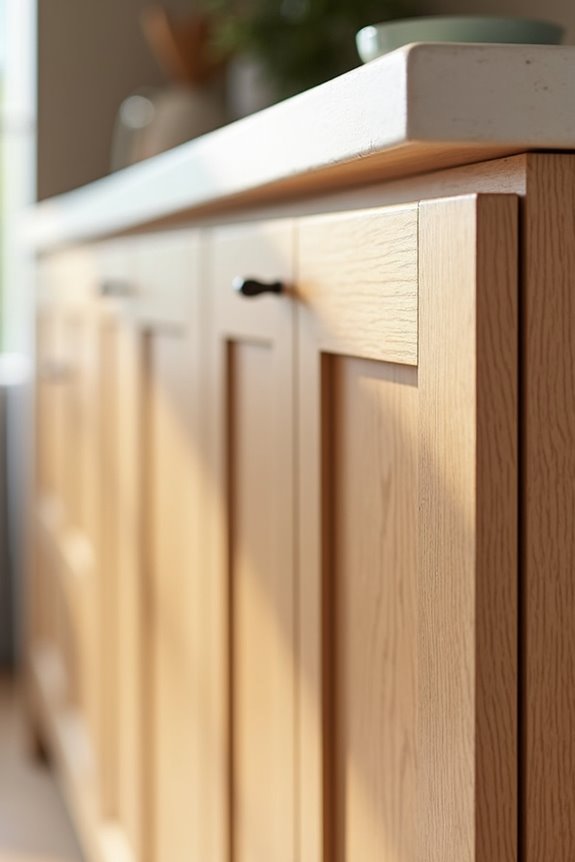
While keeping your cabinets clean prevents one type of damage, protecting them from heat and scratches stops a whole different kind of trouble! You’ll want to invest in cabinets protection that actually works.
Start by placing heat-resistant trivets under hot pots and pans—they’re game-changers for preventing discoloration and warping. Next, add shelf and drawer liners as your first defense against scratches and grease buildup. These inexpensive shields extend both appearance and function significantly.
Here’s where soft-close hardware makes a real difference. Soft-close hinges and slides reduce door slamming, preserving your durable finishes and hardware longevity. Finally, distribute weight evenly across shelves. Overloading creates unnecessary stress on doors, panels, and hinges.
These practical methods? They’re the difference between cabinets that fade and cabinets that thrive!
How Loose Hinges and Handles Speed Cabinet Decline
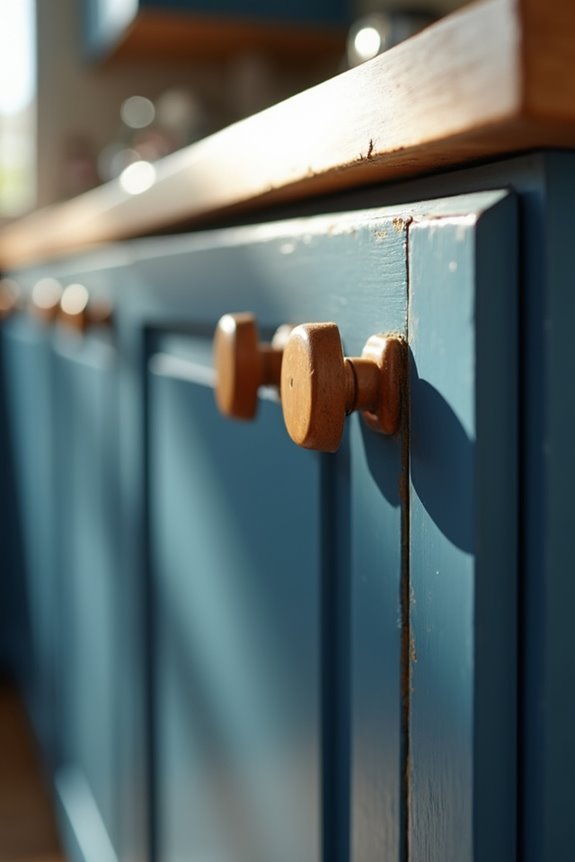
Have you ever noticed a cabinet door that doesn’t quite close right—hanging a little lower on one side than the other? That’s loose hinges and handles at work, silently damaging your cabinets!
Loose hardware wear happens faster than you’d think. Here’s what’s really going on:
- Misalignment and sagging – Loose hinges create stress points, causing doors to hang unevenly and wear frames faster
- Joint fatigue – Repeated slamming from loose hardware loosens screws further, accelerating structural damage
- Stripped screw holes – Worn holes lose holding power, making doors sag with uneven gaps
- Cabinet warping – Improperly tightened hardware transfers stress to your cabinet box, risking joint separation
The good news? You’re the cabinet longevity hero here! Regularly tighten screws, replace worn hinges, and use pilot-tested fasteners. These simple moves extend your cabinet’s life dramatically and keep everything operating smoothly!
Loose Handle? When DIY Fixes Work (and When They Don’t)
So those loose hinges we just talked about? Loose handles are equally frustrating! Here’s the good news: you can fix minor cabinet hardware issues yourself.
| Problem | DIY Solution | When to Skip It |
|---|---|---|
| Slightly loose screws | Tighten with screwdriver | Persistent loosening |
| Worn threads | Wood glue on threads | Metal-threaded anchors |
| Loose mounting plate | Reseat and tighten | Stripped screw holes |
| Multiple failing fasteners | Replace with thicker screws | Warped doors/boxes |
| Enlarged holes | Upgrade self-tapping screws | Structural damage present |
Your DIY fixes work great for minor issues, but know your limits. If handles keep loosening after tightening, water damage or warping’s likely causing problems. When multiple fasteners fail simultaneously, that’s your signal: stop troubleshooting and upgrade to longer, thicker screws instead. You’ve got this!
Repainting vs. Refacing: Which Option Extends Life?
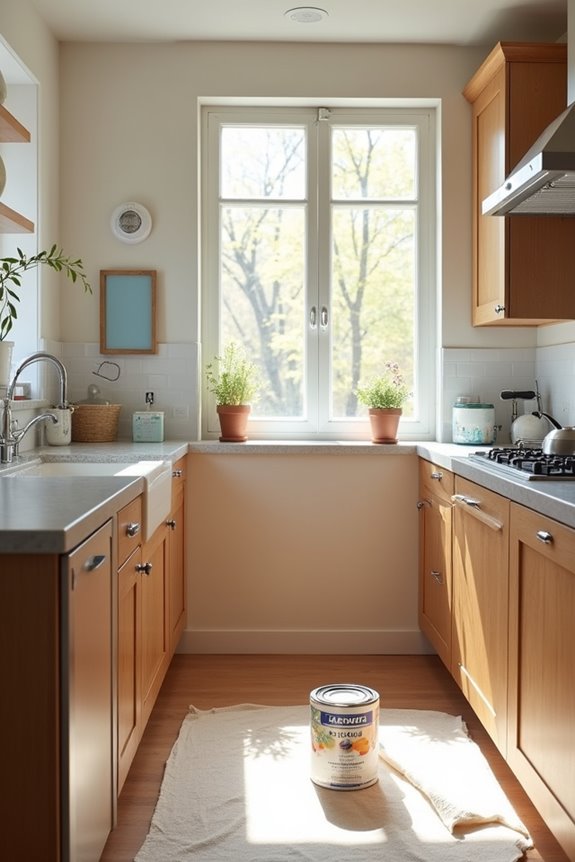
When you’re deciding between repainting and refacing, you’re really choosing between two paths to extend your cabinets’ life—and each has distinct advantages depending on your situation. Repainting typically lasts 8 to 15 years (sometimes longer!) if you nail the prep work like sanding and priming, though it demands you address any damage lurking on the cabinet boxes themselves. Refacing, on the other hand, lets you skip those risky discoveries by keeping your existing framework intact while you refresh just the doors and drawer fronts—a smart move if your boxes are already solid!
Longevity Of Repainting
Picture this: you’re staring at your kitchen cabinets, noticing the paint’s getting a little tired, and you’re wondering if you should just repaint them or bite the bullet and reface them entirely.
Repainting gives you solid longevity when you do it right. Here’s what determines how long your fresh paint actually lasts:
- Surface preparation quality – this foundation makes or breaks everything
- Cabinet materials – solid wood outperforms MDF, which swells with moisture
- Paint durability – cabinet-grade enamel beats standard wall paint
- Your maintenance habits – soft-close hardware and gentle cleaners extend results
You’ll typically enjoy 8 to 15 years before needing another full repaint. That’s genuinely impressive! Strategic touch-ups between major projects stretch this timeline even further. Repainting costs less upfront than refacing, making it perfect for homeowners like you who want lasting results without breaking the bank.
Refacing For Durability
Ready to compare your actual options? Refacing wins if you’re protecting an investment. Here’s why: you’re keeping those solid wood or plywood boxes intact—the hardworking foundation that does the real heavy lifting.
When you reface, you swap out doors and drawer fronts while preserving what matters most. Your cabinet longevity jumps to 15–25 years, depending on how well your boxes hold up. That’s significant!
Think of it this way: repainting adds years if everything goes perfectly, but refacing? It strategically extends your cabinet’s useful life by addressing what actually wears out first—the visible parts.
You’ll appreciate refacing most when your boxes are genuinely sturdy. Skip it only if damage runs deep into the structure itself. Otherwise, you’re making a durability-smart choice that respects both your wallet and your cabinets’ potential.
Why Pro Painters Get 50% Longer Cabinet Life
Ever wonder why a professional’s painted cabinets look fresh for 15 years while a DIY job starts peeling after five?
The secret’s in the process. Professional painting extends your cabinet lifespan by 50% through meticulous attention to detail. Here’s what separates the pros from the rest:
- Thorough surface preparation – They clean, sand, and prime every inch properly
- Quality materials – Cabinet-grade enamel and acrylic paints outperform budget options
- Sprayed, smooth coatings – Professional equipment delivers flawless finishes without brush marks
- Full cure time – They respect drying periods between coats
Your cabinets deserve better than shortcuts. When you invest in professional painting, you’re choosing durability that lasts. That’s belonging to a community that values quality craftsmanship and smart home decisions!
Cabinet Materials and Finishes Built to Last
When you’re choosing cabinets, you’ve got to think about what they’re made from and what’s protecting that material—because honestly, solid wood with quality polyurethane finishes will outlast particleboard by decades! Your cabinet material choice (whether it’s plywood, HDF, or solid wood) paired with the right protective coating (like cabinet-grade enamel or moisture-resistant finishes) makes all the difference in whether you’re replacing them in 10 years or enjoying them for 30+. Let’s explore how smart material and finish selections can keep your cabinets looking fresh and functioning perfectly for the long haul.
Solid Wood Versus Engineered
What’s the single biggest factor that determines whether your kitchen cabinets’ll last 15 years or 50? The material you choose!
Here’s the honest truth about solid wood versus engineered materials:
- Solid wood cabinets last 30+ years with proper care
- Engineered options like MDF or particleboard may fail in 10-15 years
- Plywood and HDF offer mid-range durability and affordability
- Moisture exposure causes engineered materials to swell and warp
Solid wood brings real durability to your kitchen. It resists moisture better, especially when finished with polyurethane coatings that protect against scratches. Engineered materials? They’re vulnerable in damp environments.
You’re investing in your home’s heart. Choose materials that’ll actually stand the test of time. Quality structural materials mean fewer replacements and genuine peace of mind!
Protective Finishes and Coatings
You’ve picked great materials, but here’s what really keeps your cabinets looking fresh for decades: the finish on top!
Protective finishes like polyurethane coatings and laminated surfaces create a shield against moisture, stains, and scratches. Think of them as your cabinets’ bodyguards! Cabinet-grade enamel or acrylic paints provide excellent durable coatings when applied properly. The secret? Proper surface preparation makes all the difference.
| Finish Type | Moisture Resistance | Best For |
|---|---|---|
| Polyurethane | Excellent | High-traffic kitchens |
| Laminate | Very Good | Busy families |
| Cabinet-grade Paint | Good | Custom looks |
Here’s the thing: regular maintenance extends your protective finishes’ effectiveness. Clean gently and reapply sealants periodically. You’re investing in longevity when you care for these coatings!
Material Selection for Durability
Ever wonder why some kitchen cabinets look brand new after 20 years while others fall apart in five? The secret’s in your material choices!
You’ve got real options here:
- Solid wood – holds paint beautifully and resists wear like a champ
- Plywood – super durable and way more stable than cheaper alternatives
- High-density fibreboard (HDF) – quality structural material that won’t let you down
- Cabinet-grade enamel or polyurethane finishes – moisture-resistant coatings protecting everything underneath
Here’s the thing: skip particleboard for structural parts. It’ll disappoint you fast. Instead, invest in solid wood or plywood frames with quality finishes that resist moisture and scratches. Pair these materials with proper installation, and you’re building cabinets that’ll genuinely last 15+ years. You’re not just buying cabinets—you’re joining people who choose quality!
Eco-Friendly Materials and Hardware Upgrades That Last
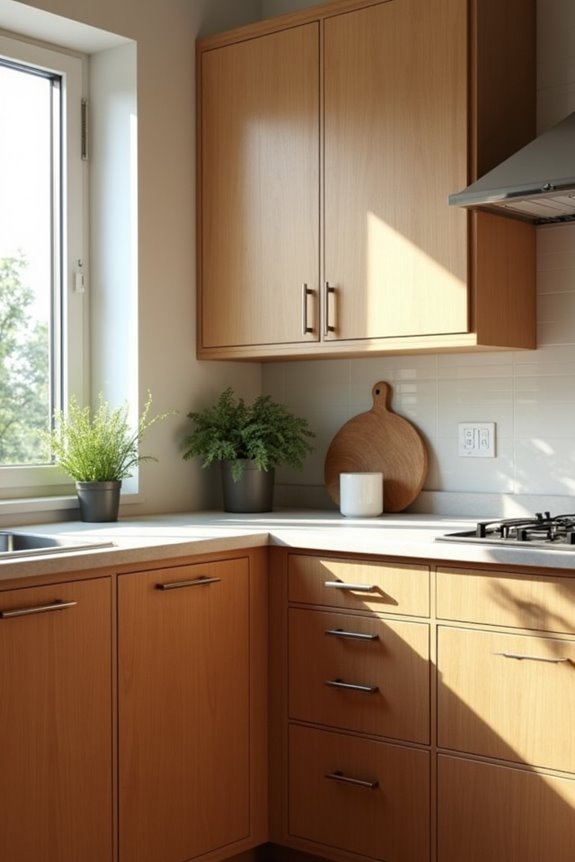
How much longer could your cabinets actually last if you chose sustainable materials and upgraded the hardware doing the heavy lifting?
You’d be surprised! Switching to eco-friendly materials and durable hardware transforms cabinet longevity dramatically. FSC-certified plywood and solid wood resist warping better than cheaper alternatives. Low-VOC finishes protect your home while lasting longer than traditional options.
| Upgrade | Benefit | Lifespan Boost |
|---|---|---|
| Soft-close hinges | Reduces slamming wear | +5-8 years |
| Quality drawer slides | Smooth operation | +7-10 years |
| Moisture-resistant polyurethane | Prevents swelling | +10+ years |
| Recycled-content shelves | Durable and green | +4-6 years |
| Laminated coatings | Enhanced protection | +8-12 years |
Upgrading hardware isn’t just smart—it’s joining a community prioritizing quality over quick fixes. Your cabinets become investments, not disposables.
Should You Refresh Cabinets or Replace Them Entirely?
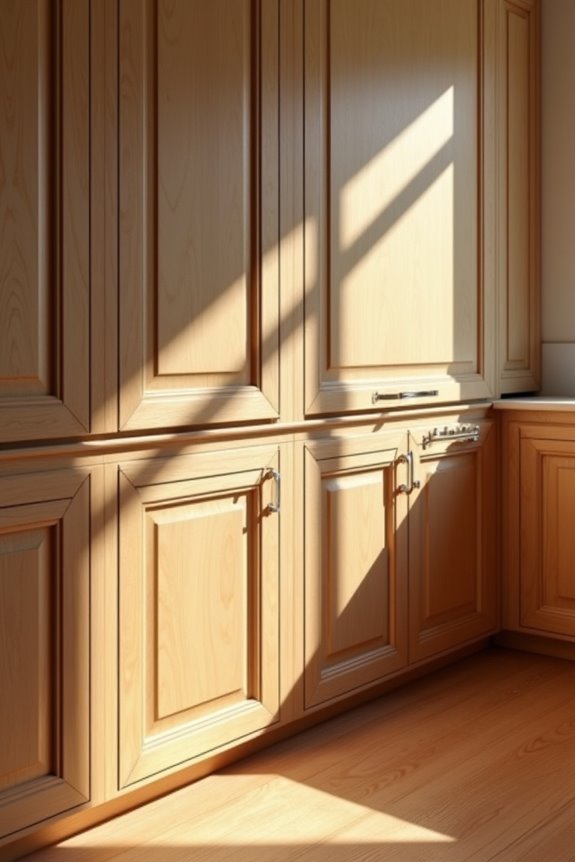
When your cabinets start showing their age, you’re facing a pivotal decision: give them a fresh makeover or tear them out and start completely fresh?
Consider these factors when weighing refacing vs replacement:
- Age and material longevity – Cabinets older than 15–20 years often benefit from replacement rather than refreshing
- Water damage assessment – Extensive moisture issues signal replacement; minor wear suggests refacing works
- Layout needs – Significant changes require full replacement; cosmetic updates favor refreshing
- Budget reality – Refacing costs substantially less while modernizing appearance
Here’s the truth: refacing preserves your existing boxes while updating doors and drawer fronts, typically costing less than replacement. You’ll experience minimal disruption and maintain resale value through updated style and improved functionality. However, if wear and tear has compromised structural integrity, replacement becomes your smarter investment. Trust your gut—and your budget!
How Regular Maintenance Protects Your Cabinet Investment
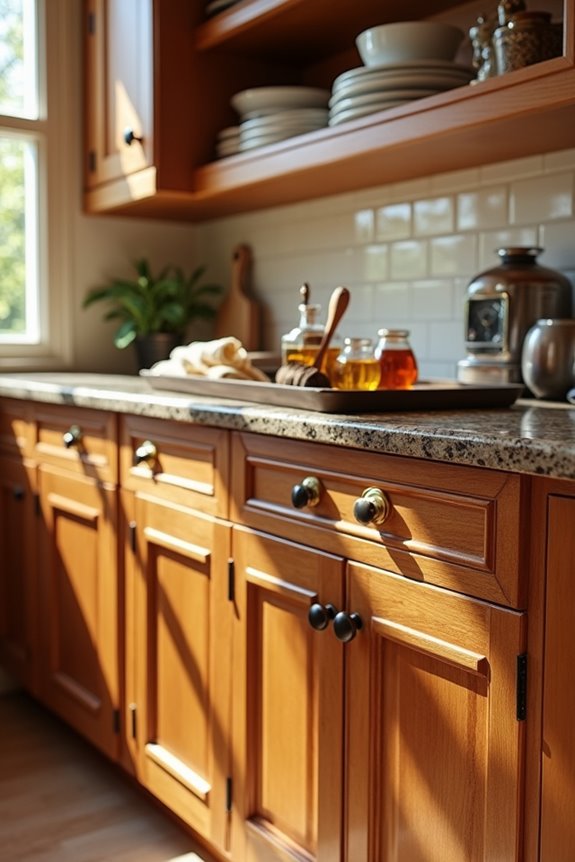
What’s the difference between cabinets that look pristine after a decade and ones that look worn out in five years? Simple: intentional care and maintenance!
You’re protecting a real investment here. Daily habits—wiping spills immediately, using soft cloths, avoiding harsh cleaners—prevent moisture damage that destroys finishes. Every few months, deep clean near your stove and handles where grease builds up.
Don’t overlook hardware either. Tightening hinges and adjusting doors keeps everything aligned and functioning smoothly. Consider soft-close mechanisms; they reduce wear from constant use.
This maintenance routine directly supports longevity. Painted cabinets typically last 8 to 15 years, but proper care extends that significantly. You’re not just preserving appearance—you’re maintaining storage efficiency and resale value. Think of it as friendship with your cabinets: show them attention, and they’ll serve you beautifully for years!