
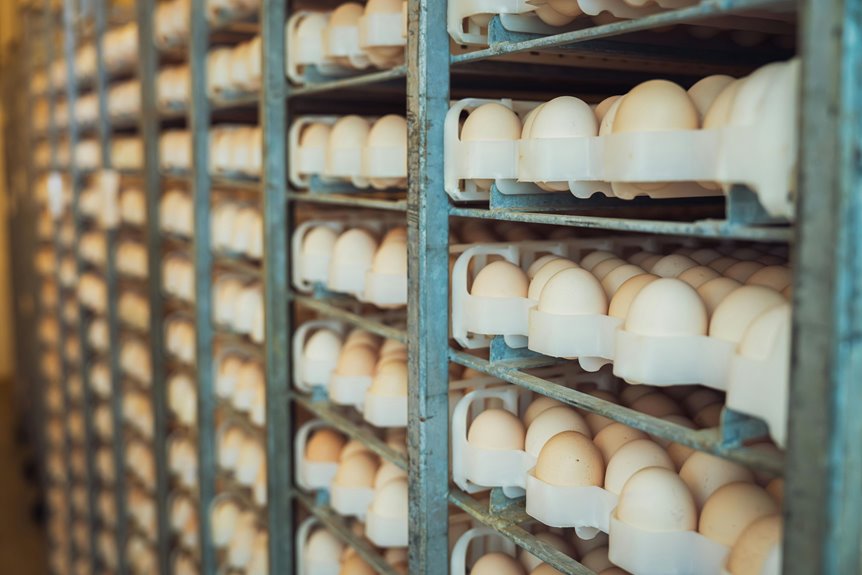
Your backyard eggs last three weeks on the counter unwashed, or two to three months refrigerated—seriously! The secret’s the bloom, that natural protective coating on fresh eggs. Skip washing unless they’re visibly dirty; keeping them unwashed preserves this moisture-sealing shield. Once washed, refrigerate immediately in a sealed container. Want to stretch storage nearly a year? Water glassing—submerging eggs in lime-water—does the trick. The specifics on timing, freshness tests, and long-term methods await!
How Long Fresh Eggs Last: Quick Answer
How long can you actually keep those gorgeous eggs you’ve collected from your backyard coop? Here’s the straightforward answer: unwashed eggs with their protective bloom last about two to three weeks at room temperature. Pretty impressive, right?
Want them to stick around longer? Refrigeration extends your shelf life dramatically—we’re talking two to three months or more! The trick is keeping that bloom intact on unwashed eggs. Once you wash them, you’ve got to refrigerate immediately, and they’ll last two to three months for peak quality.
Here’s my best advice: don’t wash your eggs unless you’re actually using them soon. Store unwashed eggs in a clean area, and you’ll join countless backyard chicken keepers who’ve mastered egg storage like pros!
The Egg Bloom: Why It Matters for Storage
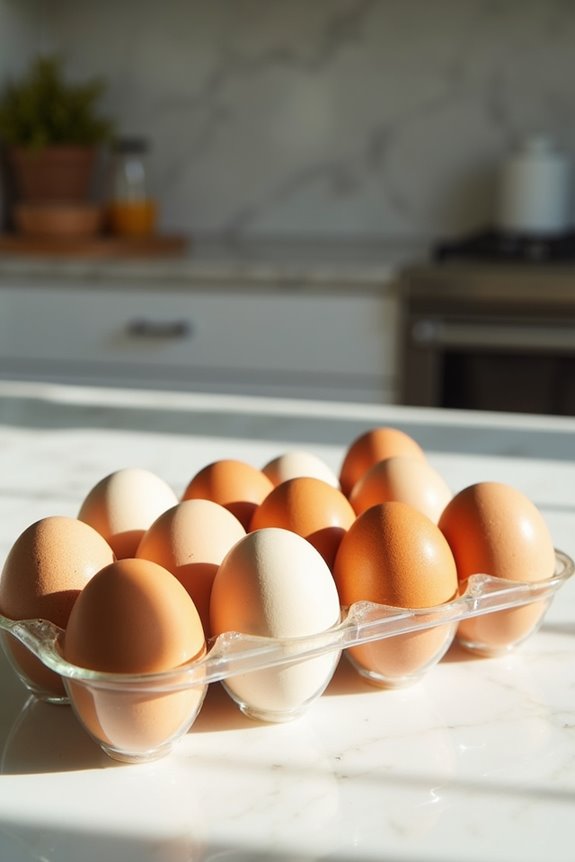
You’ve probably noticed that fresh backyard eggs sometimes have a dusty coating on the shell—that’s the bloom, nature’s built-in security system that seals moisture in and bacteria out! When you wash those eggs, you’re actually removing this protective layer, which means they’ll spoil faster unless you refrigerate them right away. Keep your eggs unwashed if you want them sitting safely on your counter for 2–3 weeks or longer, because that bloom is doing all the heavy lifting to keep them fresh!
Natural Protective Coating
When you crack open a freshly laid egg, there’s actually an invisible superhero at work—a natural coating called the bloom, or cuticle, that’s doing serious heavy lifting to keep your eggs fresh!
This protective layer seals your egg’s shell, preventing moisture loss and blocking bacteria from sneaking inside. Think of it as nature’s security system. Unwashed eggs keep this bloom intact, which is why they’ll happily sit on your counter longer than their washed cousins.
Here’s the thing: once you wash eggs, you’re basically removing that superhero cape. Moisture loss accelerates, and room-temperature storage becomes riskier. You’ll want refrigeration then.
Washing Removes Storage Benefits
What’s the biggest mistake backyard chicken keepers make? Washing your eggs before storing them!
Here’s the thing: that natural coating on freshly laid eggs—the bloom—is your secret weapon. It seals moisture in and keeps bacteria out, letting unwashed eggs sit safely at room temperature for a month or longer. Pretty amazing, right?
But washing? It strips away this protective shield entirely. Once you wash them, you’ve got maybe a week before quality declines rapidly at room temperature. That’s why washed eggs demand immediate refrigeration in sealed containers to prevent moisture loss and odor absorption.
The washing impact is real. If you’re uncertain about cleanliness, go ahead and wash—just commit to refrigerating them right away. Your eggs will thank you!
When to Wash Your Eggs (And Why It Matters)

You’ll want to skip washing your eggs unless they’re visibly dirty—that protective bloom is like nature’s bodyguard, keeping moisture in and bacteria out for 2–3 weeks at room temperature! If you do need to wash them (say, after a muddy nest situation), use warm water, dry them thoroughly, and get them straight into the fridge in a covered container to lock in freshness. The choice you make right now between washing and preserving that bloom will seriously impact how long your eggs stay fresh and where you can safely store them.
Preserving The Protective Bloom
Because your fresh eggs come with their own invisible bodyguard, you’ll want to think twice before washing them away! That protective coating—the bloom—is nature’s genius design for keeping bacteria out and moisture in. When you skip washing unwashed eggs, you’re preserving this natural shield, letting you enjoy room-temperature storage for several weeks!
Here’s the thing: washing removes that crucial bloom protection, forcing you into refrigeration after washing to stay safe. It’s like removing armor before battle!
So what’s the smart move? Leave clean eggs alone. Seriously! Only wash when absolutely necessary, using warm water gently. Pat dry completely, then refrigerate promptly in an enclosed container.
You’re not just storing eggs—you’re respecting nature’s packaging while keeping your backyard flock’s gifts fresher, longer!
Washing Timing And Methods
The timing of when you wash your eggs is just as important as how you wash them—and honestly, the best move is often not washing them at all! Here’s why: unwashed eggs keep their natural protective coating called the bloom, which extends room-temperature storage significantly.
Consider these wash timing guidelines:
- Skip washing unless eggs are visibly dirty or you’re using them within days
- Wash only soiled eggs individually; leave the rest unwashed until needed
- If washing becomes necessary, use warm water (never cold!) and dry thoroughly before refrigerating
The bloom protection is real. Unwashed eggs last a month or longer at room temperature, while washed ones demand immediate refrigeration at 40°F or below. You’re essentially choosing between convenience now or flexibility later. What matters most to your household?
Unwashed Eggs at Room Temperature: 3-Week Peak Quality

Want to know a secret that’ll change how you store your backyard eggs? Unwashed eggs at room temperature can stay safe for 2–3 weeks! That protective coating on eggshells—called the bloom—is your best friend. It blocks moisture loss and keeps bacteria out, giving you that precious window of peak quality.
Unwashed eggs at room temperature stay safe 2–3 weeks thanks to their protective bloom coating—your secret to peak quality storage.
Here’s the trick: store them round-end up in a cool, dry spot away from sunlight. Your kitchen counter works, but cooler temperatures stretch that shelf life longer. Warmer homes? They’ll shorten it.
Daily collection matters too. Skip washing unless they’re genuinely dirty. Once you wash them, refrigerate immediately—no exceptions!
You’re building storage confidence now. That first week delivers the freshest eggs, but you’ve got cushion time. Pretty smart, right?
Washed Eggs: Refrigerate Immediately for 2-3 Months
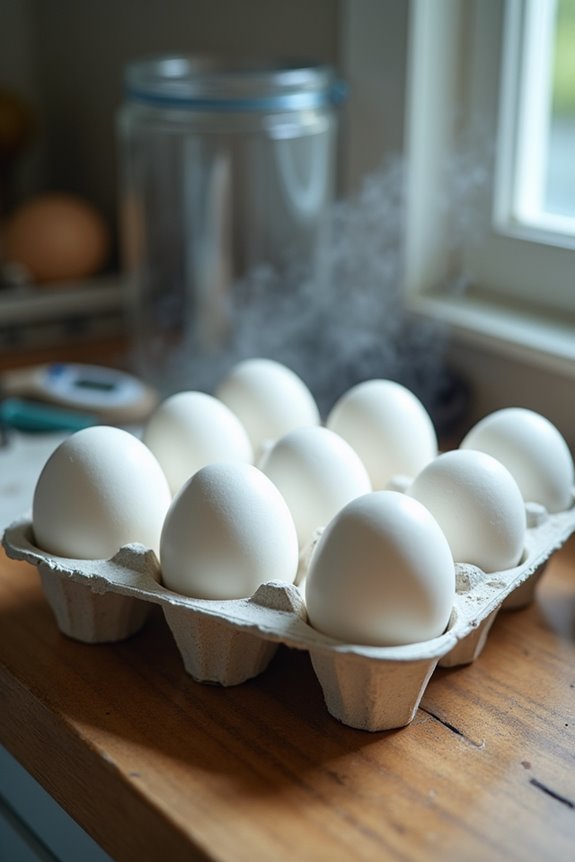
Washed eggs won’t stay quality quite as long as unwashed ones, even chilling in your fridge, so you’re trading that extended shelf life for cleanliness and peace of mind! Here’s what you need to know about maximizing food safety with your washed eggs:
- Refrigerate immediately – Don’t leave washed eggs sitting out; cold temperatures are essential for preventing bacterial growth
- Use an enclosed container – This reduces moisture loss and keeps odors from affecting your eggs
- Plan for 2-3 months – That’s your realistic shelf life window for maintaining best quality
Why the shorter timeframe? Washing removes the protective coating eggs naturally have, making them more vulnerable even refrigerated. You’re doing the right thing prioritizing food safety! Store those washed eggs properly, and you’ll enjoy them confidently.
Refrigerated Storage: Extending Freshness Beyond 3 Months
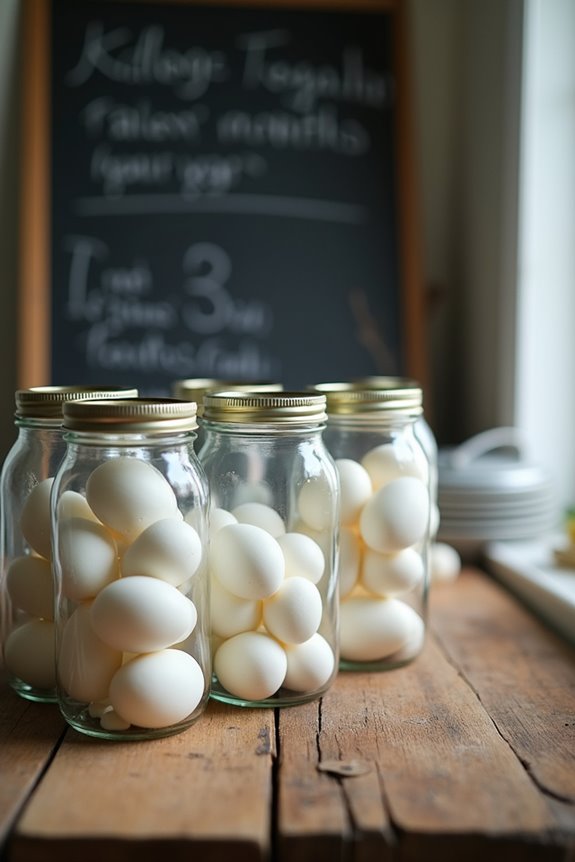
You can actually stretch your eggs’ freshness beyond three months by storing them in a sealed container that keeps out air and odors—I’ve found this simple step makes a real difference! Rotate your eggs regularly by using the oldest ones first, which prevents waste and ensures you’re always eating your freshest stock. Keep your fridge steady at 40°F or below without opening and closing it constantly, since temperature swings can mess with quality faster than you’d think!
Sealed Container Storage Best
If you’re serious about keeping your backyard eggs fresh for months, sealed containers in the refrigerator are genuinely your best bet! You’ll want to embrace this simple strategy because it’s honestly a game-changer for your freshness window.
Here’s why sealed containers work so well:
- Minimize moisture loss – Airtight storage prevents your eggs from drying out, keeping them plump and usable longer
- Block odor absorption – Your eggs won’t pick up funky refrigerator smells from neighboring foods
- Support stock rotation – Sealed containers make it easy to track which eggs you added first, helping you use the oldest ones within that essential 2–3 month window
Think of sealed containers as your eggs’ protective bubble. When you store them this way at 40°F or below, you’re not just refrigerating—you’re truly preserving quality. That’s belonging to a community of egg-keepers who do it right!
Rotation Practices Prevent Waste
Once your eggs settle into that refrigerated sealed container, the real magic happens through smart rotation—and honestly, this simple habit makes all the difference between eggs you’ll actually use and ones that quietly expire in the back of your fridge.
Here’s your game plan: move the oldest eggs forward each week. Think of it like a grocery store display! This rotation practice keeps freshness top-of-mind and prevents waste.
Weekly stock checks become your secret weapon. You’ll naturally prioritize older eggs before newer ones arrive. This storage strategy transforms refrigeration from passive to active management.
Why does this matter? You’re maximizing that three-month window while maintaining quality. Simple, consistent rotation beats any fancy system. Your backyard flock deserves respect—use what they’ve given you thoughtfully!
Temperature Consistency Maintains Quality
Your rotation system works great, but there’s one thing that’ll either supercharge your storage success or quietly sabotage it—and that’s keeping your fridge temperature rock-solid at about 40°F (4°C).
Fluctuating refrigeration temperatures? They’re basically the enemy of freshness. Here’s why that consistency matters:
- Stable cold slows moisture loss and bacterial growth dramatically
- Temperature swings drastically shorten your shelf life within weeks
- Room temperature exposure after refrigeration compromises both texture and safety
Once those eggs hit your fridge, they’ve got to stay there. No counter-sitting! Even brief warm-ups create tiny cracks in quality that multiply over time. Think of temperature stability as your secret weapon for stretching storage toward that full three-month mark. Your backyard flock’s gifts deserve that rock-solid commitment!
Room Temperature vs. Refrigerated: Which Works for You?
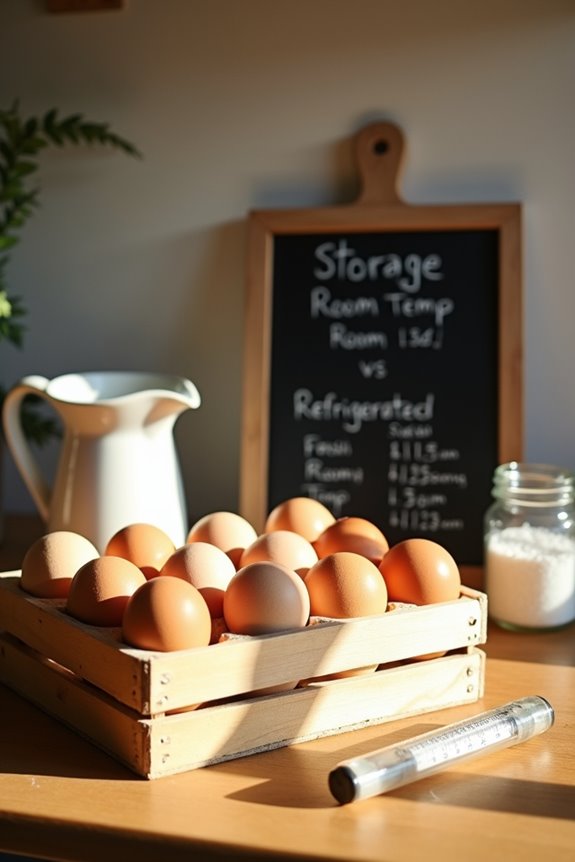
Ever wonder why your grandmother kept eggs in a bowl on the counter while you’ve always refrigerated yours? The answer lies in the bloom—that natural protective coating on unwashed eggs!
Here’s your choice: unwashed eggs with intact bloom thrive at room temperature for 2–3 weeks, while refrigerated eggs last much longer. You’re joining a growing community of backyard chicken keepers who’re rediscovering traditional storage methods.
| Storage Method | Best For | Duration |
|---|---|---|
| Room Temperature (unwashed) | Fresh flavor lovers | 2–3 weeks |
| Refrigerated (any eggs) | Maximum safety | Several months |
| Water Glassing | Long-term storage | Up to 9 months |
Want fresher-tasting eggs? Keep unwashed ones on your counter. Need peace of mind? Refrigerate them at 40°F (4°C). Your choice depends on your lifestyle and how quickly you’ll use them!
The Float Test: Check Freshness Before Cooking
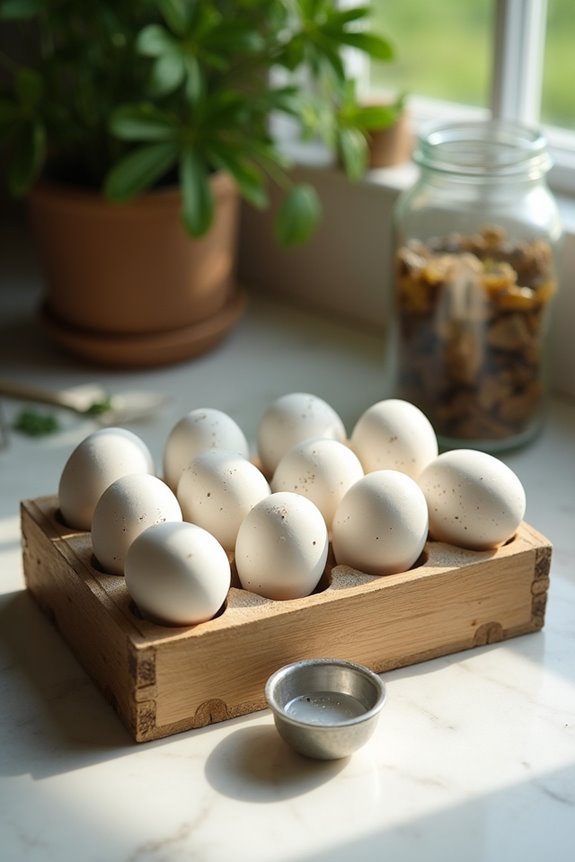
Want to know if your backyard eggs are actually fresh? Grab a bowl of cool water and drop an egg in—it’s that simple! Fresh eggs sink flat on the bottom, older eggs stand upright (still good to eat!), and floaters? Those need to go straight in the trash because they’re no longer safe.
Water Test Method
How can you tell if that egg sitting in your kitchen is still good to eat? The float test is your secret weapon for checking freshness before cooking!
Here’s how you’ll become an egg-freshness expert:
- Fill a bowl with cool water and gently place your egg inside
- Watch carefully: sinking eggs lying flat are super fresh, standing eggs are older but still usable, and floating eggs mean discard immediately
- Combine this with other freshness cues like checking yolk roundness and albumen thickness
Fresh unwashed backyard eggs with their protective bloom can hang out at room-temperature storage for 2–3 weeks. Washed eggs? Refrigerate those right away! That strong buoyant float? It signals serious gas buildup from spoilage. You’ve got this!
Freshness Indicators Explained
So you’ve got a carton of backyard eggs sitting on your counter, and you’re wondering: are they still safe to eat?
The float test is your best friend! Simply place an egg in cool water and watch what happens. Fresh eggs with bloom intact sink flat—that’s your green light. Eggs standing upright? Still usable, just not super fresh. Floating eggs? Toss them immediately.
Why does this work? As eggs age at room temperature storage, moisture escapes through the shell, creating more air inside. That increased air pocket makes older eggs buoyant.
Here’s the bonus: unwashed eggs with their protective bloom keep longer than washed ones. So before cooking, grab a bowl, fill it with water, and let your eggs tell you their story. Trust the float test every time!
Guard Against Temperature Swings and Humidity
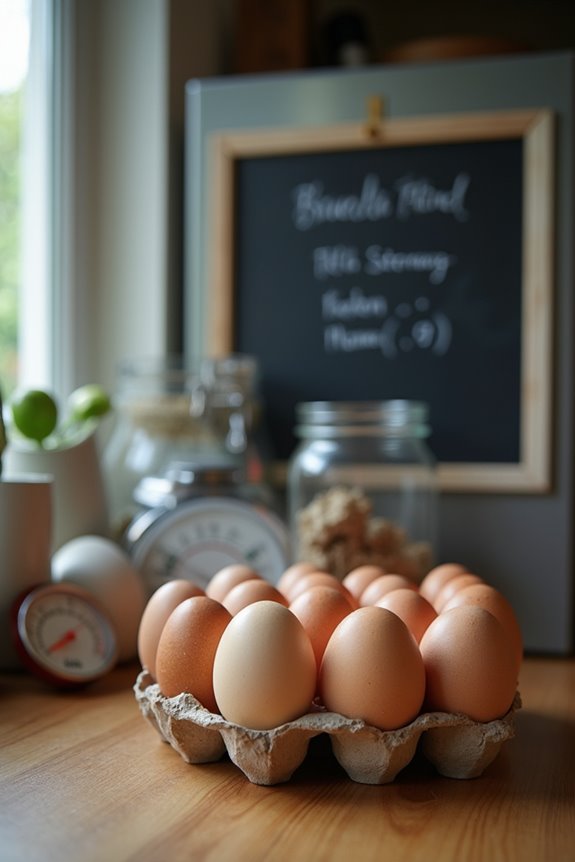
Why does your kitchen feel like the perfect spot to store eggs when it’s actually working against you? Temperature swings and humidity are your eggs’ worst enemies, even though your countertop seems convenient.
Here’s what you need to know:
- Avoid temperature fluctuations—keep eggs in a stable environment under 75°F (24°C) away from heat sources; repeated warming and cooling accelerates spoilage and damages the protective bloom
- Choose low humidity spaces—dry locations preserve moisture in unwashed eggs, extending room-temperature storage life significantly
- Skip sunlight and damp areas—direct light and moisture degrade your bloom protection and invite mold or bacteria
Your refrigerator at 34–40°F (1–4°C) handles humidity better than your kitchen ever could. Store eggs in the back where temperature stays consistent. Trust me, this simple shift dramatically extends freshness!
Keeping Eggs Cool in Summer Heat
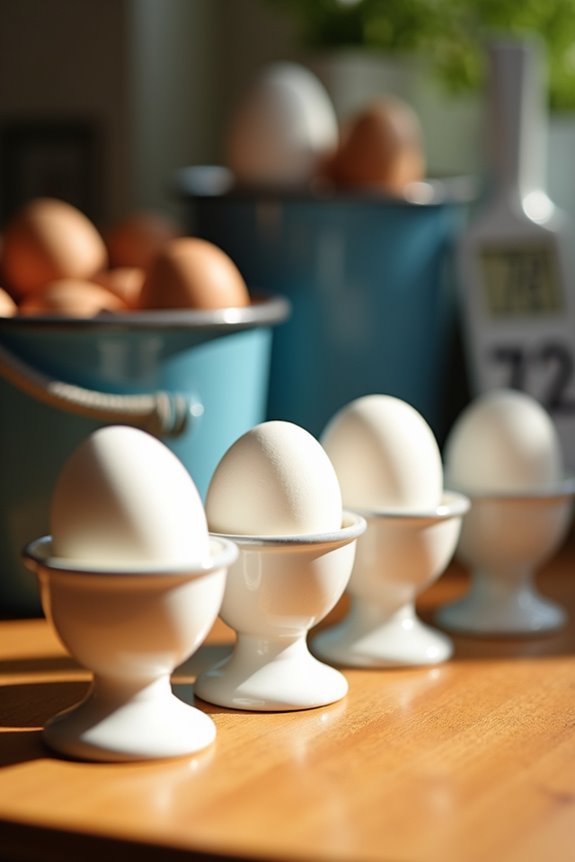
Your refrigerator’s steady 34–40°F (1–4°C) looks pretty good right about now, doesn’t it? Summer storage demands strategy! Keep unwashed eggs with their natural bloom at room temperature only if your storage spot stays cool, dry, and below 75°F (24°C). Direct sun? Absolutely not. Skip it.
Collect eggs more frequently during warm weather. This minimizes time they spend sitting around getting older. Washed or dirty eggs need refrigeration immediately—no exceptions in summer heat. Store them in enclosed containers to prevent moisture loss and odor absorption.
Here’s the reality: unwashed backyard eggs survive 2–3 weeks at room temperature during summer if kept shaded, but quality declines faster than cooler months. When refrigeration isn’t available, water-glassing offers a creative alternative, though it requires careful handling. Your fresh eggs deserve protection!
Rotate Eggs by Collection Date
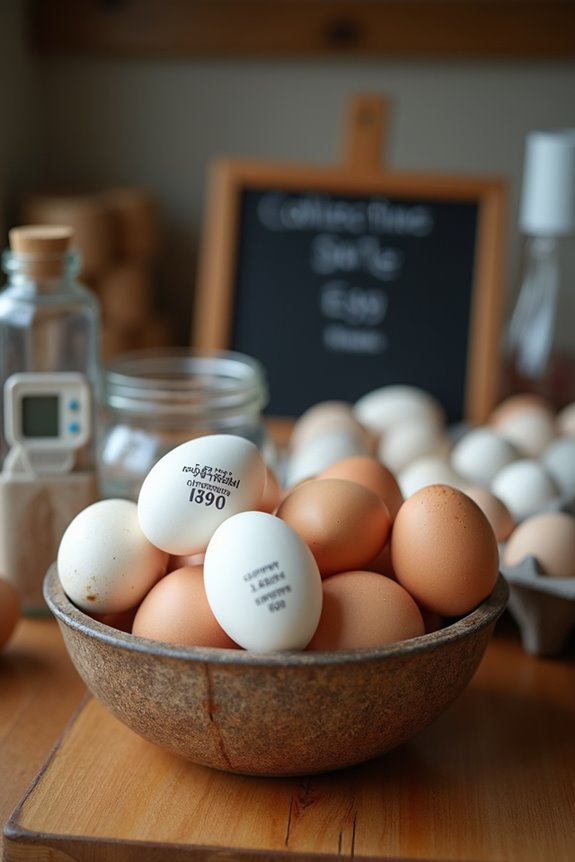
Ever notice how it’s easy to forget which eggs you grabbed first? That’s where eggs rotation saves the day! You’ll want to implement a simple freshness tracking system by labeling each carton with its collection date. Here’s your game plan:
- Mark cartons immediately upon collection or arrival
- Store older eggs toward the front for room-temperature storage
- Keep refrigerated eggs at the back, rotating them forward as you use them
For unwashed vs refrigerated eggs, the strategy differs slightly. Unwashed eggs with their protective bloom last longer at room temperature—check them regularly using the float test. Once you refrigerate or wash eggs, update your labels to reflect the new storage date. This ensures you’re consuming eggs within 2–3 months, maintaining peak freshness and safety for your family!
Water Glassing: Preserving Eggs Long-Term
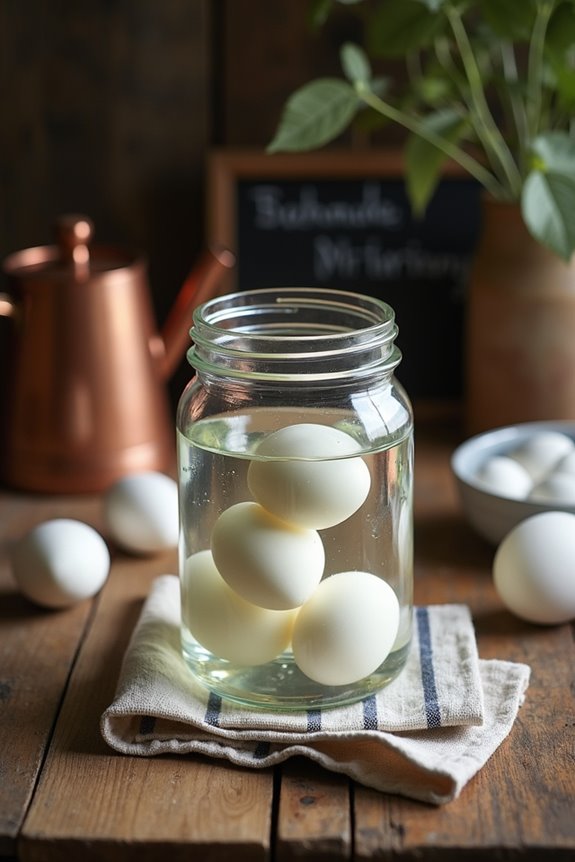
If you’ve dreamed of storing your backyard eggs for nearly a year without refrigeration, water glassing might just be your answer! This preservation method creates a protective barrier around unwashed eggs, blocking air and bacteria completely.
Here’s what you need: mix 1 part hydrated lime with 10 parts water to create your lime-water solution. Submerge your clean, dry eggs fully in this mixture, then store them at room-temperature in a cool, dark place—think basement or pantry!
The best part? You’re joining a time-tested community of homesteaders who’ve trusted this method for generations. Before cooking, test eggs for buoyancy to ensure freshness. Check seals periodically, keep containers undisturbed, and you’ll have preserved eggs through winter. That’s the homesteading win we all celebrate!
Signs Your Fresh Eggs Have Spoiled
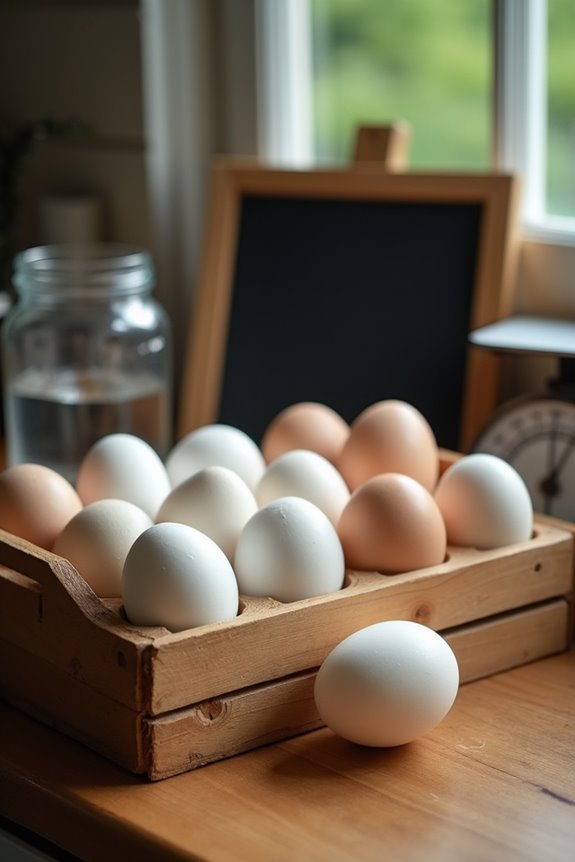
Once you’ve mastered storage methods like water glassing, the next challenge is knowing when your preserved eggs have actually gone bad—and honestly, it’s easier than you’d think!
You’ve got reliable spoilage signs to watch for:
- The float test fails – Fresh eggs sink in cold water, but floaters or ones standing on end signal age and declining quality
- Odor gives it away – Crack open an egg and detect any bad smell? Discard it immediately without hesitation
- Visual red flags appear – Slimy, powdery, or discolored whites and yolks mean spoilage
Here’s the thing: bloom presence helps room-temperature storage dramatically, but washed eggs refrigerated need using within 2–3 months for best quality. Trust your senses! That intuition protecting your flock’s eggs? It’s your superpower.
Safe Thawing and Using Frozen Eggs
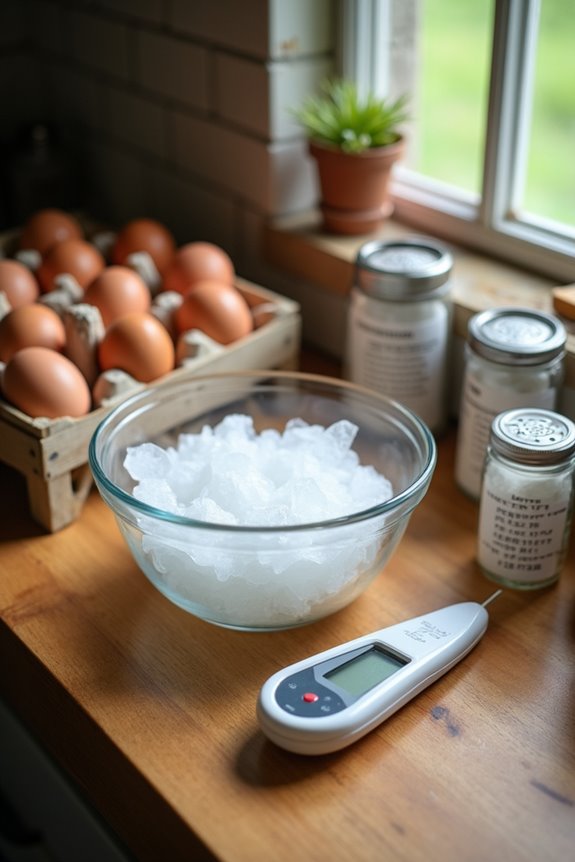
How do you bring your frozen eggs back to life without ruining them? The secret’s simple: thaw them in your refrigerator, not at room temperature. This thawing safety method prevents bacteria growth and keeps your unwashed eggs safe.
| Method | Time | Best For |
|---|---|---|
| Refrigerator | 24 hours | All egg dishes |
| Room temperature | 1-2 hours | Emergency only |
| Cold water | 30 minutes | Quick thawing |
Once thawed, your eggs might look separated or weird. Don’t panic! Massage and mix them thoroughly to restore texture. You’ll get better results this way. Use 1/4 cup thawed eggs per whole egg for scrambling, omelets, or baked goods.
Here’s the crucial part: never refreeze thawed eggs. Use them within three to five days of refrigeration. Discard anything beyond that timeframe. You’ve got this!