You shouldn’t burn wood in your gas fireplace—it’s genuinely risky! Gas fireplaces are engineered specifically for gas flames, not wood combustion. Wood fires release dangerous carbon monoxide indoors, damage burners and venting components with excessive heat, and create toxic smoke. Plus, you’ll void your warranty immediately. Instead, consider wood stoves, gas inserts with realistic wood aesthetics, or electric fireplaces. A licensed professional can assess your home and recommend the safest option tailored to your needs.
Don’t Burn Wood in a Gas Fireplace: Here’s Why
Why would you want to toss a log into your gas fireplace when it’s specifically engineered for gas flames? Here’s the truth: wood burning in a gas fireplace creates serious safety hazards you’ll want to avoid. Your gas fireplace lacks manufacturer approval for wood combustion, meaning it’s not tested or designed for those conditions. Wood fires generate toxic smoke and dangerous carbon monoxide levels in your living space—that’s genuinely hazardous. The intense heat damages gas logs, burners, and venting components. Plus, wood ash and soot clog your venting system, reducing safety and efficiency. Think of it this way: using equipment differently than intended invites disaster. Stick with what your fireplace was built for, and you’ll keep your home safe and cozy!
The Safety Hazards: Fire, Gas, and Carbon Monoxide
When you burn wood in a gas fireplace, you’re essentially inviting three serious dangers into your home simultaneously: uncontrolled fire, toxic gases, and carbon monoxide poisoning.
Here’s what happens: wood-burning generates intense heat that can ignite surrounding insulation and materials, creating a fire hazard you didn’t anticipate. Meanwhile, wood fires release toxic gases and dangerous carbon monoxide levels indoors. Your gas fireplaces aren’t designed for this! Backdrafts can occur too, pushing smoke and harmful particulates directly into your living spaces where you’re breathing.
Think of it this way—modifying your setup damages critical safety components. You’re essentially removing the tested protections between you and serious harm. Your family deserves better! Stick with approved fuel sources. Your home’s safety depends on it.
How Wood Burning Damages Your Fireplace
Beyond the immediate danger to your family, burning wood in your gas fireplace causes serious damage to the unit itself—damage that’ll cost you big time to fix.
Here’s what happens: The excessive heat from wood fires damages gas logs and burners designed specifically for controlled gas combustion. You’re essentially overheating components that weren’t built for wood burning damage. Soot and ash accumulate inside, clogging burners and vents—this reduces efficiency and creates maintenance headaches.
That buildup also obstructs proper vents and drafting, which means your indoor air quality suffers. Your firebox and surrounding components experience heat damage that sometimes renders the entire unit unusable. And here’s the kicker: manufacturer safety guidelines don’t cover wood burning modifications, so you’ve voided your warranty and protection. The repair bills? Honestly, they’ll shock you.
Can You Convert a Gas Fireplace to Burn Wood?
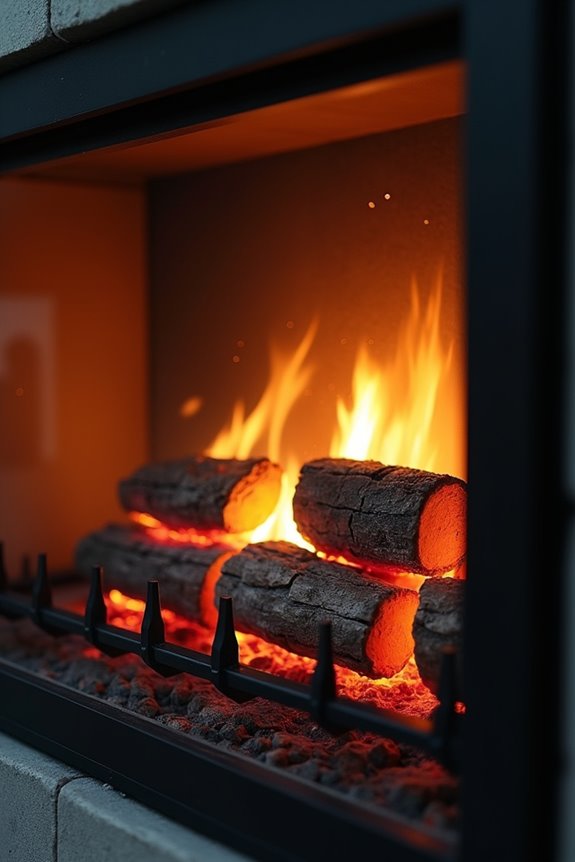
So, you’re thinking about transforming your gas fireplace into a wood-burning one—I get it!
Here’s the honest truth: it’s theoretically possible but seriously complicated. You’d need extensive demolition, a proper wood-burning conversion with new firebox design, and strict adherence to safety codes. Most professionals warn against it because modifications void warranties and create compliance headaches.
| Consideration | Gas Fireplace | Wood-Burning Alternative |
|---|---|---|
| Installation | Simple retrofit | Major reconstruction |
| Safety codes | Fewer requirements | Strict compliance needed |
| Maintenance | Minimal | Regular creosote cleaning |
| Cost | Lower | Significantly higher |
Instead of converting, consider a wood-burning insert—it’s safer and code-compliant! A licensed professional assessment is essential before deciding. They’ll explore whether conversion makes sense or if alternatives better suit your home. Don’t skip this step!
Wood Stoves, Gas Inserts, and Electric Fireplaces: Your Real Alternatives
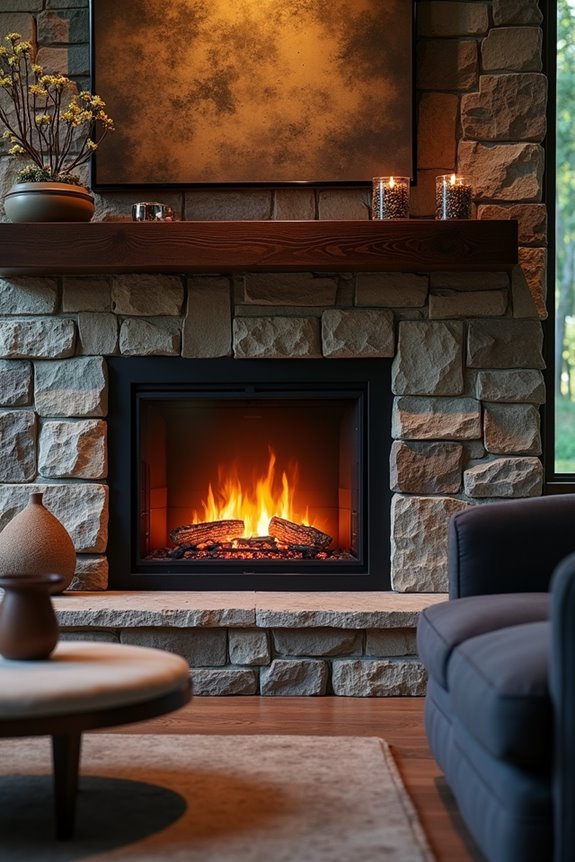
What if you could skip the conversion headache entirely and choose a fireplace alternative that actually works better for your home?
You’ve got three solid options! Wood stoves deliver authentic wood-burning experiences with impressive energy efficiency—some even qualify for a 26% tax credit. Gas inserts retrofit your existing fireplace to run on gas, giving you that wood-look aesthetic without actual combustion. Electric fireplaces offer the easiest route: stunning visuals, zero ventilation needs, minimal maintenance.
Wood stoves offer authentic efficiency with tax credits, gas inserts provide wood aesthetics without combustion, or electric fireplaces deliver stunning visuals with zero maintenance needs.
Here’s the thing: direct vent gas fireplaces aren’t designed for wood. Their logs and heat output are engineered specifically for gas operation. Trying to force wood-burning defeats the entire system.
Local professionals can guide you through each option, helping you weigh your space, budget, and lifestyle. You’ll find the perfect fit—one that actually works instead of fighting against your fireplace’s design!
When to Call a Professional for Help
Once you’ve decided which fireplace type actually fits your home—whether that’s a wood stove, gas insert, or electric unit—you’ve taken a huge step toward making the right choice. Now comes the important part: getting professional help!
Here’s why you can’t skip this step. Converting a gas fireplace to wood-burning requires serious expertise. You’re looking at demolition, venting modifications, and code compliance issues that aren’t DIY-friendly. A licensed professional assesses whether your current setup works or needs complete replacement.
Don’t ignore warning signs either. Unusual odors, smoke backup, or strange heat patterns mean you should stop using your fireplace immediately and call someone. Professional assessment catches gas logs problems and safety hazards before they become dangerous. Think of it as protecting your family while getting expert guidance on wood-burning fireplaces that actually work for your space!