
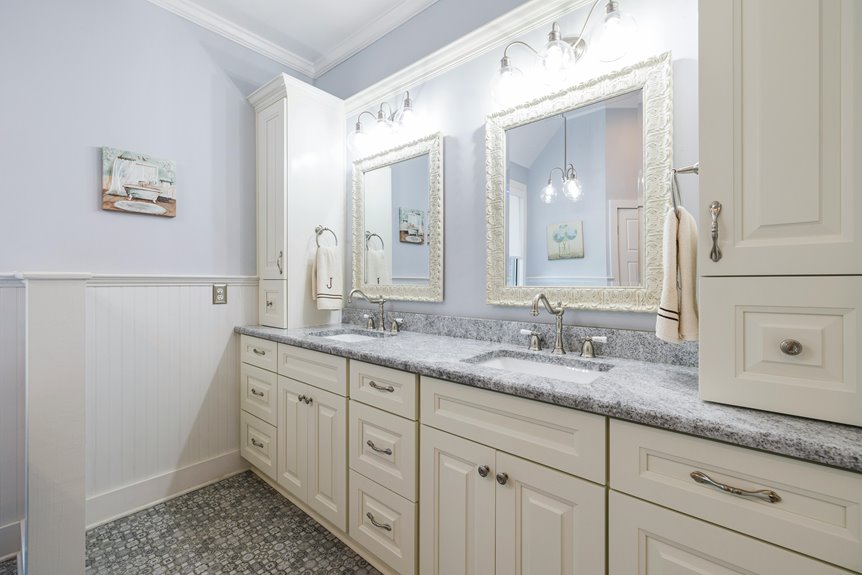
A bathroom vanity is that cabinet-and-sink combo that anchors your whole bathroom! You’ll want to match it to your space, plumbing location, and daily routine. Measure your bathroom first—width, depth, clearance. Then pick your style: floating vanities save floor space, freestanding offers charm, corner designs maximize awkward areas. Consider single or double sinks based on who’s using it and when. Match your countertop material to moisture levels. Think storage: drawers for quick access, cabinets for hidden items. The specifics matter way more than you’d think!
Understand Vanity Basics: What You’re Choosing Between
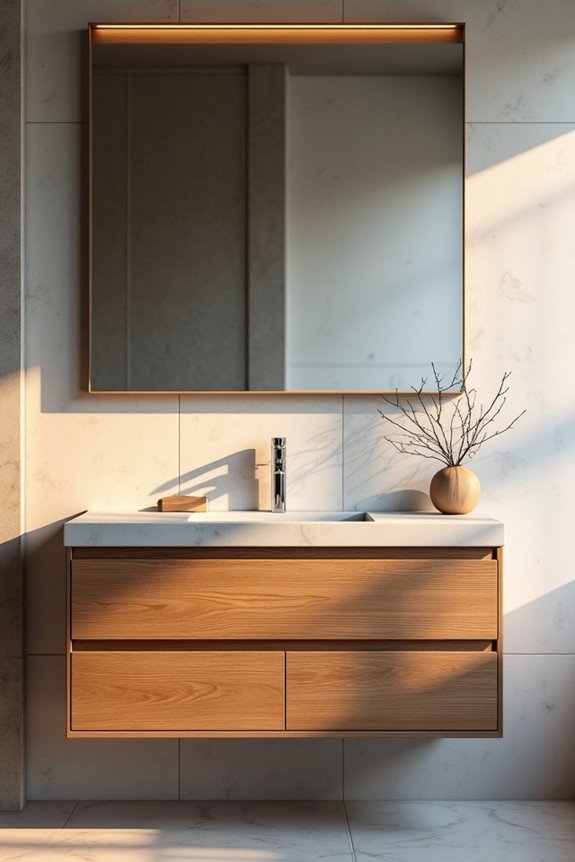
What’s really hiding behind that bathroom mirror? A vanity—your bathroom’s hardworking hero! Understanding vanity basics means exploring several key choices that’ll transform your space.
Understanding vanity basics means exploring several key choices that’ll transform your bathroom space into something truly special.
First, consider vanity types: wall-mounted vanities save floor space, while freestanding options offer traditional charm. Corner vanities maximize awkward areas beautifully.
Next, examine sink configurations. Single basins work great for smaller bathrooms; double basins suit shared spaces. You’ll find undermount, vessel, and drop-in options, each affecting your counter space differently.
Countertop materials matter tremendously! Quartz resists moisture brilliantly, granite looks stunning, and laminate stays budget-friendly. Pick what matches your lifestyle.
Don’t forget storage options and cabinet layout—these determine whether you’re organized or frantically searching for your toothbrush! Space planning using standard widths (24 to 60 inches) ensures your bathroom feels balanced, not cramped. You’ve got this!
Measure Your Bathroom and Map Out Your Plumbing
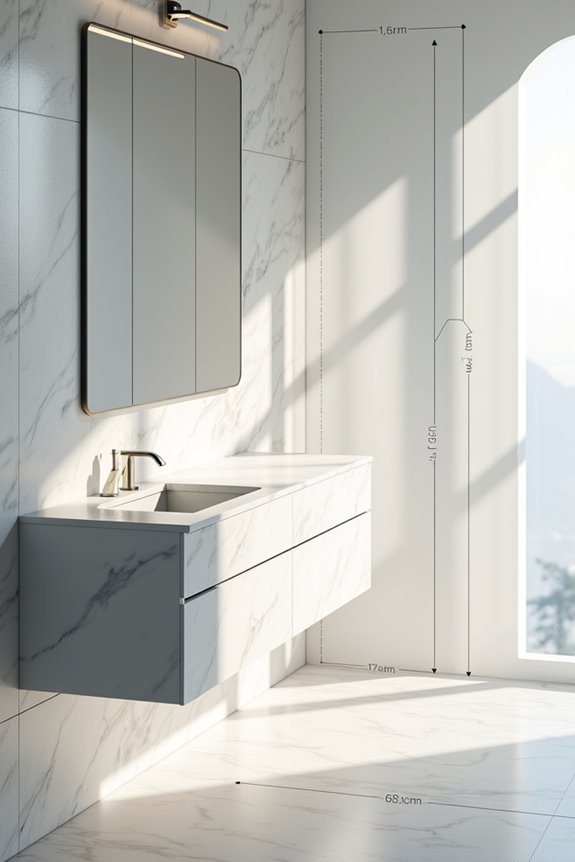
Before you fall in love with that gorgeous vanity online, you’ve got to grab your measuring tape and get real about your bathroom’s actual dimensions—width, depth, height, and don’t forget those door swings! Next, locate your plumbing rough-ins (those water supply and drain lines already built into your walls) because your vanity needs to work *with* them, not against them, unless you’re ready for some serious and costly rerouting. Once you’ve mapped it all out, you’ll know exactly what size and style of vanity actually fits your space instead of discovering mid-installation that your dream piece blocks the door!
Bathroom Dimensions and Layout
How’d you like to avoid the frustrating mistake of picking a gorgeous vanity only to realize it won’t fit through your bathroom door?
Your bathroom’s dimensions determine everything about vanity selection. Start by measuring width, depth, and height carefully. Next, identify your door swings and walkway space—you’ll need at least 30 inches of clearance in front of the vanity for comfortable use.
Here’s what you should map out:
- Plumbing rough-ins location to guide vanity placement and width requirements
- Ceiling height and mirror height to confirm compatible vanity dimensions
- Fixture alignment with your shower, toilet, and existing bathroom layout
Think of your vanity footprint as part of your bathroom’s overall flow. When everything aligns properly, your space feels intentional and welcoming. You’ve got this!
Plumbing Location Assessment
Where’s your water supply hiding? That’s your first detective mission! You’ll need to map out your plumbing rough-ins and wall plumbing locations before selecting your vanity. This step prevents costly mistakes and frustration later.
Check where your drain and supply lines sit. Your vanity width and vanity depth must align perfectly with these existing fixtures. Measure twice, buy once—trust me on this!
| Plumbing Element | Location Check | Action Needed |
|---|---|---|
| Water Supply Lines | Behind wall studs | Note height |
| Drain Pipes | Under floor/wall | Verify accessibility |
| Shutoff Valves | Wall-mounted | Ensure reach |
Sometimes you’ll discover your sink configuration needs adjusting. If plumbing changes are required, don’t panic—grab professional help. They’ll handle relocations safely. Plus, ensuring proper clearance space around everything keeps your bathroom functional and beautiful!
Consider Who Uses Your Bathroom and How Often
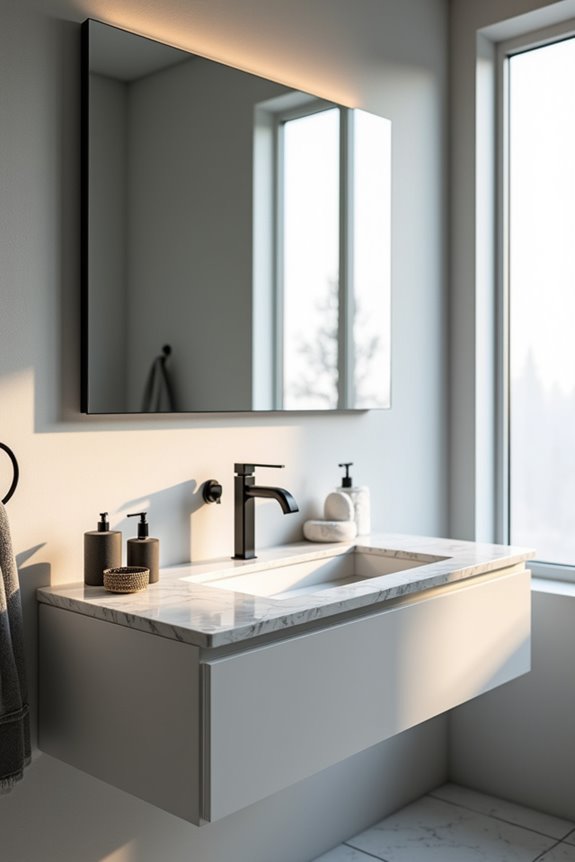
The vanity you need really depends on who’s using it and when—think about whether it’s just you getting ready each morning or your whole family scrambling for counter space before school. If you’ve got multiple people showering and grooming at peak times (like those chaotic 7-8 a.m. hours), you’ll want double sinks and serious storage to keep everyone from bumping elbows. A single-sink vanity might work perfectly for a guest bathroom or powder room, but families typically need at least 30 inches of counter space per person, plus drawers and cabinets to stash toothbrushes, deodorant, and all those grooming essentials.
Single User vs. Shared Space
Ever noticed how your bathroom routine changes completely depending on who else lives with you? Your vanity size and storage organization need to match your living situation.
Single bathrooms call for different strategies:
- A compact single-sink vanity maximizes counter space and reduces your footprint in powder rooms
- Fewer drawers work fine when you’re the only one storing items
- Minimal accessibility modifications may be necessary
Shared bathrooms demand more thoughtfully:
- Double-sink vanities prevent morning traffic jams and let everyone get ready simultaneously
- Additional drawers and cabinets accommodate multiple users’ products without clutter
- Plan your daily routine around peak usage times to minimize congestion
Think strategically about your household’s rhythm. Does everyone shower at dawn, or do staggered schedules work better? That answer shapes whether you need one sink or two. You’ve got this!
Peak Usage Times Matter
Think about your family bathroom’s peak usage times. Morning routines hit hard, right? Everyone needs counter space simultaneously for toothbrushes, skincare products, and hair tools. That’s when double sinks become lifesavers! You’ll want organized storage within arm’s reach—drawer dividers work wonders here.
Nighttime prep follows similar patterns. Your accessibility considerations matter too, especially with multiple users navigating around each other. Rounded corners prevent bumps during rushed mornings.
Guest bathrooms? They’re different animals. You’ll need less counter space since visitors use them solo and briefly. Focus on streamlined storage instead.
Smart vanity planning prevents bathroom traffic jams and keeps daily routines running smoothly!
Storage Needs by Household Size
How many people are fighting over counter space in your bathroom right now?
Your household size directly shapes your storage strategy. Larger families need serious drawer and cabinet space for everyone’s toiletries, towels, and cleaning supplies. Smaller households? You can skip the extra storage and maximize that precious counter real estate instead.
Consider your daily routines carefully:
- Multiple users demand double sinks with ample organization—think pull-out bins and dividers that keep everyone’s stuff separate
- Guest bathrooms thrive with single-sink vanities that streamline storage and open up your floor space
- Adjustable organizers adapt as needs change, so you’re not stuck with yesterday’s layout forever
Match your bathroom layout to who actually uses it and how often. A family of five needs different organization than a couple sharing a powder room. You’ve got this!
Prioritize Your Storage and Counter Space Needs
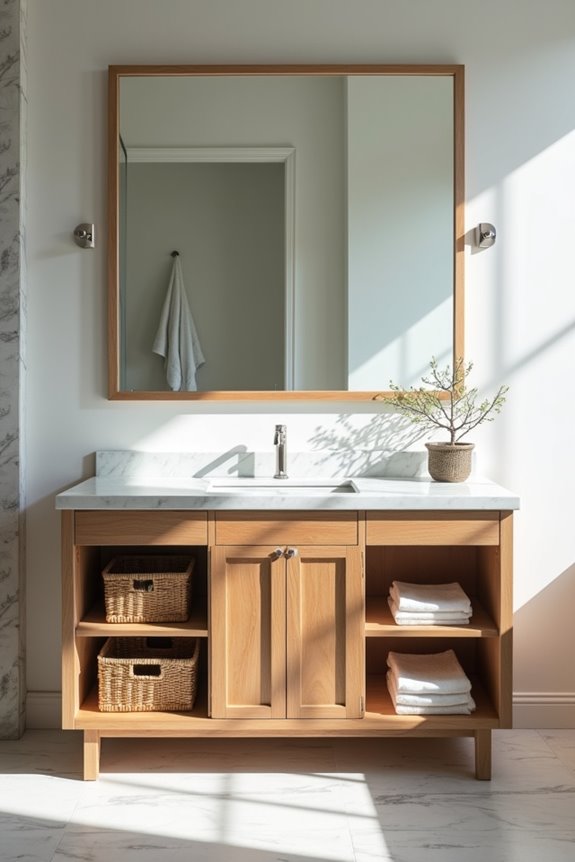
What’s actually sitting on your bathroom counter right now? Toothpaste, skincare bottles, hair tools? That’s your starting point! Catalog everything you use daily, then honestly assess whether your current vanities have enough counter space beside the sink for these essentials.
Next, decide your storage priority. Do you need more drawers for quick access to everyday items, or cabinets for hidden storage of cleaning supplies and towels? Most people benefit from a mix—drawers keep frequently used items within arm’s reach, while cabinets hide the clutter.
For shared bathrooms, a dual-sink vanity with expanded drawer configurations reduces morning chaos. Tight on space? A compact vanity or wall-mounted option maximizes floor area while still offering hidden storage. Align placements with your natural workflow, ensuring comfortable reach during daily grooming tasks!
Choose Your Vanity Type: Floating, Freestanding, or Corner
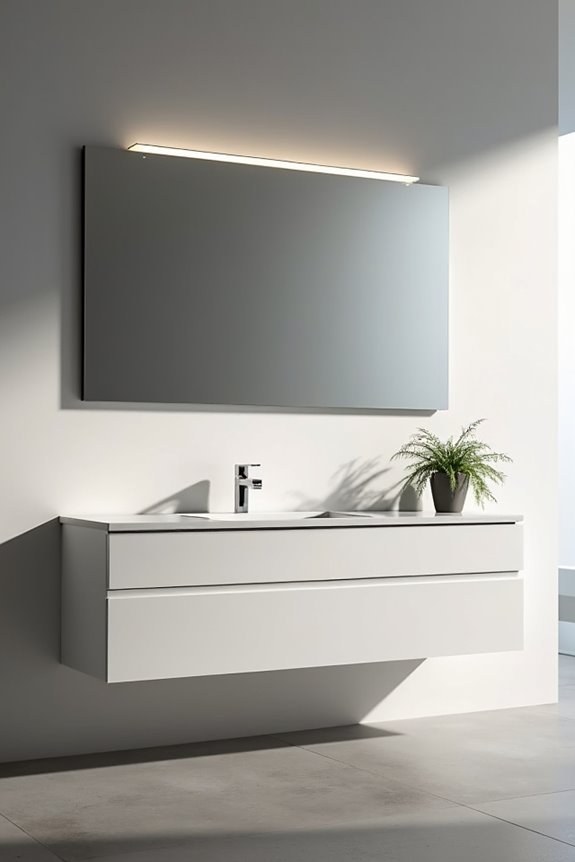
Your vanity’s foundation—literally—changes everything about how your bathroom functions and feels.
You’ve got three solid options, each with distinct advantages:
- Floating vanities attach directly to walls, creating an airy, modern look while maximizing floor space—perfect for compact bathrooms!
- Freestanding vanities stand independently on legs, offering traditional charm and flexible placement throughout your room.
- Corner vanities nestle into tight spaces, typically featuring single sinks that work wonders for smaller bathrooms.
Here’s what matters: each vanity type affects your plumbing access, cleaning ease, and traffic flow differently. Floating models give you easy floor cleaning underneath but require careful plumbing planning. Freestanding designs offer straightforward installation and design variety. Corner options maximize awkward spaces brilliantly.
Consider your bathroom’s layout honestly. What feels right for your lifestyle? The best vanity type matches both your space and how you actually use your bathroom daily!
Select a Style That Matches Your Bathroom Design
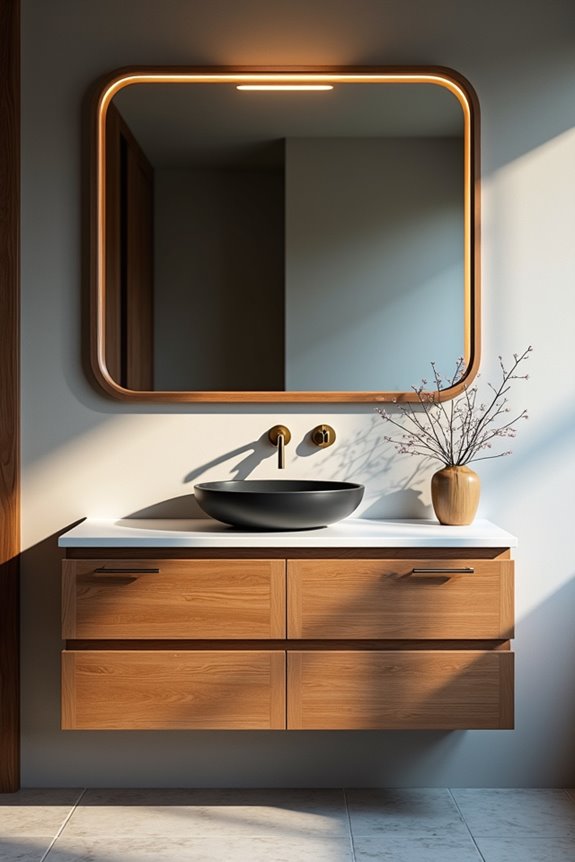
Now you’ll want to decide whether you’re drawn to modern vanities with their clean lines and floating designs, or traditional ones that feel like furniture pieces with lots of storage warmth. Your choice between these styles—or a transitional blend combining both—should match your bathroom’s overall vibe, whether that’s sleek and contemporary or cozy and classic. Once you’ve picked your style direction, you’ll coordinate materials and finishes like whites, grays, or wood tones to transition everything works together seamlessly with your fixtures and cabinetry!
Modern Versus Traditional Elements
Have you ever walked into a bathroom and instantly felt like it belonged in a design magazine—or a Victorian mansion?
That’s the magic of choosing between modern and traditional vanities! You’ll find they’re completely different creatures:
- Modern vanities feature sleek lines, floating designs, and vessel sinks that scream contemporary cool
- Traditional vanities showcase ornate details, solid wood, and hidden storage that whispers elegance
- Transitional vanities blend both worlds, balancing decorative charm with streamlined profiles
Here’s the friendly truth: your vanity’s style harmony depends on matching cabinet doors, hardware finishes, and countertops throughout your bathroom. Don’t worry—you’re not locked into one direction! Just consider your room’s size and existing fixtures. A small bathroom might celebrate modern simplicity, while spacious layouts can handle traditional storage solutions. Pick what makes you feel at home!
Material and Finish Coordination
Most bathroom vanities face a tough challenge: they’ve got to look beautiful while standing up to constant moisture, humidity, and daily wear. You’ll want materials that complement your design while actually lasting!
Consider melamine, HPL, MDF, or wood veneer for budget-friendly options with solid moisture resistance. Prefer something timeless? Solid wood and plywood deliver charm, though they need proper sealing and maintenance.
Here’s the game-changer: edge sealing! This protects your vanity from water sneaking into vulnerable spots. Low-porosity materials resist damage better, keeping your investment safe for years.
Match your material choice to your bathroom’s style. Modern spaces shine with sleek melamine finishes, while traditional designs love wood’s warmth. Custom vanities let you coordinate everything perfectly, but prefab options work great too if you’re budget-conscious. What matters most? Choosing materials that balance beauty with resilience!
Decide on Single or Double Sink Configuration
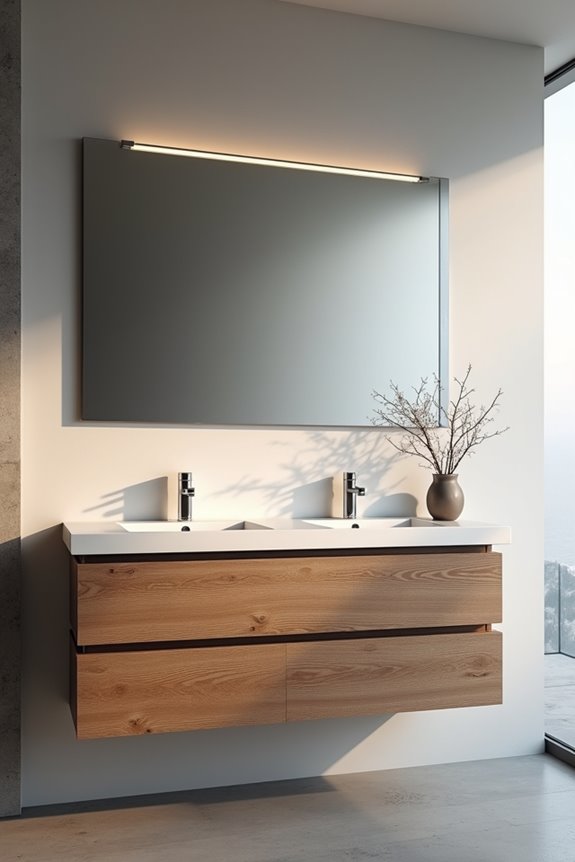
If you’re standing in your bathroom getting ready, do you find yourself waiting for someone else to finish at the sink? That’s your sign to consider a double sink bathroom vanity!
Here’s what you need to know:
- Single sinks work great for smaller bathrooms and powder rooms, keeping costs down and saving precious countertop space
- Double sinks let two people use the bathroom simultaneously, with separate storage space and counter access for each person
- Plumbing rough-ins matter—ensure your existing setup can handle two sinks’ faucet and drain layouts
Double sinks typically need 60 inches or more of width, so measure carefully! Think about your daily routines. Do two people really need simultaneous access? That answer determines everything. You’ll love the convenience of a double sink setup if you’re sharing your bathroom regularly!
Pick Materials and Finishes That Resist Moisture
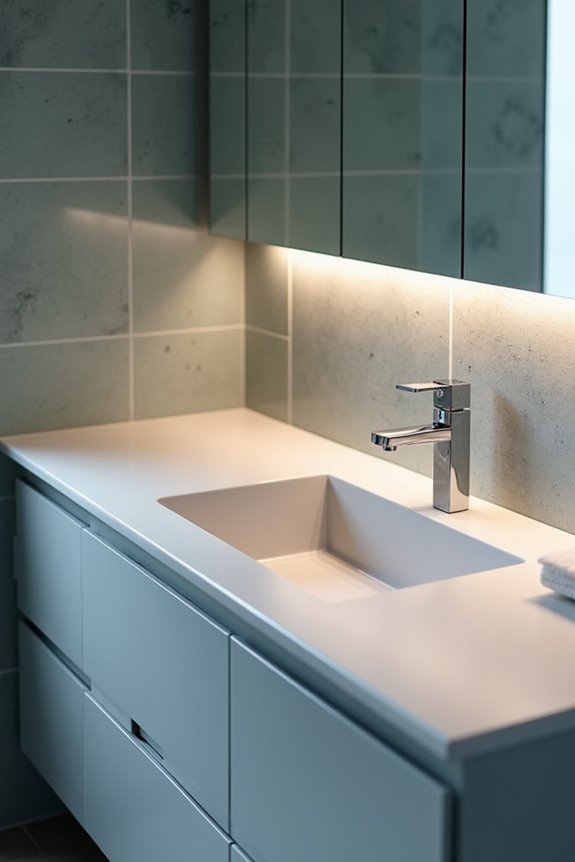
Why does your bathroom vanity look tired and swollen after just a few years? Moisture wreaks havoc on traditional materials! That’s why you’ll want moisture-resistant materials like melamine or solid wood with proper sealing for your bathroom vanity foundation.
Your countertops and cabinetry deserve non-porous surfaces—quartz countertops, solid surface, or porcelain slabs are champions at resisting stains and water damage. Here’s the game-changer: laminated cabinetry with integrated moisture barriers prevents warping in humid environments.
Don’t overlook hardware! Corrosion-resistant hardware in brushed nickel, chrome, or stainless steel keeps everything looking fresh. Skip porous granite or marble without sealing—they’re moisture magnets requiring constant maintenance.
Mildew-resistant finishes complete your protection strategy. You’re investing in a vanity that’ll stay beautiful for years, not months!
Choose a Countertop Material That Fits Your Budget and Lifestyle
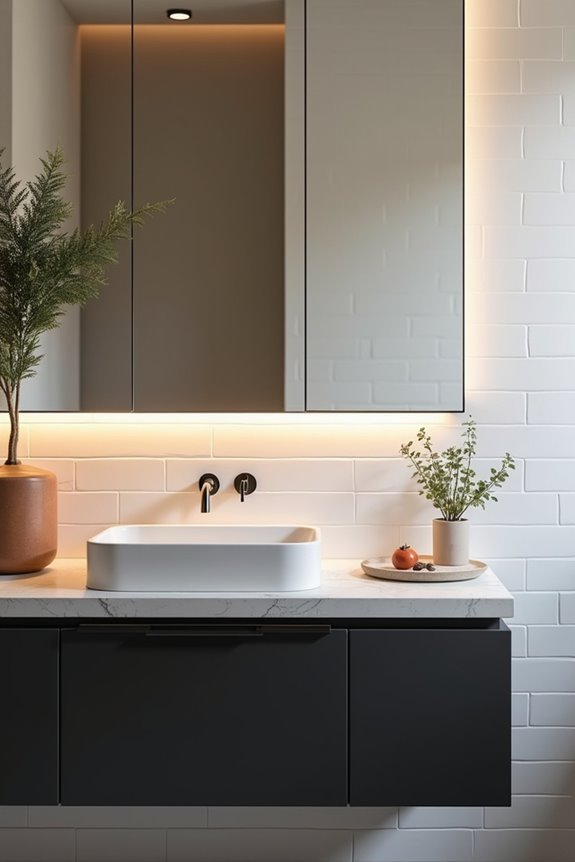
Your vanity top needs to match both your budget and daily routine. Let’s break down your options:
- Quartz countertops offer non-porous, stain-resistant surfaces requiring minimal maintenance—perfect if you’re busy!
- Laminate countertops won’t break the budget, though they’re less heat- and scratch-resistant than stone alternatives.
- Solid surface materials like Corian provide seamless, repairable options that resist moisture beautifully.
Stone countertops deliver luxury aesthetics but demand periodic sealing and ongoing maintenance. That’s real commitment! If you’re juggling life’s chaos, quartz might be your friend. Budget-conscious? Laminate works great for basic needs. Want premium durability without constant upkeep? Solid surface countertop materials deliver. Choose the countertop material that fits your actual lifestyle—not Pinterest’s lifestyle. You’ve got this!
Ensure Your Vanity Fits: Width, Depth, and Clearance Requirements
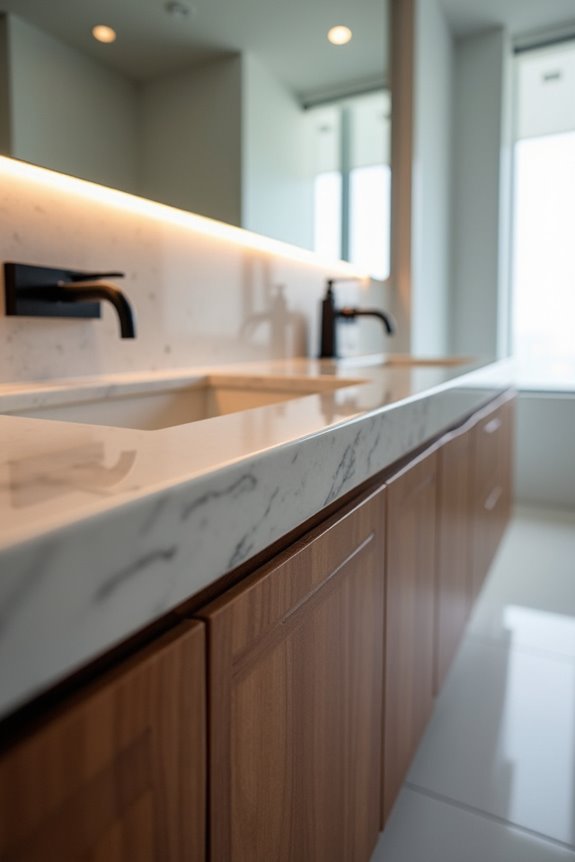
Here’s the thing—a gorgeous vanity that doesn’t fit your bathroom is basically a very expensive paperweight!
Let’s nail down your vanity footprint before purchasing. Measure your bathroom’s width, depth, and height carefully. You’ll want at least 30 inches of clearance in front for comfortable movement—trust me, you’ll appreciate that space daily!
Check your door and drawer clearance next. Will the vanity obstruct entry or opening components? Don’t overlook plumbing rough-ins either; existing pipes determine your actual width and depth options.
Finally, verify mirror placement and ceiling height. Your backsplash and mounted mirror shouldn’t interfere with anything overhead.
Smart space planning prevents costly mistakes and frustration. You’ve got this! Taking time now means enjoying your bathroom later without regrets or awkward squeezing!
Make Sure Your Plumbing and Vanity Are Compatible
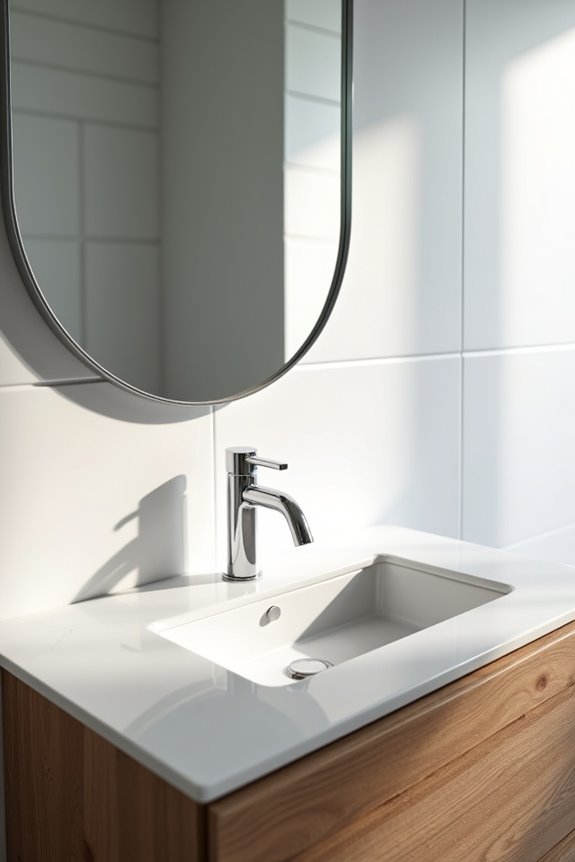
Once you’ve found the perfect vanity, here comes the reality check—does it actually work with your existing plumbing?
Your plumbing compatibility matters enormously. Check these crucial elements:
Your plumbing compatibility matters enormously. Check vanity height, rough-ins alignment, faucet positioning, and mounting style before purchasing.
- Vanity height and rough-ins alignment: Measure your current supply and waste line locations. Your new vanity’s rough-ins (the openings for pipes) must match these existing positions to avoid expensive reworking.
- Faucet alignment and sink configurations: Verify that predrilled holes in your vanity match your faucet type. Misaligned holes mean costly cabinet modifications or starting over!
- Mounting position considerations: Wall-mounted or floating vanities require different plumbing approaches than floor-standing models. Moving pipes for a floating vanity demands professional help and planning.
Here’s my friendly advice: measure twice, call a plumber if you’re unsure, and confirm everything before purchasing. Trust me—preventing plumbing disasters beats fixing them later!
Understand Maintenance Requirements for Your Materials
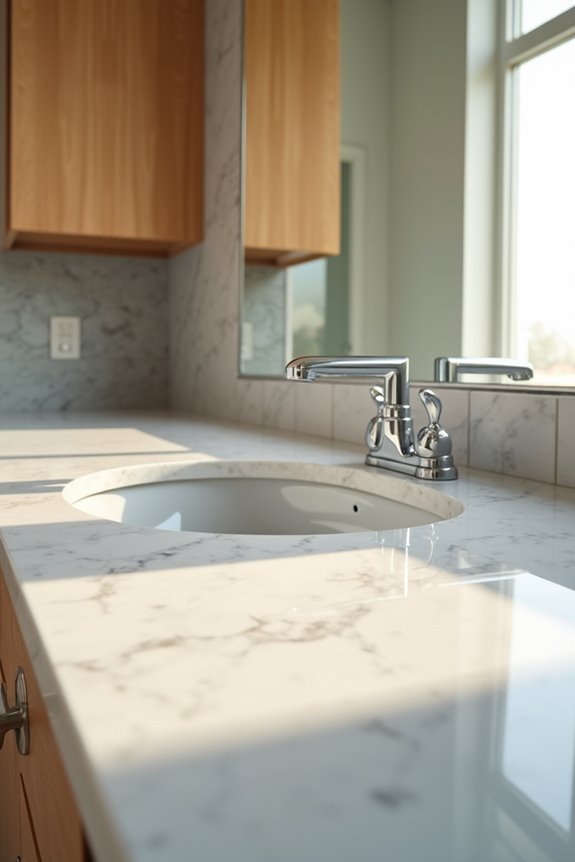
After you’ve locked in the perfect plumbing setup, it’s time to think about what happens next—keeping that vanity looking fresh for years to come! Different materials demand different care approaches, and understanding your vanity’s needs prevents costly damage down the road.
Moisture-resistant options like melamine and quartz require minimal fuss—just regular cleaning with mild soap and water. Natural stone demands periodic sealing to maintain durability against water damage. Wood veneer needs reinforcing protection through water-resistant finishes and quick cleanup after spills, preventing warping that’ll catch you off guard.
Review your material’s care instructions before committing! Budget-friendly laminates offer decent moisture resistance but may show wear over time with heavy exposure. Consider your lifestyle honestly. Are you realistic about maintenance routines? Matching material durability to your actual cleaning habits ensures your vanity stays beautiful, not just functional!
Select Mirrors and Lighting to Match Your Vanity Style
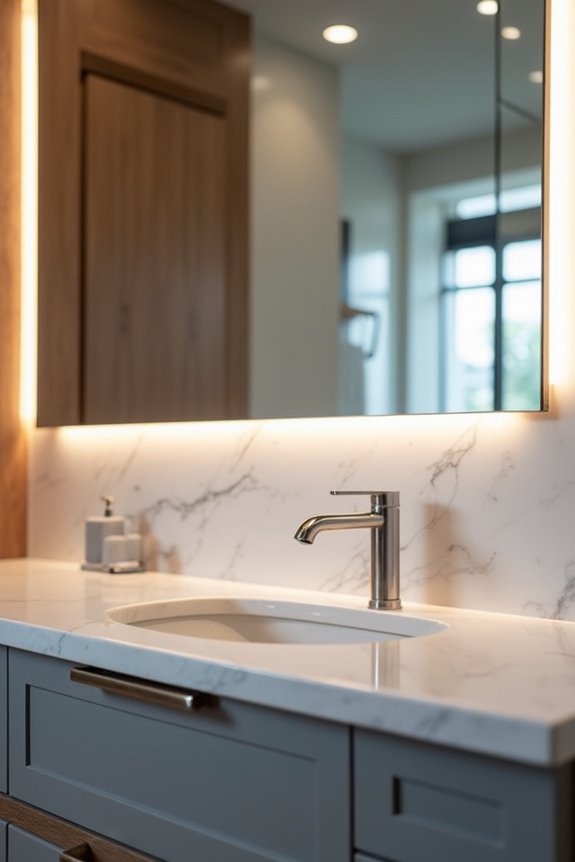
What’s the point of having a gorgeous vanity if you can’t see yourself clearly in the mirror? Your vanity mirrors and lighting deserve serious attention because they’re teammates in your bathroom’s success!
Here’s what transforms a basic setup into something spectacular:
- Match mirror size to your vanity width and height so everything feels balanced and intentional, not cramped or overwhelming
- Layer your lighting strategically by combining overhead fixtures with wall-mounted sconces at eye level to eliminate unflattering shadows
- Coordinate mirror finishes with your faucet and hardware finishes for that cohesive, put-together aesthetic
Consider LED lighting or defogging mirrors if humidity’s your nemesis. These smart upgrades provide even, glare-free illumination while keeping moisture at bay. Think of your mirror and lighting as the dynamic duo that lets you show up as your best self every single morning!