
To confirm your fireplace flue is open, try these straightforward tests! First, locate your damper control—usually a handle, lever, or chain above the firebox. Gently test its movement for smooth operation without sticking. Next, stand a few inches away and feel for cool downward airflow. Listen for a soft whoosh sound. Hold newspaper near the opening; upward movement means it’s working. Shine a flashlight inside—light reaching the chimney confirms openness. If your damper’s stuck, apply steady pressure and retry. Discover exactly what each test reveals.
Find Your Damper Control
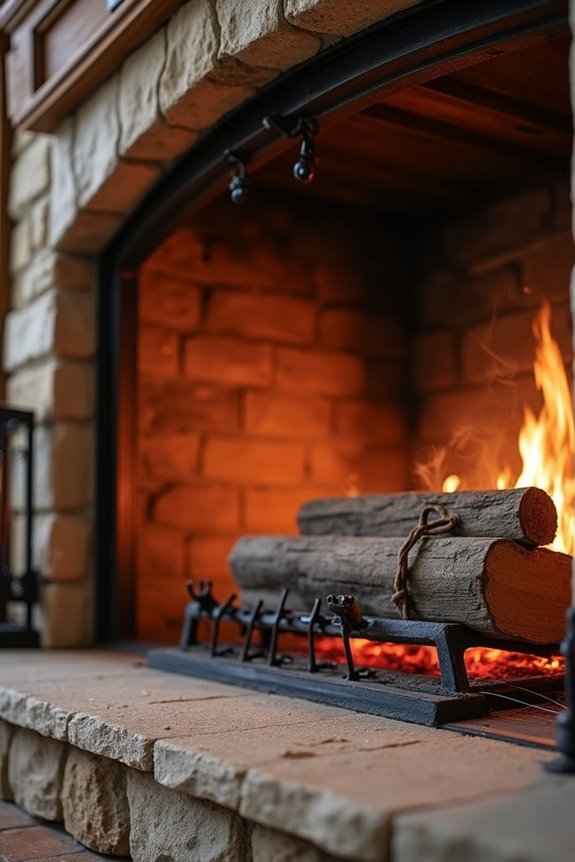
Where’s your damper hiding? Look up! Your damper control sits right at the fireplace throat, that narrow passage above your firebox. You’ll spot a handle, lever, or pull chain—it’s your key to controlling airflow.
Your damper control sits at the fireplace throat above your firebox—look for a handle, lever, or pull chain to control airflow.
Here’s what to check: Pull-type handles mean you’re opening things up. Levers work similarly; push upward for open. Chain-style dampers? Pull toward yourself to close, or let it hang freely for open status.
Once you locate it, observe the metal plate inside. Does it align with your chimney opening? That’s open! Only seeing the plate itself? It’s closed.
Don’t worry if you’re unsure. This simple exploration takes minutes, and you’re already ahead of most homeowners. You’ve got this!
Feel for Cool Air to Confirm Your Flue Is Open
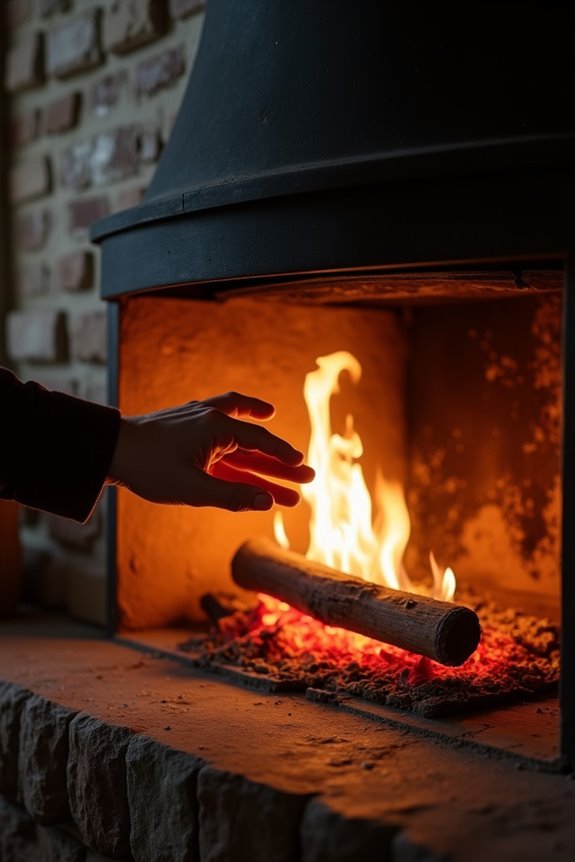
Now comes the hands-on test—stand a few inches from the fireplace opening and position your hand to feel what’s actually happening in there. You’re hunting for that telltale cool, steady draft moving downward through the flue, which signals an open damper doing its job right. Compare what you feel (strong cool air versus weak or warm air) across different spots around the firebox to confirm whether your flue’s truly open or just playing tricks on you.
Hand Placement And Positioning
How’s the best way to tell if your flue’s actually working? Hand placement matters tremendously! Position your hand about a few inches directly in front of the firebox opening. You’re searching for that cool draft moving downward—that’s your confirmation signal.
| Hand Position | What to Feel | What It Means |
|---|---|---|
| Near firebox opening | Steady, cool breeze | Flue’s likely open |
| Higher up by damper | Stronger draft sensation | Flue’s definitely open |
| Multiple spots | Consistent airflow | High confidence it works |
Notice the draft direction—downward movement tells you everything! Try this several times across different moments. Inconsistent results? That’s your red flag. Steady, noticeable coolness? You’ve got an open flue! This simple hand-check technique combines with visual inspections for foolproof results.
Interpreting Air Temperature Signs
Want to know the simplest, most reliable way to check if your flue’s actually working? Feel the air temperature right at your fireplace opening!
Here’s what you’re looking for: A noticeably cool draft flowing downward means your chimney damper status is excellent—the flue’s genuinely open. Place your hand a few inches from the opening and you’ll feel that refreshing chill, even when your room’s warm. That breeze? That’s outside air being pulled down through the chimney.
Now, if you’re feeling warmth instead or barely any airflow, your damper’s likely closed or stuck partially open. Total airflow absence? Definitely closed.
Try this quick test: alternate your hand position between where you suspect the damper’s open versus closed. Notice how the temperature changes? That’s your confirmation! This simple temperature-sensing method beats complicated gadgets every time.
Listen for Airflow Sounds
Ever notice how your fireplace seems to have its own personality? It actually talks to you through sound! When your damper’s open, you’ll hear a distinctive soft whoosh—that’s air moving through. Listen closely in a quiet room for outside noises like birds, traffic, or wind becoming louder inside your chimney. That amplification tells you your damper’s definitely open. Conversely, if outside sounds stay muffled, your damper’s probably closed. Here’s the thing: intermittent or faint air movement sounds suggest a partially open damper or minor blockage. A strong, consistent draft correlates with a fully open flue, while weak or absent drafts indicate closure. Pay attention to these audio clues—they’re reliable indicators you can trust. Your fireplace won’t lie!
Use the Newspaper Test to Verify Airflow
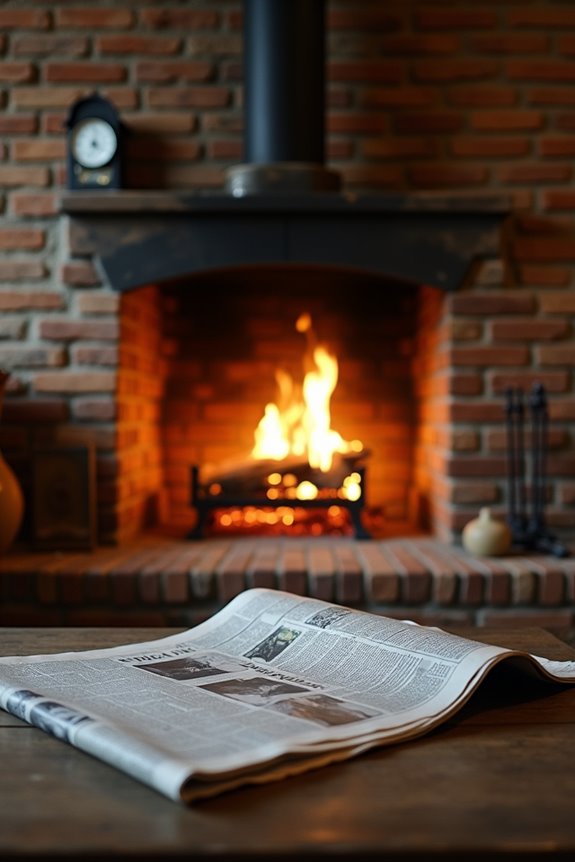
Ready to see your flue in action? Grab a small newspaper piece—seriously, just a corner—and hold it near your firebox opening. You’ll witness something cool: if your chimney damper is open, steady airflow pulls that paper upward smoothly. It’s like watching your fireplace breathe!
Here’s what happens next. The newspaper should drift away from the room, not curl back toward you. A curling or lingering smoke cloud signals a closed or partially closed damper—your airflow’s blocked. Cold chimneys sometimes need warming before drafting properly, so patience matters here.
Never leave burning material unattended in your firebox. This simple test confirms what your ears detected earlier. You’re building real fireplace knowledge! That upward pull means you’re ready to use your fireplace safely and efficiently.
Look Inside the Flue With a Flashlight
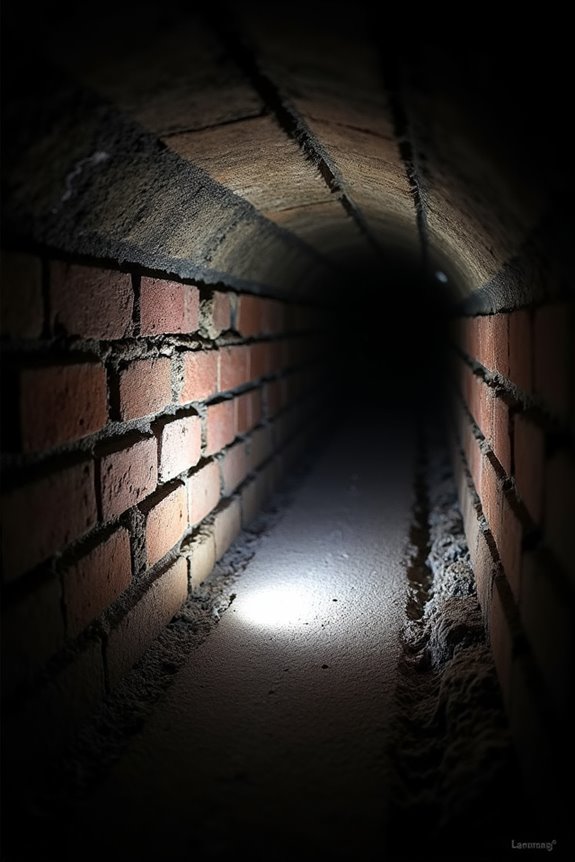
You’ll want to grab a flashlight or your phone’s light and shine it up into the flue from your fireplace base—it’s honestly the clearest way to see what’s happening inside! Look for that metal damper plate and check whether you can see clear through to the chimney interior (which means it’s open) or if you’re just staring at the metal plate itself (which means it’s closed). The light trick beats guessing every time, and you’ll spot the damper’s position in seconds!
Locating Your Chimney Damper
What’s the easiest way to check if your fireplace damper’s actually working? Head to your firebox—that’s the chamber where you’d build a fire—and locate the damper control. You’ll find it at the chimney’s base, typically a handle or lever system. Grab your flashlight or phone light and peer upward into the flue opening. Here’s where it gets interesting: watch that metal damper plate move when you operate the control. If you see the plate shift smoothly, congratulations—your damper’s responsive! When the chimney damper is open, you’ll glimpse the dark interior above. The plate blocking your view signals a closed position. This simple visual confirmation tells you everything about your damper’s functionality and whether you’ve got proper airflow.
Using Light Effectively
Ever tried squinting into a dark fireplace and wondering what’s actually going on up there? Grab a bright flashlight or your phone’s light—you’re about to become a fireplace detective! Shine that beam directly into the flue from the fireplace throat. You’re looking for a metal plate that reveals your damper position. Here’s the game-changer: if you see straight up through the opening into the chimney interior, you’ve got an open damper. See only the metal plate blocking your view? That’s closed. Move your light slowly across the damper area, watching for gaps or light penetration into the chimney. This simple technique eliminates guesswork. You’ll know exactly what you’re dealing with, and honestly, it’s satisfying!
Interpreting Visual Signs
Now that you’ve got your flashlight ready, it’s time to read what that beam reveals inside your chimney. Point it upward and observe carefully. You’re looking for a metal plate—that’s your chimney dampers in action. If you can see straight through into the chimney’s dark interior, congratulations! Your damper’s open. But if that metal plate blocks your view completely, it’s closed. Think of it like a door: open means light travels through, closed means the plate stops you.
| What You See | Damper Status | What It Means |
|---|---|---|
| Chimney interior visible | Open | Smoke exits freely |
| Only metal plate visible | Closed | Smoke stays trapped |
| Plate won’t move | Stuck/Blocked | Needs professional help |
| Light passes through | Open | Ready to use |
| Complete darkness | Closed | Don’t light fires |
Test How Freely the Damper Moves
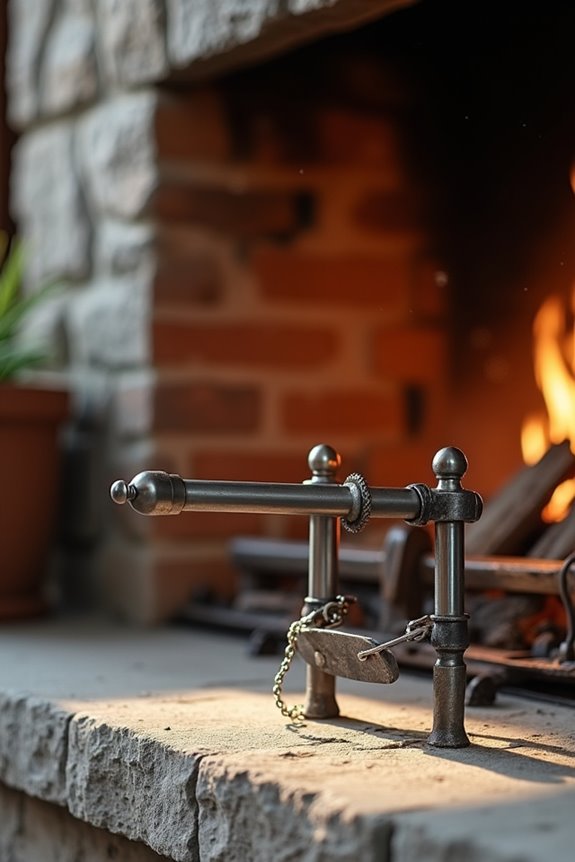
Once you’ve spotted your damper, it’s time to see if it actually works! Gently test the chain or lever by moving it slowly through its full range. You’re checking if the damper responds smoothly without sticking or grinding sounds.
Gently test your damper’s chain or lever through its full range, checking for smooth operation without sticking or grinding sounds.
Here’s what to listen for: a distinct whoosh or airflow change means your damper’s functioning properly. If it feels seized or overly stiff, stop immediately—forcing it risks damage.
Try this simple check: move the damper partway, then pause and listen. Healthy dampers glide with minimal resistance. A stuck damper might need professional attention, but many respond well to gentle, patient testing.
Does it move freely? Excellent! You’ve confirmed your damper’s operational. That’s a solid win for your fireplace maintenance routine!
What to Do If Your Damper Won’t Open or Stays Stuck
What happens when you pull that chain or lever and nothing budges? Don’t panic! You’re not alone in this frustrating situation. Here’s what you should do:
- Gently tug the chain or lever in its intended direction several times, listening carefully for any creaking or movement sounds
- Apply steady, moderate pressure rather than forcing it, which could cause damage to the mechanism
- Wait a moment, then try again—sometimes rust or debris just needs persuasion
If your damper still won’t cooperate, it’s time calling a chimney professional. They’ve got specialized tools and expertise to free stuck dampers safely. Here’s the important part: if you smell gas or notice excessive smoke backing into your room, stop immediately and call someone today. Your safety matters! Getting professional help isn’t giving up; it’s being smart about ensuring your damper is open and functioning properly.